Wendelin's "Christian Theology": Doctrine of Justification, Part 1

[A fundraising break-through: We have surged to about 40% of our goal! Thanks be to the Most High God!
We still have some ground to cover. If you are being blessed by the translation work, please consider supporting the work and speeding it on its way. Click here to watch a brief video on the project.]

THESIS I: Hitherto the cause of the reception of Christ or the Mediator. The effects follow, which are principally three: (1.) Justification, (2.) Sanctification, (3.) Glorification or eternal life.
THESIS II: Justification is an act of God’s free grace, whereby elect sinners, liable to the curse of the law, because of the righteousness or satisfaction of Christ applied by faith and imputed by God, before the divine tribunal, with sins remitted, are freed from the curse of the law and reckoned righteous.
EXPLANATION: I. To justify does not signify to make a righteous man out of an unrighteous through the infusion of righteousness, as to sanctify is to make holy: but to pronounce one righteous or to absolve judicially. Thus this term is constantly taken in the Cardinal languages, Hebrew, Greek, and Latin: among the Hebrews it is הִצְדִּיק; among the Greeks, δικαιούσθαι. Whence it appears, that justification is not a real change or alteration, but the pronouncement and reckoning of a judicial sentence.
II. But, as righteousness is twofold, Evangelical and Legal: so justification is also twofold, Evangelical and Legal.
Evangelical righteousness is the satisfaction of Christ rendered to the divine law for us, apprehended by true faith and graciously imputed to us by God.
Legal righteousness is the habit of our own righteousness, abiding in us, which we acquire through observation of the precepts of the law.
Therefore, Evangelical justification is that whereby a sinner is freed from the curse of the law, and graciously reckoned as righteous before God, because of the righteousness and merit of Christ apprehended and applied by true faith.
Legal justification is that whereby one is pronounced righteous in himself, by his own inherent righteousness and innocence.
Before the divine tribunal no one is justified, that is, is freed from the curse of the law, and is pronounced innocent and righteous, except by Evangelical righteousness and justification. For as many as are of the works of the law are under the curse, Galatians 3:10. And it is evident, that no man is justified by the law in the sight of God, verse 11. In this locus, therefore, we treat of Evangelical justification.
III. The Papists, against the propriety of all languages and the authority of Sacred Scripture, contend that to justify is to make one just through infusion or induction of righteousness: just as to heat is to make a warm thing out of a cold thing through the induction of inherent heat.
Hence another quarrel arises between us and the Papists.
We have known, and received from Scripture, only one justification, namely, the freeing of a sinful man from the curse because of the imputed righteousness of Christ.
The Papists preach a twofold justification, namely, a first and a second.
They call that the first, whereby a righteous man is made out of an unrighteous man, through infusion of habitual righteousness and remission, that is, the expulsion of sin: For thus they interpret remission.
They call that the second, a righteous man is made even more righteous, through acquisition of greater righteousness and inherent holiness: that is, by the study of good works.
To the first justification, say they, are we disposed: (1.) by general faith, whereby we believe to be true what things have been revealed by God, and that He is just in the punishment of sins, and merciful in forgiveness through and because of Christ: (2.) by fear of divine judgment and infernal punishments: (3.) by hope of divine mercy and remission of sins: (4.) by love toward God, who is so merciful and kind: (5.) by detestation of sin: (6.) by intention of a better life and observation of God’s commandments.
With these things posited and going before, they say that infusion of justifying grace and expulsion of sins immediately follow. Becanus, Theologiæ Scholasticæ, part 2, tractate 4, chapter 3, questions 1-3.
IV. All these things are false and forged outside of Scripture, as it will be evident from what follows. Scripture knows only one justification, which is the release of the sinner from the curse, because of the λύτρον/ransom of Christ apprehended by saving faith. Scripture in general excludes works from the causes of justification, inasmuch as it denies that we are justified by works. Scripture commends an altogether gracious justification. Scripture says, that before justification and regeneration we are dead in sins and incapable of any good work. Scripture teaches that we are justified by faith of such a sort that distinguishes the Children of God from the children of the devil. The justifying faith of the Papists is also common to devils. Finally, Scripture distinguishes justification from sanctification, which the Papists confound together. Their second justification is nothing other than sanctification. Dispositions toward the first, with faith excepted, do not precede, but follow, true justification: unless the shadow of good works, which even the hypocrites sometimes show, be understood.
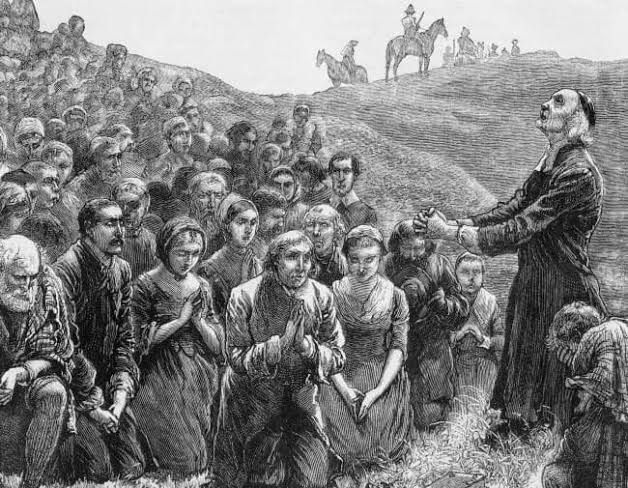


Westminster Confession of Faith 11: 1. Those whom God effectually calleth He also freely justifieth;1 not by infusing righteousness into them, but by pardoning their sins, and by accounting and accepting their persons as righteous: not for anything wrought in them, or done by them, but for Christ's sake alone: nor by imputing faith itself, the act of believing, or any other evangelical obedience, to them as their righteousness; but by imputing the obedience and satisfaction of Christ unto them,2 they receiving and resting on Him and His righteousness, by faith: which faith they have not of themselves; it is the gift of God.3
1 Rom. 8:30; Rom. 3:24.
2 Rom. 4:5-8; 2 Cor. 5:19,21; Rom. 3:22,24,25,27,28; Tit. 3:5,7; Eph.…
Follow the translation of Wendelin's Christian Theology:
www.fromreformationtoreformation.com/introductory-theology
Volume 1 of Wendelin's Christian Theology is now available in print!
https://www.lulu.com/shop/steven-dilday/wendelins-christian-theology-volume-1/hardcover/product-yv54k5p.html?q=wendelin&page=1&pageSize=4