Wendelin's "Christian Theology": Doctrine of Sanctification, Part 1

[A fundraising update: We have almost reached 50% of the fundraising goal! Thanks be to God!
We still have some ground to cover. If you are being blessed by the translation work, please consider supporting the work and speeding it on its way. Click here to watch a brief video on the project.]
THESIS I: Hitherto the first effect of the received Mediator, namely, justification. A second effect follows, namely, Sanctification, which is a gracious act of GOD’S Holy Spirit, whereby He mortifies sin in those justified, and, with their intellect illuminated and their will and affections renewed, kindles new motions of holiness in their hearts.
EXPLANATION: I. A great many Theologians take sanctification, regeneration, conversion, repentance, and internal vocation as Synonyms: But others, and indeed the more recent, more accurately distinguish them, and arrange these blessings of God in this order: namely, that the offer of the Mediator, which is performed through external vocation, is followed by internal vocation, which they think to be the same thing as conversion, and teach to consist in two parts, (1.) the act of faith, whereby the mind is illuminated so that it might become acquainted with, and the will is prepared so that it might apprehend, the Mediator: (2.) regeneration, whereby the nature of man is renewed to act in a manner pleasing to God.
To internal vocation they subjoin justification, whereby the sinner, with Christ apprehended by faith, and with His satisfaction imputed to him by God, is absolved from the curses of the law, and obtains the remission of sins.
To justification, finally, they subjoin sanctification, which they teach to consist in the actual flight from sin and exercise of holiness, or the study of good works. At the same time, all these benefits are distinct, not so much in time, as in order, and sanctification is ever joined with justification: for God does not absolve anyone from guilt or the curse, except him whom He at the same time renews after His image and sanctifies: which is to be observed against the calumnies of the Papists, who fasten to us a justification of this sort, which is not only distinct from sanctification, but also separated from it: to which opinion we are complete strangers: even if we judge that justification and sanctification ought be no means to be confounded.
II. The greater precision in the distinction of internal vocation, regeneration, and sanctification, we, with other great authors, set aside in this place, having regard to beginners, who might not grasp these subtler matters as well. Therefore, following in the footsteps of our teachers, with pains taken, to sanctification do we refer those things that others refer distinctly to internal vocation or regeneration as distinguished from sanctification: although we do not at all despise the greater precision of the more recent Theologians. See Exercitation 125.
THESIS II: Sanctification’s causes, effects, and adjuncts are to be considered.
THESIS III: The Efficient is either principal or instrumental.

THESIS IV: The principal is Jehovah God, and particularly the Holy Spirit. Now, Jehovah sanctifies the sinner, induced by His mercy alone, founded on the merit of Christ the Redeemer.
EXPLANATION: I. Concerning the principal efficient of our sanctification there are express testimonies of Scripture: Leviticus 20:8; 21:8, I, Jehovah, am thy sanctifier. 2 Timothy 2:25, 26, if God peradventure will grant to them, that they, repenting, might acknowledge the truth, and, having escaped out of the snare of the devil, whereby they are held captive, might recover soundness of mind.
This action Scripture attributes to God, when it says: that God circumcises our heart,[1] puts the fear of Himself in our heart, introduces reverence for Himself in our spirits.[2] But the Holy Spirit is particularly called the Spirit of sanctification, Romans 1:4; the Spirit of renewal, Titus 3:5. Thus we are said to be reborn of the Spirit, John 3:5.
II. Now, God is impelled, or induced, to sanctify us by His mercy alone, founded on the merit of Christ, as it is evident from express testimonies of Scripture. Titus 3:5, According to His mercy He saved us, by the washing of regeneration, and renewing of the Holy Spirit. 1 Peter 1:3, According to His great mercy He hath begotten us again unto a lively hope by the resurrection of Jesus Christ from the dead. 1 John 1:7, The blood of Jesus Christ cleanseth us from all sin. 1 Corinthians 1:30, Of God is Christ made unto us wisdom, righteousness, sanctification, and redemption. Romans 9:18, He hath mercy on whom He will, and whom He will He hardeneth.
III. The grace, wherewith God regenerates and sanctifies us, is fixed by Orthodox Theologians, according to the Scriptures, as fivefold: (1.) prevenient, (2.) preparing, (3.) operating, (4.) cooperating, (5.) perfecting.
Prevenient grace is that whereby in the mind of the sinner not yet converted God inspires good thoughts concerning the greatness of human misery, and the felicity of the condition to which he could be conveyed.
Man needs this grace; because of ourselves we are able to think nothing good, 2 Corinthians 3:5; and every imagination of the human heart is only evil all the time, Genesis 6:5.
* By this grace the sinner:
(1.) Looks into the Law of God, and compares his own life and state with the law, James 1:25.
(2.) From the comparison of the divine law with his life and state he recognizes that he is liable to death and shut up under sin, Romans 1:20; 2:1, 20; 7:7; 11:32.
(3.) He despairs of obtaining salvation through his own strength or that of another creature, Romans 7:9, 11, 13.
(4.) He humbles himself before God with sorrow and fear, because of his sins, which he confesses, Matthew 9:12.
Preparing grace is that whereby the mind and will are prepared, so that it might see the spiritual light shining, and propose to itself to follow it resolutely.
Man needs this grace: because the natural man is not fit for the things of the Spirit of God: for they are foolishness to him, neither can he know them, 1 Corinthians 2:14. Neither can any resolution of well doing be in him by nature, who is altogether obstinate in evil, Jeremiah 13:23.
Operating grace is that whereby ability is given to us, so that we, according to our desire, might prevail to follow the spiritual light arisen in us.
Man needs this grace: because in his sins he is spiritually dead by nature, and no less unsuited to spiritual motions pleasing to God, than one corporally dead is to produce bodily and animal motions: Colossians 2:13, and you, being dead in your sins and the uncircumcision of your flesh, hath He quickened together with Him, having forgiven you all trespasses. Ephesians 2:1, And you (hath He quickened), who were dead in trespasses and sins.
Cooperating grace is that whereby in the matter of salvation, with us now working, and studying holiness, God cooperates by continuous action, by stirring up the remiss, raising up the fallen, recalling the erring, confirming the wavering.
Man needs this grace: because without Christ he is able to do nothing, John 15:5. And it is God which worketh in us, both so that we might will, and so that we might work, according to His gracious benevolence, Philippians 2:13.
Perfecting grace is that whereby God more and more perfects sanctification and regeneration in us; although we reach not the apex of perfection in this life.
Man needs this grace: because without God he is not able to perfect any good. Hence Paul in Philippians 1:6, I am confident of this very thing, that He which hath begun a good work in you will perform it until the day of Jesus Christ.
IV. It is a question between us, and the Papists and Arminians: Whether to all men, without distinction, is granted by God sufficient grace, whereby they might be able to be converted to God, regenerated, and finally saved eternally?
We support the negative by the following arguments:
(1.) Because from unrenewed man Scripture expressly withdraws the power of well doing, and of converting himself to God: Jeremiah 13:23; Matthew 7:18; 12:34; John 3:4; 6:44; 15:5; Romans 8:7; 1 Corinthians 2:14; 12:3; 2 Corinthians 3:5.
(2.) Because the Gentiles of old, before they were called by the preaching of the Gospel, were without Christ, had no hope, being without God in the world, Ephesians 2:12.
(3.) Because not all are called by the preaching of the word; and without a call no one is able to believe, Romans 10:14.
(4.) Because of old God did not give to a great part of the people of Israel, even among so many miracles, a heart to understand, nor eyes to see, Deuteronomy 29:4.
(5.) Because the ability to understand the mysteries of the kingdom of heaven is not given to all: Matthew 13:11.
(6.) Because not all men are able to understand, that they are dead in sins, and have need of renewal through Christ: for these things are not able to be understood without a special calling.
But to feign a universal sufficient grace without the power to do good works, without Christ and God, without a call through the word, without a heart to understand and eyes to see, without the ability to understand the mysteries of the kingdom, without an acknowledgment of wretchedness; is to feign a sufficient grace that is neither sufficient nor gracious.
Let the heralds of this grace tell us, I pray, what sufficient grace befell the altogether brutish peoples of the Americas, before Christians had frequent commerce with them, in that deepest barbarism and ignorance of divine and human things: Unless you make grace out of nature (which was Pelagius’ deception), you will scarcely show a vestige of grace, much less of sufficient grace.
V. Against the contrary opinion the Papists and Arminians object:
(1.) What is able to be known of God was manifest in the Gentiles by divine disclosure, Romans 1:19.
Therefore, sufficient grace was given to them by God.
Response: The consequence is denied: The knowledge, of which Paul speaks, was common to the Gentiles with devils, to whom no one would attribute sufficient grace. And, that this knowledge was not saving, and hence was not sufficient, is evidently demonstrated from this: that they did not know God as the Father of our Lord Jesus Christ: neither did they know anything of the Son of God as the Redeemer of mankind.
(2.) The Gentiles do by nature the things contained in the law: Romans 2:14.
Therefore, they had sufficient grace.
The rationale of the consequence: because without the grace of God no one is able to do the things contained in the law.
Response: The consequence is denied: The Proof is not true in any simple way. For Paul does not say that the Gentiles by grace, but rather by nature, do the things contained in the law. We do not then deny, that among the Gentiles that excelled others there was some help, but we deny that it was sufficient grace.
(3.) God did not suffer Himself to be without a testimony among the Gentiles, Acts 14:17.
Therefore, sufficient grace also fell to the Gentiles.
Response: The consequence is denied: For not just any revelation and testimony or knowledge of divinity is sufficient grace; because God does not allow Himself to be without a testimony even among the devils.[3]
(4.) God commands all to believe upon Christ.
Therefore, He gives to all sufficient strength to believe.
The rationale of the consequence: because what is impossible is unjustly commanded.
Response: 1. The antecedent is false: those only are commanded to believe upon Christ, to whom Christ is made known by the preaching of the Gospel, or, to whom the external call of the word comes. But it does not come to all.
2. The consequence is also denied: the Proof is not true in any simple way: for, even if what is impossible, in such a way that it was never possible, is unjustly commanded; yet what a man is bound to do, and what he was at some point able to do, is able to be justly commanded: but this ability was given to man in the first creation, as we proved in its place.
VI. Moreover, there is a question between us, and the Papists and Arminians, concerning the efficacy of converting grace: Whether God by His grace effects conversion in a man, in such a way that by that converting grace, posited together with the intention of God concerning the conversion of the man, the man is necessarily converted, or the effect of conversion is always and infallibly posited?
Response: We defend the affirmative by the following arguments:
(1.) Because the power of the Spirit regenerating or converting us is no less efficacious and powerful, than that which exerted itself in Christ, when He was raised from the dead, Ephesians 1:19, 20, where the efficacy of that power is described in words full of significance, and is not only called δύναμις/power, but even μέγεθος δυνάμεως, greatness of power, and ὑπερβάλλον μέγεθος τῆς δυνάμεως τοῦ κράτους τῆς ἰσχύος αὐτοῦ, the surpassing greatness of the power of the might of His strength:[4] Colossians 2:12.
But that power of the Spirit raising Christ was so efficacious, that it was not able to be overcome by death; and, with that posited, Christ was not able not to rise from the dead.
(2.) Because divine power gives us all things that pertain to faith and piety, 2 Peter 1:3.
Therefore, it gives to us, not only that we might be able, but even more that we might be willing, to be converted, and are actually converted, and might by no means reject the converting grace applied by God with the intention of converting us.
(3.) Because God effects in us, not only that we might be able to will and to effect: but also that we actually will and effect, Philippians 2:13.
Therefore, the grace of conversion does not hang upon human choice, in such a way that by it man is only able to be converted, but by grace the will is affected in such a that it wills and effects.
(4.) Because the hearts of men are in the hand of God in such a way that He turns them whithersoever He will, Proverbs 21:1.
Therefore, the grace of conversion is not in the hand of man in such a way that he might admit or repel it at his pleasure.
(5.) Because the free will before conversion is the servant of sin; therefore, the efficacy of the converting grace is not able to be suspended upon it; but rather the will depends upon grace.
(6.) If by the free will of unregenerate man it stands, that the grace of conversion is efficacious or not efficacious: it follows, that converted man causes himself to differ from others not converted.
But the consequent is false, according to Paul’s doctrine, 1 Corinthians 4:7.
Therefore also the antecedent.
(7.) If the effect of converting grace in us is not saving, unless it be attended by the free will of man not yet converted; it follows that the initiation of salvation is of us, and that in regeneration the will of man is more efficacious than the converting act of God.
But the consequent is absurd: Therefore also the antecedent.
(8.) If a man is ever not converted, whom God intends to convert by the application of grace; it would follow that concerning the conversion of men God most frequently fails of His end.
But the consequent is absurd: Therefore also the antecedent.
The minor is proven. Because it belongs to one imprudent and impotent to fail of his end: But neither imprudence nor impotence is applicable to God.
(9.) The same is Augustine’s opinion in de correptione et gratia, chapter 12: To Adam in the greatness of his might He gave permission to do what he might wish: He preserved the weak, so that, with Him bestowing, they might will most invincibly what is good, and might most invincibly refuse to forsake this. The same, To Simplicianus,[5] question 2: The effect of God’s mercy is not able to be in man’s power, so that He might show mercy in vain, if man be unwilling: for, if He willed to have mercy on them, He could also call them in a manner suited to them, that they might be moved, understand, and follow. The same, On the Predestination of the Saints, chapter 8, teaches, that the grace, which we call efficacious, is refused by no hard heart: because that very grace softens the heart. In Epistle 107 ad Vitalem he rebukes those who say that all men would have received the grace of God, if those, to whom it is not given, had not rejected it by their own will.
VII. At this point we are contradicted by the Papists and Arminians, who hold that conversion is placed in the free will of man in such a way that there is no efficacy of converting grace, no effect of the divine intention concerning a man’s conversion, unless, with God willing to convert, the man responds with such freedom that he is also able not to respond, and is able to hinder altogether the act of conversion and the intention of God. Whence they teach that the grace of conversion is resistible, and that God wills in vain unless man wills; and so they make God depend on man, not man on God. Consequently, they actually acknowledge no other grace of conversion than moral suasion, by which faith, hope, and charity are urged upon the unregenerate man through the word; and thus conversion is rather expected from man, than effected in him: which of old was the opinion of the Pelagians.
Among other arguments of the Papists, Pelagians, and Arminians, are these:
(1.) Some of those that God willed to convert, and whom He called with all indications of earnest affection and a ready will, that they might be converted, resisted the will and call of God, and were not converted.
Therefore, He did not apply that efficacy of grace which, with which posited, they were not able not to be converted.
The antecedent is proven: Matthew 23:37, How often would I have gathered thy children together? etc., and ye would not. Acts 7:51, Ye do always resist the Holy Spirit. Isaiah 65:2, I have spread out my hands all the day unto a rebellious people.
Response: I deny the antecedent: the Proof is inconsequent: For those that have not obeyed the call and command of Christ, of which sort there have been many in all ages, God did not intend their conversion, nor did He apply to them the grace of conversion properly so called.
Christ willed to gather the inhabitants of Jerusalem together by His preceptive will, whereby the gathering was commanded: not by His decretive will, made concerning the conversion of reprobates.
Those that refuse to obey the commandments of the Holy Spirit are said to resist Him: and they are either reprobates or elect: to reprobates the grace of conversion is never applied, and so they are never converted, and always resist the commandments. Although the elect sometimes reject the external call, they all are at length converted by internal conversion, and so internal grace is applied to no one in vain.
If those to whom God spreads out His hands are not converted, it is false that the hands of God were spread out to convert them. For this spreading out of the hands of God is nothing but external vocation, with which the grace of conversion, properly so called, is not always conjoined. Its end is not the conversion of reprobates, but their conviction and ἀναπολογησία/ inexcusability.[6]
(2.) The men of Israel and of Judah, even after God applied all necessary helps, that they might perform the duties of piety and justice, were not converted: Isaiah 5:1-4. Therefore, with the grace of conversion posited, conversion is not necessarily posited; and, consequently, both grace and conversion are resistible.
Response: The antecedent is false concerning the reprobate Jews: For, although it is certain that they were not converted, yet it is false that all necessary means for conversion were applied to them.
They insist: If all were not applied, God could not have said: What could have been done more to my vineyard, that I have not done in it?
Response: It is denied that this follows: Because in the passage alleged God only speaks of external means, which would have been altogether sufficient to procure fruit, unless the vines were evil. For He compares Himself to a vinedresser, who is fully discharging his office, when he applies all external cultivation to the vine.
They insist again: But God hoped for and expected good fruits.
Therefore, He cultivated the vine with this intention, that it might bear good fruits.
Response: The consequence is denied. Hope and expectation are improperly attributed to God: and in this passage they signify nothing but the requirement of the fulfillment of the duty. Should you say otherwise, that God was properly hoping concerning a future event that did not happen, He shall be liable to the charge of ignorance or impudence: for one that hopes for an event that is never going to happen, or is not able to foresee the future, or, if he does foresee that a thing is not going to happen, yet hopes that it will happen anyway, labors under ἀῤῥωστίᾳ/weakness of mind.
(3.) The stiff-necked Jews had eyes to see, and yet they did not see, ears to hear, and yet they did not hear, Ezekiel 12:2.
Therefore, the efficacious grace of conversion was not applied in such a way that it was not able to be frustrated, and was not able finally to be resisted.
Response: The consequence is denied. The rationale: that by eyes to see and ears to hear are understood, not the internal grace of conversion, but the power of the external senses in man, whereby the people was able to hear the sermons of the Prophets, and also to see the marvelous works and blessings of God: and hence they were obliged to be excited unto the worship of their Benefactor: which is also charged against the Gentiles, Romans 1:20.
(4.) The grace of conversion is of this sort, that by it some, to whom it comes, are not converted, but others, if the same had come to them, would have been converted, Matthew 11:21.
Response: The antecedent is denied. Neither is it proven from the passage alleged out of Matthew, in which internal regenerating grace is not treated, nor even the internal conversion of the mind: but only the external means, namely, the sermons of the Prophets, and the eminent works of God formerly conspicuous in the Jewish Church: likewise external repentance, consisting in fears and the external study of piety, which is sometimes conspicuous also in reprobates and those not renewed. If these means had formerly come to the Tyrians and Sidonians, they would have accomplished more among them than among the inhabitants of Chorazin: whence is argued the greater wickedness of the inhabitants of Chorazin, whom those moved not at all, than that of the Tyrians and Sidonians, who would have been more greatly impacted by them, even if they would not have been regenerated by them alone.
(5.) God ordinarily converts men through the word.
Therefore, He does not will to convert them by that efficacy, wherewith posited, they are not able not to be converted.
The rationale of the consequence: Because the word contains nothing other than commandments, inducements, promises, and threatenings: which act only morally, and often do not persuade men of what they propose.
Response: The antecedent is not exclusively true: for the conversion of man is not by the word alone, but principally by the Holy Spirit, who converts men, by illuminating the intellect and sanctifying the will, by an internal action concurring with the word; without this internal action no man would be converted by the word alone: for the natural man is not capable of the things of the Spirit of God, for they are foolishness to him, neither is he able to know them, 1 Corinthians 2:14. Whence the Gospel is said to be hid to them that are lost, 2 Corinthians 4:3. See Exercitation 127.
VIII. Into the camp of the Pelagians, Papists, and Arminians, at least on this topic, the recent Lutherans cross over with their banners flying: when they reject the distinction between external and internal vocation: as the distinction is explained by us against the Pelagians, Papists, and Arminians, they repudiate it, and say, that external vocation is always conjoined with the grace of doing what is commanded, and that by offering everything that works toward salvation, God does what is in Him. Similarly: Whomever God calls to the kingdom of heaven, whether elect or reprobate, He calls, as far as it is in Him, efficaciously: although, on account of men’s resistance, that call sometimes does not attain the desired effect. Likewise: External vocation through the preaching of the word is at the same time internal, unless it is hindered, and efficacious, so far as God bestows the power of penetrating and moving hearts, although, through the indisposition of the subjects in which it operates, the efficacy of the Word and of the call accomplishes nothing in some to whom it is preached. Also: God calls all men, each and every one, to His kingdom, whether by word, or by nod, and by such means so efficacious, that through them all might arrive at the inheritance of the kingdom, unless they resist the calling even of those. These are the words of Nicolaus Hunnius[7] in his disputatione de universali vocatione, in the year 1622.
Therefore, according to the Lutherans, converting grace is universal: because vocation is universal: and the whole is placed in the power of the human will; and God acts the same way toward those who are converted, and those who are not converted: and reprobates are as able to be converted, if they will what they are able to will, as the elect: those who are not converted, as much as those who are converted. Whence it is evident, that the cause of the distinction lies in man alone. This even the sounder Papists condemn as Pelagian, with Luther and the early Lutherans applauding: as we have shown in the Exercitations.
* IX. Rivet[8] rightly warns that the determination of the question concerning the efficacy of converting grace is of such moment, that whatever is today controverted about divine predestination and things connected with it depends upon it. For if, he says, it is once established that any divine grace whatsoever is rendered either vain or efficacious according to the free will of man, and that whatever God does in man is suspended upon his consent, which grace does not irresistibly work, it follows:
(1.) First, that no other grace is given for perseverance, and that perseverance therefore depends on the will of man, in such a way that it remains uncertain until the man himself has determined himself.
(2.) That no one’s salvation can be pronounced with certainty before death.
(3.) That there is no other predestination than a general one, concerning the salvation of those perseveringly believing and doing what is right, or who are going to believe and do what is right.
(4.) That Christ died equally for those who are condemned and for those who are saved. Add:
(5.) That both election and reprobation depend on the foresight of what men are, or are not, going to do.
(6.) That the cause of the distinction among men lies solely with men.[9]
(7.) That in the decree of saving a man foresight is prior in order: and so the foresight of future things does not depend on the decree either of effecting or of permitting, but the decree depends on the foresight.
[1] See Deuteronomy 30:6; Colossians 2:11.
[2] See Jeremiah 32:40; Psalm 86:11.
[3] James 2:19.
[4] Ephesians 1:19, 20: “And what is the exceeding greatness of his power (τὸ ὑπερβάλλον μέγεθος τῆς δυνάμεως αὐτοῦ) to us-ward who believe, according to the working of his mighty power (κατὰ τὴν ἐνέργειαν τοῦ κράτους τῆς ἰσχύος αὐτοῦ), which he wrought in Christ, when he raised him from the dead, and set him at his own right hand in the heavenly places…”
[5] Simplicianus (c. 320-c. 400) was Bishop of Milan from 397 to c. 400, and the immediate successor of Ambrose.
[6] Romans 1:20: “For the invisible things of him from the creation of the world are clearly seen, being understood by the things that are made, even his eternal power and Godhead; so that they are without excuse (ἀναπολογήτους)…” Romans 2:1: “Therefore thou art inexcusable (ἀναπολόγητος), O man, whosoever thou art that judgest: for wherein thou judgest another, thou condemnest thyself; for thou that judgest doest the same things.”
[7] Nicolaus Hunnius (1585-1643) was a German Lutheran pastor and theologian. He served as Professor of Theology at Wittenberg (1617-1623), and then as pastor of St. Mary’s Church and superintendent of the Lübeck church (1623-1643). Hunnius was a polemicist, vigorously defending Lutheran orthodoxy against Romanism, Socinianism, Enthusiasm, and even the Reformed.
[8] Andrew Rivet (1573-1651) was a Huguenot minister and divine. He ministered at Sedan and at Thouars; he went on to teach at the University of Leiden (1619-1632) and at the college at Breda. His influence among Protestants extended well beyond France.
[9] See 1 Corinthians 4:7.


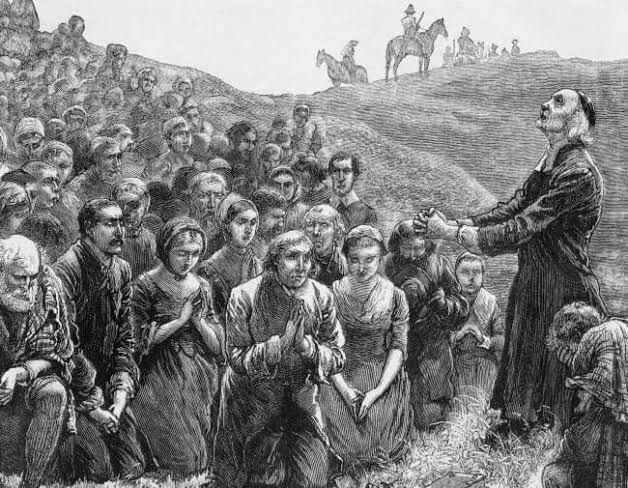
Westminster Confession of Faith 13:1: They, who are once effectually called and regenerated, having a new heart and a new spirit created in them, are further sanctified really and personally, through the virtue of Christ's death and resurrection,1 by His Word and Spirit dwelling in them;2 the dominion of the whole body of sin is destroyed,3 and the several lusts thereof are more and more weakened and mortified,4 and they more and more quickened and strengthened in all saving graces,5 to the practice of true holiness, without which no man shall see the Lord.6
1 1 Cor. 6:11; Acts 20:32; Phil. 3:10; Rom. 6:5,6.
2 John 17:17; Eph. 5:26; 2 Thess. 2:13.
3 Rom. 6:6,14.
4 Gal. 5:24; Rom. 8:13.
Follow the translation of Wendelin's Christian Theology:
www.fromreformationtoreformation.com/introductory-theology
Volume 1 of Wendelin's Christian Theology is now available in print!
https://www.lulu.com/shop/steven-dilday/wendelins-christian-theology-volume-1/hardcover/product-yv54k5p.html?q=wendelin&page=1&pageSize=4