Wendelin's "Christian Theology": Doctrine of the Lord's Supper, Part 4

[A fundraising update: We are 25% of the way to our fundraising goal 25 new $100/month subscribers! Thanks be to God. If you are being blessed by the translation work, please consider supporting the work and speeding it on its way. Click here to watch a brief video on the project.]
THESIS XV: Hitherto the sign in the Lord’s Supper. The thing signified follows, which corresponds to the substantial or ceremonial sign.

THESIS XVI: To the substantial sign, more specifically the bread, corresponds Christ’s body: to the wine corresponds Christ’s blood: but, which is really to say the same thing, by the bread is signified and represented Christ’s body; by the wine, Christ’s blood. Both, namely, Christ’s body and blood, are truly present in the supper, yet not corporally, but spiritually: because the mind of man by true faith apprehends that which is signified, exhibited, and sealed, and unites it to himself.
EXPLANATION: I. That the things signified by the bread and the wine in the Lord’s Supper are the body and blood of Christ, is evident from this: that the Lord says that the bread is His body, and the cup, or the wine in the cup, is His blood, concerning which there is no controversy between us and our opponents.
II. That the things signified by the bread and the wine, namely, the body and blood of Christ, are truly present in the legitimate use of the supper, is beyond controversy between us, the Lutherans, and the Papists; but the controversy concerns the mode of presence.
We say, that in the administration of the supper the body and blood of Christ are spiritually present to believers, that is, are apprehended and applied by the faith of the communicants, even if bodily or locally they are not in the supper or on earth, but only in heaven.
The Papists and the Lutherans say, that in the supper Christ’s body and blood are present corporally, that is, through contact corporal or ἀδιαστασίαν, without distance; and they exist in, with, and under the bread and wine, or with the accidental appearances of bread and wine.
III. That this opinion of the Lutherans and of the Papists is false, we have proven above, in the disputation against τὸ ῥητὸν, the literal use, for which the Lutherans and the Papists fight; yet in such a way that they mostly fight among themselves.
Let it now be briefly observed, that the bodily presence of Christ in, with, and under the bread, or appearance of bread, is inconsistent:
(1.) With the nature of sacraments in general: for sacraments are not vessels of grace or of the things signified, but only signs and seals.
(2.) With the first institution and administration of the supper. For, while Christ was taking the bread from the table, breaking, and distributing it, He sat together with His disciples at the table: but He was not in, with, and under the bread, neither with His hands did He break and hold Himself in, with, and under the bread.
(3.) With the instituted end of the supper: which Paul says to be, that we might remember Christ, and proclaim His death until He comes in judgment.[1] But if He is now present in His own body, the proclamation of His death shall cease.
(4.) With the scope and intention of Christ. For Christ willed His body to be eaten by believers principally insofar as it was delivered and crucified for us. Whence He says, this is my body, which is delivered for you. But those that now feign His bodily presence in the bread, and then add an oral manduction, exhibit His glorious and impassable body as to be eaten. Also, it was Christ’s scope to teach His disciples concerning the truth and fruit of His coming suffering. But how could they be convinced of the truth of His suffering, if so large a stumblingblock concerning the truth of His body had been cast in their way, namely, that the body of Christ was constituted in such a way that in, with, and under the bread it was invisible, impalpable, and without the figure and dimension of men, indeed, not even comprehended in any certain place? Who would believe that a body of this sort could truly suffer?
(5.) With the nature of a true and human body: which is visible, palpable, and circumscribed in a definite place: which sort that body is not, which is imaged to be under the host, in many places at one and the same time.
Our opponents take exception: There is no inconsistency, that His body is finite, circumscribed, and present in only one place at a time, and nevertheless present in multiple places at the same time: for the former is applicable in a natural way to Christ’s body; the latter in a supernatural way and in a mystical manner.
Response: What overthrows the nature of a true human and finite body, which sort is πολυτοπία, multi-presence, or ubiquity, is not able to be applicable to a true, finite, and human body, either naturally, or supernaturally or mystically. Thus it is able to be done in no manner or respect, that one might be a man, and remain a man, and yet not be furnished with reason. And so, if the true, finite, and natural body of Christ is mystically and supernaturally in many places at the same time, certainly mystically and supernaturally it shall not be the true, nor the finite, nor the natural body of Christ. Just as the infinite divine nature, if mystically and supernaturally by ἀδιαστασίαν, a lack of extension, is only in one place, it shall not be divine, nor infinite.
(6.) With the nature of the glorious body of Christ: which is no longer able to suffer or to die, and so not able to be bodily and orally eaten.
But those feign, that His glorious body, existing corporally in the bread, is eaten orally, and suffers whatever the bread suffers: as the express words of Luther have it. Or, if they do not feign this, which many acknowledge to be absurd, in this respect they are not the γνήσιοι/Gnesioi disciples of Luther;[2] neither are they able to defend oral manduction properly so called.
(7.) With His ascension into heaven, and session until the last day. For, if Christ ascended into heaven with respect to His body, and remains there until the last day; certainly He is not now bodily on earth and in the bread: or, if He is, then it is false that He ascended into heaven, and remains in that very place until the last day.
They take exception: Scripture does indeed say, that Christ ascended into heaven; but it does not deny that He is at the same time in other places in His body: indeed, it rather bears witness in the words of institution, that He is truly and really on earth in the sacred supper.
Response: By that very thing that Scripture says, that Christ is in heaven in His own body, it denies that He is at the same time on earth; because by its truth and finitude it is not able to be in heaven and on earth at the same time. The words of institution expressly testify to the same, by which words we are commanded to make use of the Lord’s Supper, until Christ in His body returns from heaven to earth.
They take exception: By the visible return of Christ the perpetual and corporal, invisible presence of His body on earth is not denied.
Response: The corporal and perpetual, invisible presence of the body of Christ on earth is a fiction, contrary to Scripture and the truth of a human body: concerning which matter see more in its proper place.
(8.) With the express testimonies of Scripture, which deny that Christ in His body is always on earth; of which sort are: I am come into the world; again, I leave the world, that is, the earth, John 16:28.[3] Me ye have not always with you, John 12:8. If He were yet on earth, He should not be a priest, Hebrews 8:4. See Exercitation 105. Of our men see Mornæus,[4] de Eucharistia, book 4, where he proves that the Fathers, up to the first Council of Nicea inclusively, did not recognize transubstantiation or Christ’s real presence in the signs.
IV. Hitherto the falsity of the opinion of the Lutherans and Papists has been demonstrated. We now prove the truth of our opinion concerning the spiritual presence of the body and blood of Christ in the Lord’s Supper.
(1.) Christ in His body and blood is present in the supper either corporally or spiritually. But not corporally, as we have shown: Therefore spiritually.
(2.) Of what sort is the union of members, that is, of believers, with Christ the head, of such a sort also is His presence in the supper.
But the union of believers with Christ is only spiritual.
Therefore, His presence is only spiritual.
The rationale of the major: that the presence of Christ in the supper is because of our union with Christ.
The minor is proven: Because the union is constituted by faith, whereby He is said to dwell in us, Ephesians 3:17, and by the Holy Spirit, which is the same in Christ and in believers.
That this spiritual presence of the body and blood of Christ is altogether true and real, we prove by these arguments:
(1.) That presence is true and real, which is from true and real causes.
But the spiritual presence of Christ’s body is from true and real causes, namely, from the sacramental symbol, the Spirit, and faith; which are the bonds or cause whereby we are united to Christ: the Spirit, the principal cause: the sacramental symbol (the same is the meaning of the word) and faith, instrumental causes.
Therefore, the spiritual presence of the body of Christ is true and real.
(2.) That presence is true and real, through which we are truly and really united to Christ even as man.
But through His spiritual presence we are truly and really united to Christ even as man. Therefore, His spiritual presence is true and real.
(3.) Through what the body of Christ was delivered unto death for us is truly and really before our spiritual sense, that is, true and real.
But through spiritual presence the body of Christ, delivered unto death for us, is truly and really before our spiritual sense, namely, true faith: Therefore, His spiritual presence is true and real.
(4.) Of what sort is the spiritual manduction, of that sort also is the spiritual presence of the flesh of Christ.
But the spiritual manduction is true and real.
Therefore, the spiritual presence of the flesh of Christ is also true and real.
(5.) If the Spiritual presence of the flesh of Christ is not true and real, certainly it is merely false and imaginary.
But the consequent is false: Therefore also the antecedent. See Exercitation 107.
V. Therefore, the Lutherans are deceived and deceiving, when they suppose, and attempt to persuade others, that absolutely no true and real presence of the body and blood of Christ in the Supper is acknowledged by us, because we do not acknowledge the corporal presence that they themselves acknowledge. Also in vain do they prove against us, that the body of Christ is truly present and eaten in the Supper: for this we believe no less than they, neither do we need to have it proven to us. See Exercitations 103, 104.
But let us consider one or two of their arguments:
(1.) Those that say that the true body and blood of Christ are as distant from the bread and wine of the Lord’s Supper as heaven is distant from earth, acknowledge no true and real presence of the body of Christ in the supper. But the Calvinists (whom they so call) say, that the true body and blood of Christ is as distant from the bread and wine of the Lord’s Supper as heaven is distant from earth.
Therefore.
Response: The major is false: or, it is only true of a local and corporal presence of His body, properly so called. A spiritual presence is not hindered by the spatial difference of the signs and things signified. But if they absolutely insist on corporal presence also; this we admit, but only with respect to the symbols, which presence we call sacramental, because from the sacramental symbols directly are affirmed the very things signified. Whence we admit this reasoning: The bread is present corporally in the Lord’s Supper. The bread is the body of Christ: Therefore, the body of Christ is present corporally in the Lord’s Supper.
(2.) What is present only to faith, is not really present, but is present only by contemplation and imagination.
But according to us, in the supper the body of Christ, properly so called, is only present to faith.
Therefore, according to us, in the supper the body of Christ is present, not really, but only by contemplation and imagination.
Thus Graver argues, who calls presence, which is by faith, imaginary.
Response: The major is false: it appears that to those men there is no act of faith, except contemplation and imagination. But Scripture speaks of faith far more glowingly. Faith is ἐλπιζομένων ὑπόστασις, πραγμάτων ἔλεγχος οὐ βλεπομένων, the substance of things hope for, the evidence of things not seen, Hebrews 11:1. By faith Christ dwells in our hearts, Ephesians 3:17. Faith overcomes the world, 1 John 5:4: see Exercitations 104, 107.
(3.) If according to us the body of Christ were truly present in the supper: certainly according to us it would be in many places at the same time.
But the consequent is false: Therefore also the antecedent.
Response: The hypothetical is denied. Spiritual presence, which we have shown to be real in the supper, does not imply the πολυτοπίαν/multi-presence of the body of Christ properly so called: corporal presence alone, which happens through the lack of spatial distance, implies that absurdity. The object is at one and the same time present to the senses of many, which nevertheless is not in many places at the same time with respect to substance: Let the Sun serve as an example, which is present above the horizon to the eyes of many mortals, separated by a great interval of space, without the πολυτοπίᾳ/multi-presence or παντοτοπίᾳ/omni-presence of its body.
(4.) If, according to our opinion, the body of Christ properly so called is of itself truly present in the supper, it is present either visibly or invisibly.
But it is present in the supper neither visibly nor invisibly.
Therefore, clearly it is not in the supper.
The minor is proven: That it is not present visibly is conceded by both parties: That neither is it present invisibly according to us, they prove from this: that we deny that the body of Christ is able to be present invisibly anywhere.
Response: We deny the latter part of the minor, and say, that the bod of Christ properly so called is truly present invisibly in the supper, to the extent that it is apprehended most truly and really by faith, helped and confirmed by the sacramental symbol, even if it is separated from the location of the Lord’s Supper by the breadth of the entire heaven: elsewhere when we say, the body of Christ is not present anywhere invisibly, we maintain this only, that the body of Christ immediately by corporal presence is in no place without being visible.
Note: The body of Christ is visibly present in the place of the supper with respect to the sacramental symbols, signifying, sealing, and exhibiting in their own peculiar manner, which are Christ’s body improperly.
We hold that the same considered in itself is invisibly present in the supper, not in the place of the supper, but to the faith of those partaking, which we call the spiritual presence; and that it is summed up in three degrees, as it were, in its saving use: (1.) by exhibition before the spiritual sense of faith; (2.) by apprehension through faith; (3.) by union with the faithful. To each of which the sacramental symbols elevate faith. Concerning this theme many things might be seen in our Exercitationibus, especially Exercitation 104. At the same time, let us also on this point hear Graverus roaring against us in his Absurdis, pages 155, 156.
(5.) According to the Calvinists, it is absurd to expect the coming of a thing present. Therefore, the body of Christ, according to the same, is not present in the supper.
The rationale of the consequence: Because His coming is expected.
This is the sense of the antecedent: it is absurd to expect the corporal coming of a thing corporally present. However, it is not absurd to expect the corporal coming of a thing spiritually present but corporally absent. Whence it is evident that the consequence is able to be granted by us in one and another sense: and the antecedent is able to be denied, with the consequence granted, and the antecedent is able to be granted, with the consequence denied.
(6.) But if we are not in a place where the flesh of Christ now is: it follows, that the flesh of Christ is not present to us in the supper. But the former is true, according to the Calvinists, and Therefore also the latter.
Response: The hypothetical is denied. Because distance of place does not remove all presence; or, with corporal presence denied, not all presence is denied.
(7.) If the presence of the flesh of Christ is truly distant from us, certainly it will not be truly present in the supper.
But the former is true, according to the Calvinists.
Therefore, etc. The rationale of the hypothetical is: because they stand in contradiction, to be truly absent and at the same time truly present.
Response: The hypothetical is denied: the proof is false, because of the different kinds of presence and absence.
(8.) If the flesh is not otherwise present to us in the supper, than it was present to the Fathers under the Old Testament: it follows that it is present in no manner.
But the former is true, according to the Calvinists. Therefore, etc.
The hypothetical is proven: Because the flesh of Christ under the Old Testament did not yet actually exist.
Response: If the not otherwise be not extended very broadly, we deny the hypothetical: the proof is inconsequent, because because faith apprehends even future things set forth in the word and sacraments, and the presence is at hand in a certain manner, John 8:56; Hebrews 11:1.
Graverus insists: A non-Entity has no real accidental properties. The flesh of Christ under the Old Testament was a non-Entity.
Therefore, it had no real accidental property: and, consequently, it was not present to the Fathers under the Old Testament, nor eaten by them.
The minor is proven: Because under the Old Testament it did not yet exist.
Response: 1. If a non-Entity be understood, which does not actually exist yet outside of its causes; but yet is going to exist at some point, even in such a way that its future existence is revealed, promised, represented in signs and visible things, and exhibited and sealed to the mind through the senses: I deny the major. For, I the effects of a non-Entity of this sort are real, why not also the accidental properties? This is manifest by the example of Christ’s flesh. From the foundation of the world it was efficacious in the reconciliation of all believers with God; the faith of all the elect of the Old Testament was occupied concerning it: which they apprehended, applied to themselves, and beheld with the eyes of faith, namely, whoever were made partakers of eternal life from the beginning of the world. And would you deny that these adjuncts of the flesh of Christ were real? Seeing that this lamb is also said to have been slain from the foundation of the world, Revelation 13:8. Faith causes what things are hoped for to exist, and shows things not seen, Hebrews 11:1.[5]
2. That His flesh was not eaten by believers under the Old Testament, is an ἀθεόλογος/atheological assertion: For thus believers under the Old Testament are damned: because life comes to no one, except by the eting of the flesh of Christ, John 6:53; Acts 4:12. At the same time, the flesh of Christ is not quite reverently called a non-Entity.
Again, he insists: The Fathers of the Old Testament had only the shadow of the flesh of Christ.
Therefore, the flesh itself was not present to them.
The antecedent is proven, Hebrews 10:1.
The antecedent is false: for, even if the legal ceremonies were merely shadows of things to come, the believing Fathers nevertheless had not mere shadows, but the very things represented and exhibited by those shadows and signs they apprehended by faith and united with themselves. Who, I ask, would be so profane that he would say, that the ancients apprehended a mere shadow of the flesh of Christ, but not the flesh itself? had life from the shadow, but not from the θεανθρώπῳ/Theanthropos/God-man Messiah Himself?
VI. On behalf of the corporal presence of the body and blood of Christ in, with, and under the bread do our adversaries, the Lutherans, fight with these arguments:
(1.) Christ said of the bread: This is my body.
Therefore, the body of Christ exists in the bread.
The rationale of the consequence: because the mouth of truth itself is not able to lie.
Response: I deny the consequence. Its rationale proves nothing. For, the mouth of the truth said, that the bread is His body, but did not say that His body is in, with, and under the bread. Now, in what sense He said, the bread is His body, we have already previously explained, namely, in the same sense in which He said, This cup is the New Testament: which nevertheless was not corporally in the cup: much less was it properly the cup. Christ made the Testament; an artisan, the cup.
(2.) Christ is able to cause it to be, that His body is corporally in the bread.
Therefore, He causes it to be, that His body is corporally in the bread.
The antecedent is proven: because He is omnipotent.
Response: I deny the consequence. For, from Christ’s power alone to this or that effect, or from ability to being, no consequence is able to be drawn.
Also, the antecedent is not true in any simple way. For, to cause a body, truly human, finite, of just and manly proportions, visible, palpable, which has been carried into heaven, and will remain there until the last day, to be whole and entire everywhere in the tiny bit of Eucharistic bread, in such a way indeed that it is not able to be seen nor felt, involves not one, but many contradictions, and is foreign to the power and will of Christ: Therefore, it is not an object of divine omnipotence. The Son of God, Jesus Christ, before us was not yea and nay, but yea: 2 Corinthians 1:19.
(3.) Christ will to cause it to be, that His body is in the bread.
Therefore, He causes this.
The antecedent is proven: because He said, This is my body.
Response: I deny the antecedent: there is no proof. For, Christ did not say, In this is my body.
(4.) The body of Christ is everywhere.
Therefore, it is also in the bread of the Lord’s Supper.
Response: The antecedent is false: as we have proven above in the doctrine concerning the person of Christ.
(5.) If the body of Christ were not under the bread, and the blood under the wine, certain Christ had instituted bare and empty signs in the supper.
But the consequent is false: Therefore also the antecedent.
Response: If our adversaries consider those signs bare and empty, which do not corporally contain in themselves the things signified, and do not corporally exhibit them to each and all communicants, we readily concede, that the bread and wine in the Lord’s Supper are bare and empty signs. For, in this respect testamentary tables are also bare and empty signs: because the goods bequeathed are not corporally contained in them. In the same sense also the word of God, and the sacraments of the Old Testament, are bare and empty signs, since neither in the word of the Gospel is Christ with His benefits corporally and οὐσιωδῶς/substantially contained, nor does the Messiah exist in the sacraments of the Old Testament, nor in the sacrifices.
But if it is insulting to the word of God, and also the sacrifices and sacraments of the Old Testament, to call them bare and empty signs, because they do not or did not have in themselves corporally the things signified: certainly the signs instituted by Christ in the holy supper ought not to be traduced, as bare and empty, even if they do not corporally contain in themselves the things signified.
Therefore, as the word of God, which we call the Gospel in a special manner, even if it does not οὐσιωδῶς/substantially and corporally contain in itself Christ and the salvation acquired by God, nevertheless it does exhibit those things to the believing soul, and is a most efficacious means for advancing our salvation, if only it be received by a true faith. Whence by Paul, Romans 1:16, it is called the power of God unto salvation to every one that believeth: So also the sacramental symbols, instituted by Christ in the sacred supper, even if they do not corporally contain in themselves the body and blood of Christ, nevertheless exhibit them to the believing soul, and are most efficacious means for advancing our salvation, to the extent that they are received with true faith. Seeing that all believers, who, according to the institution of Christ, receive these external symbols, and enjoy them, are also partakers of the things signified, that is, the body and blood of Christ, unto salvation.
(6.) If in the cup is wine alone, it could not be proclaimed of it, that it is the New Testament in the blood of Christ.
But the consequent is false. Therefore also the antecedent.
Response: The consequent of the hypothetical is denied: For, that expression is sacramental, whereby, because of the sacramental union, to the signs are attributed the names of the things signified.
(7.) If the body of Christ be not united to the bread, except by a relative union, as it is explained by us; it would follow, that the bread is a sacrament in the same manner as the Passover formerly.
But the consequent is false. Therefore also the antecedent.
The rationale of the hypothetical: because the body of Christ was also united to the Passover lamb in the same manner.
The minor is proven: Because thus it would not be a sacrament of the New Testament.
Response: We deny the minor: the proof is inconsequent. For, the rationale of the Eucharistic bread and of the paschal lamb is able to be the same, with respect to sacramental union: yet the Eucharist is a sacrament of the New Testament, and the paschal lamb a sacrament of the Old.
Let what things we said above concerning the agreement and differences of the sacraments of both Testaments be considered.
(8.) If the bread and the wine are the sacrament only in this respect, that they are signs and seals of the body of Christ; it would follow, that the paschal lamb was a sacrament of the body and blood of Christ in a more evident respect.
But the consequent is false. Therefore also the antecedent.
The rationale of the hypothetical: that the analogy and similitude between the paschal lamb, consisting of flesh and blood, and Christ’s flesh and blood, was greater than between bread and wine, and Christ’s flesh and blood.
Response: The consequent of the hypothetical is denied. The rationale that is alleged is not true in any simple way. For even if, with respect to external appearance, a greater similitude appears between the flesh and blood of the paschal lamb and the flesh and blood of Christ, than between wine and bread and the flesh and blood of Christ; nevertheless, with respect to efficacy and the power to nourish, which is principally attended to in the Eucharistic symbols, there is a far greater analogy of the bread and wine with the things signified, than of the flesh and blood of a lamb with the same. For, the flesh and blood of a lamb are not such efficacious aliments of our earthly bodies, as bred and wine are: which are preferred above all others in Scripture, Psalm 104:15. Whence in the Lord’s Prayer it is specified κατ᾽ ἐξοχὴν, pre-eminently, and all aliments of the body are understood. In the next place, that great evidence in the Lord’s Supper does not only consist in the sacramental symbols, but even especially in the words containing the promise, This is my body. Such evident words in the institution of the Passover are not found: even if the Paschal Lamb was no less a Sacrament of the body and blood of Christ, than the bread and wine is.
(9.) Through the sacramental blood Christ comes to us, and bears witness to us on earth.
Therefore, the blood of Christ is present to us on earth.
The antecedent is proven, 1 John 5:6, 8.
Response: If the consequence speaks of the corporal existence of the blood of Christ on this earth: and in the antecedent, it is said to bear witness on this earth, because it presently exists corporally on this earth ἀδιαστάτως, without extension: We deny the antecedent, which is not at all proven out of the passage alleged from John; that passage admits various interpretations. We approve the sentence of our doctors, who by blood understand the expiation of our sin, and the remission of sins, which comes to us through and because of the shed blood of Christ: as in the same passage water denotes our sanctification: these are the witnesses on earth, which bear testimony to Christ in our hearts: by these witnesses Christ comes to us. Moreover, this, with no detriment to the truth, we are able to concede to our opponents, that Christ by His blood, which is exhibited in the Eucharist for us to drink, comes to us, and bears witness on earth to us. He comes, I say, by His blood to us, when His blood is spiritually imbibed, and we are united to Christ in the closest possible bound. He also bears witness on earth to us, though His sacramental symbol, which, existing on earth, signifies Christ’s blood shed for us and exhibits it for drinking.
(10.) Paul calls the bread the κοινωνίαν/communion of the body of Christ, 1 Corinthians 10:16.
Therefore, the body of Christ is in, with, and under the bread, and is given corporally to communicants, and is thus received by them.
Response: I deny the consequence. For, the bread is called the κοινωνία/ communion of the body of Christ, because it is a sign and seal of spiritual κοινωνίας/communion: and because those that receive the bread in faith are made spiritual partakers of the body of Christ.
Eckhard insists on this passage, and attempts to prove, that spiritual κοινωνίαν/communion is not understood by Paul, but corporal, which they derive from oral manduction, and call sacramental.
(1.) The sacramental κοινωνία/communion, of which Paul speaks, is completed in two distinct acts: for in one act one receives the body, in the other the blood.
But the κοινωνία/communion of faith is not distinguished by acts, but in one act one receives the whole Christ.
Therefore, the κοινωνία/communion of faith or spiritual is not the sacramental κοινωνία/communion, of which Paul speaks.
Response: The minor is not true in any simple way. For, even if the κοινωνία/communion of faith outside of the use of the sacrament is summed upon in only one act, yet in the sacrament of the Eucharist, because of the diversity of the symbols, it is completed in two acts: for, what is represented and exhibited in distinct symbols, that faith also distinctly apprehends: even though, where there is no distinction of symbols, those things that are distinct it apprehends together.
(2.) The κοινωνία/communion of faith is between a man and Christ.
The Pauline κοινωνία/communion is not between a man and Christ, but between the symbols and Christ.
Therefore, the Pauline κοινωνία/communion is not the κοινωνία/ communion of faith.
Response: The minor is false: the naked assertion or denial of our opponents is not sufficient for us. It is really quite easy for us to prove the contrary: the κοινωνία/communion of the body of Christ preached by Paul is that whereby all believers are made one mystical body under Christ their head; which certain is not between the bread and the body, but between the believing man and Christ, although that κοινωνία/communion is also advanced by the sacraments.
(3.) The κοινωνία/communion, of which Paul speaks, is common to believers and unbelievers. But the κοινωνία/communion of faith is not common to believers and unbelievers. Therefore.
Response: The major is false and absurd. See Exercitation 106.

THESIS XVII: To the ceremonial sign, that is, the fourfold external and visible actions corresponds the fourfold thing signified: (1.) To the Blessing or consecration, the veneration of the holiness of the spiritual food, namely, of the body and blood of Christ sanctified for us. (2.) To the Breaking of the bread and pouring out of the wine, the suffering and wounding of the body of Christ, and the effusion of His blood for us. (3.) To the Exhibition or distribution of the blessed bread and wine among the communicants performed by the minister, the exhibition of the body and blood of Christ performed by Christ, by whose institution, through external symbols, Christ Himself is offered as crucified, to be apprehended by faith. (4.) To the eating of the bread and drinking of the wine, the spiritual eating or participation of the body and drinking of the blood of Christ.
EXPLANATION: I. In the Lord’s Supper, I spiritually eat the body of Christ, and spiritually drink His blood, when I believe:
(1.) That Christ suffered in His body for me, and shed His own blood for me, as certainly as I see in the supper the holy bread broken and distributed for me, and the poured out wine presented to me.
(2.) That, because of Christ’s suffering and shed blood, my sins are forgiven, and I am made a partaker of eternal life, as certainly as I see and sense that I am a partaker of the bread and wine, whereby animal life is wont to be preserved.
(3.) That by faith and the Holy Spirit I am united to Christ, and am a spiritual member of His mystical body, as certainly as I see and know, that the bread and wine are untied to my body, and are changed into my substance.
We receive, therefore, Christ with all His benefits, which in the legitimate use of the Holy Supper are made ours through imputation, or propagation.
By imputation, His passive obedience is made ours, which faith, aided by the sacramental symbols of the Lord’s Supper, and their sacramental handling, apprehends and applies to the self: when God imputes the same to us, and reckons it in the place of a satisfactions rendered by us.
By propagation, His active obedience passes to us, that is, inhering righteousness and holiness. Whence, as from an inexhaustible fountain, through and because of His passive obedience, streams of inhering holiness and righteousness are drawn off to us. Christ is also compared to the sun, and is called the sun of righteousness,[6] by an elegant metaphor: because whoever has he sun, has the fountain of heat and light, and is suffused with both in a moment, as it were. So whoever has Christ, is never destitute of spiritual light and heat. Thence flow the two greatest benefits, justification and sanctification.
II. Of a spiritual manduction of His body and blood does Christ treat in John 6, in which passage, even if He is not treating of the sacramental symbols, yet He treats of the thing signified and sealed by the sacramental symbols.
Over this do the Lutherans labor with exceeding anxiety, so that they might demonstrate, that in John 6 sacramental manduction is not treated: but they vainly play with terms. For, they understand sacramental manduction, whereby Christ’s body and blood are received corporally and orally in, with, and under the sacramental symbols, and the body is eaten and the blood drunk: of which not only is there no treatment in John 6, but nowhere in all of Scripture; only in the writings of the Lutherans and Papists.
We also willingly acknowledge, that in this chapter there is no treatment of sacramental manduction, which in the subsequent explanation is described by us. At the same time, we contend, that there is a treatment of manduction, which in the legitimate use of the Eucharist is conjoined with the external and oral eating and drinking of the sacred symbols, which we call spiritual; and we teach to be signified, advanced, and sealed through the use of the symbols. Our opponents hitherto have not been able to evince the contrary by any argument.
Should we grant this to our adversaries, that sacramental manduction is a certain whole, consisting of two parts, as it were, the manduction of the bread, and the manduction of the body, or flesh, of Christ: To those asking, Whether in John 6 there is a treatment of sacramental manduction? we respond, that it is not treated of the whole, but only of the second part of the whole, of the manduction of the flesh properly so called: the symbol and sacrament of which was instituted some time afterwards.
III. We are said sacramentally to eat the body of Christ, and to drink His blood, when in the administration of the Lord’s Supper we perceive the sacramental signs of the body and blood of Christ, namely, the bread and the wine, according to the institution of Christ. This manduction, to the extent that it is performed by those worthy and believing, is always conjoined with spiritual manduction, for the sake of which that external sign was instituted. See Exercitation 109.
IV. The Papists and Lutherans, not content with this spiritual and sacramental manduction of the body of Christ, obtrude upon the Church an oral manduction of the same also; that the true and natural body of Christ, existing corporally in, with, and under the bread, or appearances of bread, is received and eaten by the mouth, no less than the bread. The teach the same concerning the drinking of the blood. Monstrous and infelicitous is this doctrine of oral manduction: which is the sole and only cause of the separation of Protestants, as a certain Theologian correctly observes in writing. To support this, the monstrous doctrine of ubiquity has been summoned, for the sake of which a depraved doctrine concerning the person of Christ, even the Eutychian communicatio idiomatum[7] has been brought in. This is an assault upon the Evangelical foundation! Should God avert this, it would restore the Church’s peace and concord. In the meantime, we fight against this false doctrine of the Lutherans and Papists with the following arguments:
(1.) Christ in His body is not now in, with, and under the bread of the Lord’s Supper.
Therefore, He is not eaten corporally and orally in, with, and under it.
The antecedent we proved above.
(2.) Oral manduction of the body of Christ was not instituted by Christ.
Therefore, it is not to be commended to, or obtruded upon, the Church.
The antecedent is proven:
1. Because it is impious and monstrous: of which sort ἀνθρωποφαγία/ cannibalism has always been held. Whence Augustine, book 3 of On Christian Doctrine, chapter 16, says: The expression of Christ, Except ye eat the flesh of the Son of man, and drink His blood, etc., since it appears to command a thing criminal and disgraceful, is figurative, whereby it is taught, that there must be a sharing in the suffering of the Lord, and that there is to be a sweet and advantageous hiding away in memory, that His flesh was crucified and wounded for us.
2. Because it is impossible. For, not even the lacerated flesh of Christ is able to be sufficient or all, much less is the whole able to be received and to be eaten orally by all communicants at the same time: His finitude does not allow this, which He will never put off, nor is able to put off, forever. Whence Christ shatters the dream of oral manduction for the Capernaites by an argument taken from His ascension into heaven, John 6:62.
3. Because it is useless. For the flesh of Christ (namely, when eaten orally and Capernaitically) profits nothing, John 6:63. But at this point our adversaries grumble, and say that it is more than Turkish blasphemy to say that the Flesh of Christ profits nothing. And so with multiple arguments they prove that the flesh of Christ profits much: because it is ἀντίλυτρον, a ransom, for our sins;[8] because it is given for us for the remission of sins;[9] because it is given for the life of the world;[10] because it was not assumed by the λόγῳ/Logos/Word to no purpose, etc. That all these things are altogether true, we ourselves willingly confess and believe with our hearts: but we say that they are not at all relevant to the present matter. For the question is not, Whether the flesh of Christ profits? but, whether the oral manduction of it, even to the extent that it is orally and Capernaitically eaten, profit? As we affirm the former in every way: so we deny the latter in every way, and wish it to be proven by our opponents.
But the Lutherans contend, that oral manduction is full of usefulness and consolation: because they commend it by a fivefold consolation. First, there is the consolation of our union with Christ. Second, there is the consolation of Christ’s apprehension of God and man. Third, there is the consolation of sanctification. Fourth, there is the consolation of offering and application. Fifth, there is the consolation of the resurrection.
Response: That there is not even the shadow of these consolations in oral manduction, we have shown in Exercitation 111, § 11-15. Indeed, there are in it just so many impediments of solid consolation; it crushes the true consolation of union, apprehension, sanctification, application, and resurrection. At the same time, by the same means many consolations were able to be counterfeited: namely, the consolation of the crucifixion and sacrifice: which the Savior suffers in the oral manduction properly so called. The consolation of burial, within the entrails of those communicating, pious and impious, etc. Hitherto our second argument.
(3.) Against the Papists this reason strongly militates: The Manduction of the body of Christ, instituted in John 6, is necessary for salvation.
But oral manduction is not necessary for salvation.
Therefore, oral manduction of the flesh of Christ is not instituted in John 6, as the Papists maintain, from whom in this particular the Lutherans dissent.
The major is evident from verse 53, except ye eat the flesh of the Son of man, ye have no life in you.
The minor is proven by the Fathers and believers under the Old Testament, and also of infants under both Testaments.
(4.) If the body of Christ be properly, orally, and corporally eaten, then certainly it would be ground with the teeth and cast into the stomach: For thus solid food is properly said to be eaten orally.
But the consequent is false: Therefore also the antecedent.
The minor is proven: because this grinding and casting into the stomach is far crueler than the crucifixion was.
On this issue, there are honest Papists, who acknowledge the consequent of our hypothetical as necessary. For, although they judge the chewing and grinding, which is performed by the teeth, to be excessively cruel; yet from the remaining things which go along with oral manduction they do not remove the body of Christ eaten orally. And so they confess that it is swallowed, transmitted into the stomach, even into the stomach of a mouse, indeed, even into an unclean place, which opinion of certain Catholics, recited by Bonaventura,[11] Cardinal de Torquemada[12] judges to be true.
The Lutherans do indeed abhor this impiety, and with good reason: but they shall never be able to obtain oral and corporal manduction properly so called of the body of Christ, true and properly so called, unless they also admit chewing, swallowing, and casting into the stomach: for without these there is no oral manduction of solid food, true and properly so called, neither shall there be.
(5.) If in the first institution the body of Christ were corporally in, with, and under the bread, and were eaten orally and properly with the bread: certainly Christ Himself would have orally eaten His own body, when He ate the bread.
But the consequent is false and absurd: Therefore also the antecedent.
(6.) The oral manduction of the body of Christ is Capernaitic.
Therefore, it has no place in the Lord’s Supper.
The antecedent is proven: because the Capernaites, when they heard that the body of Christ was to be eaten, understood that of corporal and oral manduction: as it is evident from John 6:52.
The rationale of the consequence: because Christ Himself rejects and condemns this Capernaitic opinion: John 6:63.
Our adversaries do indeed deny, that their oral manduction is Capernaitic, but in vain; there is no other Capernaitic manduction, except the oral: the Capernaites understood this; our adversaries defend this: although they want to appear to treat the flesh of Christ more humanely, the Capernaites were perhaps thinking that it was to be treated: although not even here does Luther dissent: certainly no one that asserts and defends oral manduction properly so called is able to dissent. Yet the moderns attempt to prove that their manduction is not Capernaitic.
1. In Capernaitic manduction the body of Christ suffers.
In the Lutheran, it acts, but does not suffer.
Response: It is plainly contradictory to say, that the body, properly so called, is properly eaten orally, and does not suffer: while what Luther understood, he frankly confessed: In the administration of the Lord’s Supper, the body of Christ suffers whatever the bread suffers: Tome 2, Eisleben, folio 333a.
2. In the Capernaitic, the flesh of Christ is corrupted.
The Lutheran preserves it from corruption.
Response: 1. If to be ground by the teeth, swallowed, and cast into the stomach is to be corrupted, this is granted concerning the Capernaitic. But if in the Lutheran it is not, it will not be Capernaitic, but neither will it be oral manduction properly so called: or if it is oral, it will not be without grinding, swallowing, and casting into the stomach. Whence again Luther confesses and writes: the body of Christ is ground by the teeth: Tome 2, Wittenberg, folio 184.
2. It is false, that Lutheran oral manduction alone of itself preserves from corruption: seeing that it is supposed to be common with the impious, who are not preserved from corruption by it. Indeed, it in no way preserves: because it was not prescribed by Christ: because it is inconsistent with the truth of the human nature of Christ: because it is disgraceful to the same seated in glory.
3. The Capernaitic is without symbols.
The Lutheran is with symbols.
Response: As the Lutheran conjunction of symbols does not hinder it from being oral and properly so called: neither does it prevent it from being Capernaitic, which is nothing other than oral, whether symbols be present or absent. Neither would the Capernaites have been more approved of Christ, if they had supposed that the flesh of Christ was to be eaten in this manner with the bread. Hitherto the sixth argument against oral manduction.
(7.) If in the first institution the disciples had corporally and orally eaten the body of Christ, and had drunk His blood in the same manner, Christ would have died twice in the state of His humiliation; once in the administration of the supper, and again in the crucifixion.
But the consequent is altogether false. Therefore also the antecedent.
The rationale of the hypothetical: because it is not able naturally to happen, without the body ceasing to be alive, from which the blood is separated: and which is ground by the teeth, and cast into the stomach: all which happened to the body of Christ in the first administration of the supper, it it was eaten separately, properly, and orally, and the blood drunk in the same manner.
(8.) The union of our bodies with Christ is not corporal, but spiritual.
Therefore, neither is the manduction of the body of Christ corporal and oral.
The rationale of the consequence: because the union originates from the eating.
(9.) The body of Christ now glorified suffers no more.
Therefore, neither is it now eaten properly, corporally, and orally, nor is its blood shed and drunk.
The rationale of the consequence: Because a body truly human is not able to be properly, corporally, and orally eaten (in whatever manner it might be said to be eaten properly, corporally, and orally) without manifest suffering. But what is not capable of suffering, that is not able to be eaten properly, corporally, and orally.
(10.) If the glorious body of Christ, together with His blood, were corporally in, with, and under the sacramental symbols, and in, with, and under them were eaten properly, orally, and corporally by all communicants without distinction: it would follow, that it is often swallowed by the impious and victims of the underworld, and is buried within their entrails, and that the temple of Christ and Belial is one and the same.[13]
But the consequent is monstrous and dreadful even to consider.
Therefore also the antecedent.
(11.) If Christ had instituted the supper for the sake of oral manduction, He would have instituted it in vain.
But the consequent is false. Therefore also the antecedent.
The rationale of the hypothetical: Because oral manduction necessarily presupposes the corporal presence and ubiquity of the body of Christ, which the Lutherans deduce from the hypostatic union. Whence they argue in this way:
What is so frequently, indeed daily, eaten orally under all bread and food, and is not able not to be eaten, that was not necessary to command to eat corporally under the bread alone only a few times in a year.
But, according to the hypothesis of the Lutherans, the body of Christ is frequently, indeed daily, eaten orally under all bread and food.
Therefore.
The minor is proven: Because it is everywhere. Therefore it is corporally under and in all bread and food, and hence it is not able not to enter the mouth with all food; for, if it be separated from any food, it would not be everywhere. Indeed, also in this manner one may argue:
What is in the mouth before the reception of the Eucharistic bread, and is not able not to be and to remain, that is not necessary to transfer into the mouth through bread; indeed, it is not able to be transferred.
But, according to the hypothesis of ubiquity, the body of Christ is in the mouth before the reception of the Eucharistic bread, and is not able not to be and to remain. Therefore.
Mylius[14] acknowledges and commends the strength of our eleventh argument, in a sermon at Jena on the Lord’s Supper, 1592. If without the supper, says he, we are able to be partakers of the body and blood of Christ, the Lord’s Supper is not necessary.
In our century, oral manduction is suspect to many Lutherans, who are unwilling to appear that they carry Christ’s body about in their mouth: whence some have recourse to this subtlety, that it might completely vanish. Today, to eat orally the body of Christ is to many nothing other than to receive within the mouth, yet in such a way that it does not at all touch the mouth, is not crushed by the teeth, is not transmitted into the stomach: that is, is not eaten orally. Worthy indeed is this contradictory figment, because of which the Church of Christ has now been suffering for a hundred years. There is no distinction here between to eat and to drink. How many Lutherans now believe, that they contain the body of Christ, with its head, hands, and feet, without the enclosure of their teeth? When they are interrogated over this matter by us, either they remain silent in astonishment, or they expressly contradict. See Exercitation 111.
V. Our arguments for the spiritual manduction of the body of Christ, as opposed to oral and bodily manduction, are as follows:
(1.) The body of Christ is not eaten orally and corporally.
Therefore, besides sacramental manduction, explained above, there is only spiritual manduction.
We have already previously proven the antecedent.
(2.) Our union with Christ is not corporal, but only spiritual.
Therefore, the manduction of His body is only spiritual.
The rationale of the consequence: Because from the manduction is the union.
(3.) Of what sort is the hunger, whereby we desire food; of what sort is the food, which we desire; of what sort is the life, upon which we feed; and of what sort is the abiding of the food in us: such also is its manduction.
But the hunger, whereby we desire the food of the body of Christ, is spiritual; the food, which we desire, is heavenly; the life, upon which we feed, is spiritual; the abiding of the food in us and its nourishment is spiritual.
Therefore, the manduction of the body of Christ is also only spiritual, not corporal.
(4.) In the first administration of the supper the disciples of Christ at the body of Christ only spiritually: that is, they did not eat it corporally and orally.
Therefore, it is also eaten now only spiritually.
The antecedent is proven: For, if they had corporally and orally eaten the body of Christ, as they ate the bread, and had drunk His blood, they first would have had to slaughter the Lord as He was slaughtered by the Jews, and would have had to treat Him far more cruelly than the Jews.
(5.) Of what sort is the proper union of all the members of Christ with each other, of that sort also is the manduction of the body of Christ properly so called, through which we coalesce into that one body, and not some other union opposed to it.
But the proper union of all the members of Christ with each other is spiritual, not corporal.
Therefore, the manduction of the body of Christ properly so called, through which they coalesce into that one body, is spiritual, not corporal.
The minor is proven: The communion and union of the Saints, which in the Apostolic Symbol we profess to believe to belong to the Saints, with respect to all and each believer, who ever were, are, or are going to be, in all times and places. Therefore, it is able only to be spiritual: and what other union is able to be among them, who are so far removed for each other in time and space?
(6.) Orthodox antiquity of old only acknowledged a spiritual manduction of the body of Christ in the supper: and it condemned oral manduction. Hence Tertullian in de resurrection carnis: By hearing is it to be devoured: by understanding is it to be ruminated: and by faith is it to be digested. Basil[15] on Psalm 33: The inner man has a certain spiritual mouth, whereby it is fed, receiving the word of life, which is the bread that came down from heaven, namely, the flesh of Christ.[16] Macarius:[17] Those that eat of the visible bread spiritually eat the flesh of the Lord.[18] Cyprian: As often as we do this, we do not sharpen our teeth for biting, with sincere faith we break and share the holy bread.[19] Augustine: Why art thou preparing thy teeth and belly? Believe, and thou hast eaten: to believe upon Him is to eat the living bread.[20]
* Athanasius: Upon the words of Christ, It is the Spirit that quickeneth; the flesh profiteth nothing. Here, says he, He spoke of both His flesh and spirit, and distinguished the spirit from the flesh: so that not only in that which was appearing to the eye, but also believing in invisible nature, we might learn that those things that He was saying were not carnal but spiritual. For, to how many men would His body have been sufficient for food, so that it might become nourishment for the whole world? But for this reason He made mention of His ascension into heaven, so that he might draw them away from a corporal understanding (oral manduction).[21] Chrysostom says, that those that, being worthy, want to approach to this body of the Lord, have to be like eagles, and to fly to the very heavens, to taste nothing earthly, but perpetually to soar on high, and to behold the very Sun of righteousness, and to have keen eyes of the mind.[22] Ambrose: By faith Christ is touched: by faith Christ is seen, but He is not touched with the body.[23] Jerome: When thou approachest the venerable altar to be nourished with heavenly food, touch with thy mind the sacred body and blood of thy God; receive with the hand of thine heart; take it in with the greatest inner draught.[24] Bernard:[25] It is as if He could not be touched, since He has already ascended: but He certainly can be: but with the affections, not the hand: with prayer, not the eye; by faith, not the senses. Thou wilt touch Him with the hand of faith and the finger of desire, with the embrace of devotion; thou wilt touch Him with the eye of the mind.[26]
Neither did those words of Luther mean anything else to him: One does not put it into his Mouth, one does not put it in his bosom, etc. See Exercitation 113, § 26.
To some Lutherans the object of Spiritual manduction is not the οὐσία/ substance of the body or flesh of Christ, but only its ἐνέργεια/activity: contrary to the express doctrine of Christ, John 6: see Exercitation 107, § 19, 112.
VI. The arguments of the Lutherans and Papists in favor of the corporal and oral, rather than spiritual, manduction of the body of Christ are as follows:
(1.) The words, eat, drink, are to be understood properly, inasmuch as these actions are performed with a bodily organ, namely, the mouth.
Therefore, not only the bread, but also the body of Christ, is eaten orally; neither the wine only, but also the blood of Christ, is drunk orally.
The rationale of the consequence: because the words, eat, drink, are referred, not only to the bread and wine, but also to the body and blood of Christ.
Response: To the antecedent by way of distinction: The words, eat, drink, are to be understood properly, if they are referred to the bread and wine. But if they are referred to the things signified, namely, the body and blood of Christ, they are to be taken improperly, concerning spiritual eating and drinking, which is performed by faith. Now, it is to be observed, that in the institution Christ does not simply command to eat and to drink, but with a believing remembrance, whence He says, this do in remembrance of me. And so to eat and to drink are properly referred to the mouth, and thus only concerns the sacramental symbols; but to remember is referred to faith and the spirit, and concerns the things signified.
(2.) The manduction of the body of Christ, which is commanded in the supper, is performed for recollection.
Therefore, it is not spiritual, but oral.
The rationale of the consequence: Because a spiritual manduction is not performed for recollection, but is itself the very recollection, or believing memory.
Response: To the antecedent: The sacramental manduction of the body of Christ, that is, the enjoyment of the Eucharistic bread, is performed for recollection: but not the spiritual manduction, which is the very believing recollection or memory.
And so the antecedent is not true in any simple and universal way. For not just any manduction fo the body of Christ was prescribed in the institution for recollection, but only sacramental manduction; for our very adversaries concede, that a spiritual manduction was also commanded by Christ, which yet they deny to be performed for recollection. Therefore, either a spiritual manduction was not prescribed by Christ in the institution, which is altogether false: or not all manduction was prescribed by Christ for recollection: whence the deceit, which lies hidden in the antecedent, is exposed.
(3.) A figurative manduction does not vivify.
But the manduction of the flesh of Christ vivifies.
Therefore, the manduction of the flesh of Christ is not figurative.
The major is proven: because vivification is an effect of true manduction.
Response: The major is denied: the proof is inconsequent. For figurative manduction is also true, of which sort is the manduction of the flesh of Christ, described in John 6, which truly vivifies, and is true, even if it is not proper, but figurative.
(4.) Christ, truly present in the Eucharist, exhibits His true and natural body as truly to be eaten.
Therefore, He exhibits it as to be eaten orally.
Response: The consequence is denied: for Christ’s body, true, natural, and truly present, is able to be exhibited, and is exhibited, as truly to be eaten, even if it is not eaten, and is not able to be eaten, orally. But that true manduction, which is performed by faith, concerning which John 6, is spiritual.
(5.) The manduction of the bread is the κοινωνία/communion of the body of Christ.
Therefore, in and under the bread the body of Christ is eaten orally.
Response: I deny the consequence. The rationale: because Paul calls the bread the κοινωνία/communion of the body of Christ in the same sense as it is called the body of Christ, namely, sacramentally: because it is the sign and seal of the body of Christ delivered for us, and eaten by faith. For this reason is the bread called the κοινωνία/communion of the body of Christ: because it is the sacrament of this κοινωνίας/communion, and whoever receive this sacred symbol with faith are truly made partakers of the very body of Christ. At the same time, a manifestly improper expression is observed, when the bread is called the κοινωνία/communion of the body of Christ: seeing that the bread is a substance; but κοινωνία/communion is an accidental property or relation, or action. But an accidental property is not able properly to be affirmed of a substance in the abstract.
(6.) Through the flesh of Christ comes a blessed immortality, not only to our souls, but also to our bodies.
Therefore, it is to be eaten, not only spiritually, but also corporally.
Response: I deny the consequence. The rationale of the negation: because spiritual manduction confers blessed immortality, not only to the soul, but also to the body. Thus the flesh of Christ, spiritually eaten, conferred future immortality of souls and bodies upon believers under the Old Testament. Even now, the flesh of Christ confers immortality of the body upon Infants without oral manduction.
Then, the corporal manduction of the flesh of Christ, with even our opponents admitting it, of itself confers blessed immortality neither upon souls nor upon bodies: because, according to the opinion of our adversaries, many of the number of those to be damned also orally and corporally eat the flesh of Christ, who nevertheless eat the judgment of eternal death to themselves.
In Scripture no promise has been made to the oral manduction of the body of Christ: therefore, in vain do men promise themselves life from it.
(7.) The instrument for the manduction of the body of Christ in the Lord’s Supper is the mouth of the body.
Therefore, in the Lord’s Supper the body of Christ is eaten by the mouth of the body.
Response: The antecedent is denied. It is proven by Eckhard in his fasciculo by the following arguments:
1. Of what sort the manduction is, of just such a sort is the instrument of manduction.
But the manduction of the body of Christ in the supper is not spiritual, but corporal.
Therefore, the instrument of manduction is not spiritual, but corporal.
Response: The minor is false. In the lawful use of the supper the manduction of the body of Christ is altogether spiritual; otherwise all would eat unworthily.
2. That is the instrument of perceiving the body of Christ in the sacrament, which is also common to unbelievers. But the spiritual organ, faith, is not common to unbelievers, but rather the mouth of the body.
Therefore, the spiritual organ is not the instrument of perceiving the body of Christ in the sacrament.
Response: In the sacrament of the Eucharist the body of Christ is received either sacramentally only, with respect to the symbol alone: or it is received spiritually at the same time, with respect to the thing signified, or as far as it is received according to the thing signified. Whence it is evident, that the major is not universally nor exclusively true. Not only is that the instrument of perceiving the body of Christ in the sacrament, which is also common to unbelievers: but also that which is exclusive to believers.
3. Bread and wine are perceived by the instrument of the body.
Therefore, so are the body and blood of Christ, sacramentally united to the bread and wine.
Response: the consequence is denied: Eckhard offers proof:
Christ, with the bread given, simply says: this is my body: neither does He command the eating of the bread at one time, and the eating of the body at another.
Therefore, by the same instrument of the body does He command both the bread and the body to be eaten.
Response: 1. The antecedent is false: Christ commands the bread to be eaten with a believing remembrance of His body: therefore, He commands the bread to be eaten with the mouth of the body as the food of the body: but the the body to be eaten as the food of the soul with the mouth of the soul, which is faith.
2. The consequence is also null. In understanding passages of Scripture rightly a distinction often has to be made, where no express distinction occurs, and that from a collation of other passages and the analogy of faith.
(8.) If the body of Christ be not eaten orally in the sacrament of the Eucharist, the sacrament of the Passover and the sacrament of the Eucharist would have the same efficacy: because the same spiritual manduction is determined for both.
But the consequent is false.
Therefore also the antecedent.
The minor is proven: because the sacrament of the Passover was only a figure of the sacrament of the Eucharist.
Response: If in the hypothetical the same efficacy is understood, with respect to kind, not with respect to degree, with this conceded, we deny the Minor. The proof is false: as we saw in its place.
(9.) If the manduction in the supper is spiritual and metaphorical, the body of Christ will also be metaphorical.
But the consequent is false.
Therefore also the antecedent.
The rationale of the Hypothetical: because of what sort the object is, of such a sort is the action concerning the object.
Response: The hypothetical is false, together with the proof. A mental action concerning a corporal object does not change its nature.
(10.) If in the use of the supper we unite not with Christ in any other manner than spiritually, the supper would have been instituted in vain.
But the consequent is false.
Therefore also the antecedent.
The hypothetical is proven: Because even without the use of the supper we are united to Christ spiritually by faith.
Response: The hypothetical is denied: the proof is inconsequent. For the union, which is indeed constituted outside of the supper, by faith, is made tighter by the lawful use of the supper, because faith is made stronger by this sacrament.
(11.) The union of the bread with the body of Christ is corporal.
Therefore, together with the bread, the body is also eaten corporally.
The antecedent is proven: because the bread and the body of Christ are two bodies properly so called.
Response: The antecedent is denied: the proof is inconsequent. For it is possible to have a spiritual union between bodies: such is the communion of the Saints.
(12.) If in the supper there is no other participation and connection of the body of Christ with the communicants, than the spiritual by faith, there will be no need of a miracle, so that things separated in place might be united by a spiritual bond.
But the consequent is false: Therefore also the antecedent.
Response: If miracle be taken for an admirable and singular action of the Spirit of God, we deny the hypothetical: For this is admirable enough, that the Holy Spirit would bind us so tightly by faith to the man Christ, that, although we are far separated from Him spatially, we are member of Him as our Head, and draw spiritual life from Him, no differently than our members have their animal influx from our heads.
(13.) Those eating the Eucharistic bread unworthily, and drinking the Eucharistic wine unworthily, are guilty of the body and blood of Christ, as Paul testifies.[27]
Therefore, they orally eat the body of Christ, and orally drink His blood.
Response: I deny the consequence. The rationale: Because that guilt is contracted, not from the oral manduction of the very body of Christ, and the oral drinking of the blood of Christ; but from the unworthy handling and profaning of the sacred symbols, through the unbelief and profanity of the unworthy. For, since Christ bequeathed those sacred symbols of His body and blood to be handled holily and religiously, He certainly punishes the profanation of them just as if it had been done to His body and blood: just as a subject is convicted of High Treason, who knowingly and willingly pulls down, tears in pieces, and tramples under foot an Imperial or Royal edict publicly posted. Hence Paul does not say, that they are guilty of the body of Christ, who unworthily eat the body of Christ; but who unworthily eat the bread, 1 Corinthians 11:27-29. Thus they are said to crucify to themselves and to put to shame the Son of God, who fall away, after they have once been enlightened, and tasted of the heavenly gift, etc., Hebrews 6:4-6. In Hebrews 10, they are said to tread under foot the Son of God, and to treat the blood of the covenant as profane, and to do despite unto the Spirit of grace, who, after having received the knowledge of the truth, willfully sin, verses 26, 29. See Exercitation 113.
VII. On occasion of this argument, concerning the manduction of the unworthy, let it be observed: That the unworthy, that is, unbelievers, receive nothing in the use of the Lord’s Supper, except the external symbols, the bread and the wine: For the things signified are not received without faith, of which the unworthy are destitute. Whence Augustine says concerning Judas the traitor, that he received the bread of the Lord, but not the bread which is the Lord.[28] Although it is more likely, that the Eucharistic bread was not offered to Judas by Christ: see Exercitation 114, § 1, 8.
In brief, at this point let the arguments for our opinion be observed: Our Thesis is, Unbelievers in the use of the Lord’s Supper are not made partakers of the body and blood of Christ, properly so called, or, do not receive the flesh and blood of Christ.
The arguments are:
(1.) Because they are destitute of the organ for receiving the flesh and blood of Christ, namely, true faith.
(2.) Because they do not have true and internal communion with Christ, neither are they His member, nor are they in Him.
(3.) Because they are dead with respect to spiritual life: how then are they partakers of bread conferring spiritual life?
(4.) Because they eat judgment to themselves.[29] But not judgment, but rather absolution from judgment, does he eat, whoever truly eats the very flesh of Christ, given for the life of the world.[30] Whence Paul says, that judgment is eaten and drunk, not in the flesh and blood of Christ, but in the bread and wine.
(5.) Because concerning the most glorious body of Christ nothing more unsuitable or cruel is able to be thought and said, than if it be swallowed and polluted by the impure mouth of the possessions of Satan. Luther himself sometimes denies that the body of Christ is received by the unworthy, tome 3, folio 394, 418, tome 6, folio 111.
The Lutherans and Papists take exception, (1.) that Christ is received spiritually by faith: but corporally and orally by the mouth.
Response: This is foul circular argument: The oral manduction of the flesh of Christ is a terrible figment: as we have shown above.
They take exception, (2.) that all the magnificent and salutary effect, like our perpetual union with Christ, or His abiding in us, and eternal life, pertain to the spiritual manduction alone, not to the oral.
Response: It is true that all those pertain to the spiritual manduction: whereby the flesh of Christ in itself, and properly so called, is eaten only spiritually. Whence without any distinction those effects are attributed to the manduction of the flesh of Christ: see Exercitation 114.
VIII. Yet they attempt to prove, that in the Lord’s Supper unbelievers also eat the flesh of Christ, properly so called, and drink His blood, properly so called: in addition to that objection sought from their guilt, which we resolved above, they object the following:
(1.) The body and blood of Christ pertain to the integrity of the sacrament.
Therefore, unbelievers also receive both, not only the symbols.
Response: According to the various acceptation of sacrament, the body of Christ pertains, and does not pertain, to the integrity of the sacrament: concerning which it was treated in the general doctrine. But, with the antecedent now conceded, we deny the consequence. For, what sacrament is offered in its integrity, is not received in its integrity, except by those that have been furnished with suitable organs. But unbelievers lack the organ wherewith the things signified are received.
They insist: Therefore, the impious would thus empty the sacrament.
Response: They do not empty the sacrament in itself; but they empty it for themselves; since they receive the symbols alone.
(2.) For the unworthy and impenitent also was the body of Christ delivered to death.
Therefore, these also receive the body and blood of Christ.
Response: 1. With respect to those finally impenitent the antecedent is false.
2. The consequence is denied, if the antecedent speaks of the unworthy and unbelieving in general. For all, for whom Christ died, do not believe always: but, as long as they believe not, and fail to apprehend the merit of His death, just so long do they also not receive the very flesh of Christ.
(3.) In the supper the body of Christ is also received by the mouth.
Therefore, by unbelievers.
Response: The antecedent is false.
(4.) The Eucharistic bread and the body of Christ are one by sacramental union.
Therefore, both are received by all communicants.
Response: The consequence is denied. Because sacramental union is not corporal, because the things signified are conjoined ἀδιαστάτως/inseparably with the signs, but relatively: as it was explained in the proper place.
(5.) Whoever are made partakers of the breaking of the blessed bread, those also are made partakers of the communion of the body of Christ.
But the unworthy are made partakers of the breaking of the blessed bread.
Therefore, the unworthy are also made partakers of the communion of the body of Christ.
The major is proven: Because the breaking of the blessed bread is the communion of the body of Christ: as Paul testifies, the bread which which we break is the communion, etc. Graver in the Appendix on article 13 of the Confessionis Augustanæ, page 273.
Response: The major is denied: the proof is inconsequent. For, the breaking of the bread is the communion of the body of Christ, but improperly: because it is the sign and seal of the communion, which only the believing and worthy have: see Exercitation 115.
IX. Hitherto concerning oral manduction arising from the figment of corporal presence. But as, with one absurdity granted, more are immediately granted: so also this was productive of many absurdities. For, from this the idolatrous adoration of the consecrated host was sanctioned by the Papists: of which this was the foundation: If Christ in His body is under the appearances of the host, or rather, if the host is properly Christ Himself, certainly it is to be adored: seeing that God is to be adored, wherever His presence is observed.
But we not unwillingly grant, that God is to be adored, and that Christ is able rightly to be adored everywhere as the θεάνθρωπον/Theanthropos/God-man, with our hands and our eyes also turned toward the place in which we know from Scripture Him to be with His body, provided that the place itself or the sign of His presence be not adored. For, this is crass idolatry. Therefore, if the Eucharistic host is properly Christ Himself, the θεάνθρωπος/Theanthropos/God-man, who would not adore it, or who could rightfully find fault with one adoring it? And, if He be σωματικῶς/bodily in the host, who would make it a vice, if the hands and eyes of those adoring be turned toward it, just as they are now turned toward heaven?
But, since the host is not Christ Himself, the θεάνθρωπος/ Theanthropos/God-man, nor is He present corporally in the host: it follows, that whoever adore the host, and those that for the sake of adoration preserve it in shrines, are terrible idolaters: both of which are crimes of the Papists.
X. Yet there are some things, whereby they attempt to prop up their idolatry:
(1.) God is to be adored, where His presence is observed.
But in the Eucharist His presence is observed.
Therefore, He is to be adored in the Eucharist.
Response: The conclusion does not contradict us: neither does it conclude what was to be concluded and proved, namely, that the Eucharist or host is to be adored.
(2.) The footstool of God is to be adored: because it is holy, Psalm 99:5.
Therefore, the Eucharist is also to be adored: because it is holy.
Response: The antecedent is denied: the passage of the Psalm alleged has been poorly rendered in the vulgar version. The Psalmist does not say, that the footstool of God, that is, the pavement of the temple, is to be adored: but that God is to be adored at His footstool, or on His footstool, or in the temple.[31] The reason: because He Himself (namely, Jehovah) is holy. Therefore, it is not speech concerning the holiness of the temple.
(3.) The ark of the covenant was formerly adored, because it was containing the table of the decalogue, the rod of Aaron, and the Manna.[32]
Therefore, the Eucharist is much more to be adored, which contains the Law-giver, of whom the rod and Manna were types.
Response: The antecedent is false: nowhere does the Scripture say that the ark of the covenant was adored or to be adored.
[1] 1 Corinthians 11:24-26.
[2] The Gnesio-Lutherans adhered strictly to the teachings of Luther, in opposition to the Philippists.
[3] John 16:28: “I came forth from the Father, and am come into the world (τὸν κόσμον): again, I leave the world (τὸν κόσμον), and go to the Father.”
[4] Philippe de Mornay (1549-1623), a Frenchman, was a politically active apologist for Protestantism.
[5] Hebrews 11:1: “Now faith is the substance of things hoped for, the evidence of things not seen (ἔστι δὲ πίστις ἐλπιζομένων ὑπόστασις, πραγμάτων ἔλεγχος οὐ βλεπομένων).”
[6] Malachi 4:2.
[7] Eutyches (c. 380-c. 456) was a presbyter of Constantinople. He opposed Nestorius, arguing that Christ was a mixture of human and divine elements. He was excommunicated at the Council of Chalcedon in 451.
[8] 1 Timothy 2:6.
[9] See Luke 22:19.
[10] John 6:51.
[11] John Bonaventure (1221-1274) joined the order of St. Francis in 1243, and he was made the general of the order in 1256. His theological abilities and piety are esteemed by Romanists and Protestants alike. Bonaventure wrote a Commentary on Lombard’s Sentences.
[12] Juan de Torquemada (1388-1468) was a Spanish Dominican, and articulate defender both of the Papacy, and of the Jewish conversos. In 1439, he was made a Cardinal.
[13] 2 Corinthians 6:15, 16.
[14] Georg Mylius (1548-1607) was a German Lutheran churchman and theologian, serving as Professor of Theology at Wittenberg (1585-1589), at Jena (1589-1593), and again at Wittenberg (1603-1607).
[15] Basil the Great was a fourth century Church Father and stalwart defender of Nicean Trinitarianism.
[16] See John 6:51.
[17] Macarius of Egypt (c. 300-c. 390) was one of the early Desert Fathers. His life and eremtical career were heavily influenced by Saint Anthony the Great.
[18] Fifty Spiritual Homilies, Homily 27, section 17.
[19] De Cœna Domini, the work of Arnold of Bonneval (a twelfth century Benedictine abbot), incorrectly ascribed to Cyprian.
[20] Tractates on the Gospel of John, tractate 25, section 12.
[21] Augustine’s Tractates on the Gospel of John, tractate 27.
[22] Homily 24 on 1 Corinthians.
[23] Expositio Evangelii secundum Lucam, book 6, section 57.
[24] Epistolæ, Epistle II.
[25] Bernard of Clairvaux (1091-1157) was a Cistercian monk and abbot, whose learning and austere piety made him very influential in his day.
[26] Sermons on the Song of Songs, sermon 28.
[27] 1 Corinthians 11:27.
[28] Tractates on the Gospel of John, tractate 62.
[29] 1 Corinthians 11:29.
[30] John 6:51.
[31] Psalm 99:5: “Exalt ye the Lord our God, and worship at his footstool; for he is holy (וְֽ֭הִשְׁתַּחֲווּ לַהֲדֹ֥ם רַגְלָ֗יו קָד֥וֹשׁ הֽוּא׃; et adorate scabellum pedum ejus, quoniam sanctum est, and worship the stool of His feet, for it is holy, in the Vulgate).”
[32] See Hebrews 9:4.

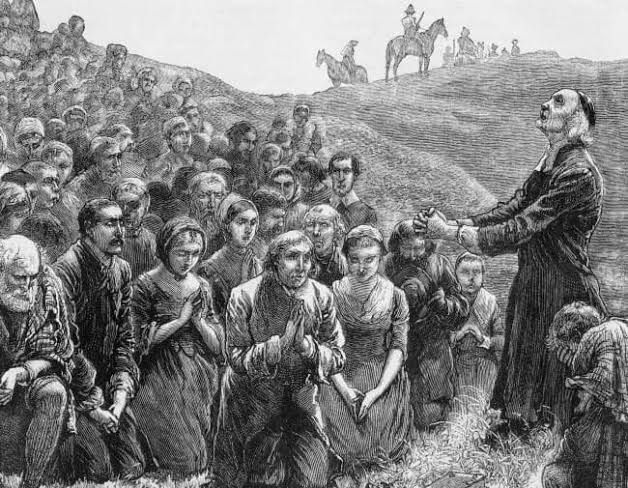

Westminster Confession of Faith 29:1. Our Lord Jesus, in the night wherein He was betrayed, instituted the sacrament of His body and blood, called the Lord's Supper, to be observed in His Church, unto the end of the world for the perpetual remembrance of the sacrifice of Himself in His death, the sealing all benefits thereof unto true believers, their spiritual nourishment and growth in Him, their further engagement in and to all duties which they owe unto Him; and, to be a bond and pledge of their communion with Him, and with each other, as members of His mystical body.1
1 1 Cor. 11:23-26; 1 Cor. 10:16,17,21; 1 Cor. 12:13
2. In this sacrament, Christ is not offered up…
An Introductory Theology Course!
www.fromreformationtoreformation.com/introductory-theology
Volume 1 of Wendelin's Christian Theology is now available in print!
https://www.lulu.com/shop/steven-dilday/wendelins-christian-theology-volume-1/hardcover/product-yv54k5p.html?q=wendelin&page=1&pageSize=4