Wendelin's "Christian Theology": Doctrine of Justification, Part 3

[A fundraising break-through: We have surged to about 40% of our goal! Thanks be to the Most High God!
We still have some ground to cover. If you are being blessed by the translation work, please consider supporting the work and speeding it on its way. Click here to watch a brief video on the project.]

THESIS VII: Hitherto the efficient of justification: Its matter is wont to be called that, through and because of which before the divine tribunal we are freed from the curse of the law and are regarded as innocent and righteous: it is the perfect satisfaction of Christ for us, whereby He Himself paid in our place the penalty due to us because of our sins: elsewhere it is called the passive righteousness and obedience of Christ.
EXPLANATION: I. When we call the satisfaction of Christ the matter of our justification, we speak in a common way: the same is otherwise rightly called the meritorious cause of our justification, seeing that because of the imputation of this we are reckoned as righteous, and are freed from the curse of the law. But the merit of Christ is the cause of calling and of justification in diverse ways. For it, considered absolutely, is the cause of calling, seeing that it precedes faith: the same, considered respectively, is the cause of justification, that is, with respect to faith, because we are not justified by the merit of Christ, unless it is apprehended by faith.
II. But at this point it is to be observed: that the obedience of Christ is twofold, namely, active and passive. Active obedience is that whereby Christ lived a life in conformity with the divine law, by perfectly observing all its commandments: whence it is said that there was no deceit in Him, Isaiah 53:9. That He knew no sin, 2 Corinthians 5:21. That He did no sin, 1 Peter 2:22. That He was tempted in all points without sin, Hebrews 4:15.
Passive obedience is that whereby he endured the curse of the law, to which we were liable because of our sins, in our place, by suffering and dying for us, and so paying the penalty in our place. Whence Paul in Galatians 3:13, Christ hath redeemed us from the curse of the law, being made a curse for us.
III. Both of these obediences of Christ are altogether necessary for our redemption and justification, yet not in the same way: salvation abounds to us by both, but not in the same way. For active obedience is a condition requisite in the Mediator, without which Christ had not been able to be our Mediator, and had not been able to merit anything by His death. Yet at the same time, if we speak properly and accurately, it is not the matter of our justification, neither is it imputed to us, in such a way that it is reckoned ours, our sins are remitted because of it, and the debt of the law is paid for us: while His passive obedience by imputation is reckoned to be ours, and our sins are remitted because of it: and the debt is paid in our place: this is proven:
(1.) Christ, as man, owed on His own behalf active obedience to the law: for every creature is bound to obey the Creator, and God is no more able to concede to man, that he conduct himself ἀτάκτως, in a disorderly manner, than to overturn the order of His righteousness, as the Scholastics rightly teach.
Therefore, that obedience is not imputed to us.
The rationale of the consequence is drawn from parity: seeing that by the same rationale, if Christ had owed to the law and had furnished death for Himself, He had not been able to impute the same to us, and to deliver us by it.
Exception is taken: Christ was made man, not for Himself, but for us. Therefore, He rendered active obedience to the law, not for Himself, but for us, that is, in our place.
Response: 1. The antecedent is ambiguous: If you say that Christ was made man for us, that is, for our good, it is conceded: if for us, that is, in our place, it is denied. For, what Christ did and was made in our place, we are not bound to do and to be: just as He was made a curse for us,[1] so that we would not be, and be bound to be, an eternal curse. But by His incarnation Christ did not obtain this, that we might no longer be men, or be bound to do things suitable for human nature.
2. The consequence is denied. For, even if Christ was made, not for His own good, but for ours; nevertheless, after He was made man, He was of Himself man, and so of Himself and for Himself liable to the law, as man: just as, after He assumed a body of Himself liable to corruption, He also had need to eat, drink, rest, etc., for Himself.
(2.) If Christ had furnished active obedience in our place, in such a way that it is imputed to us for righteousness, we would no longer be obliged to furnish active obedience to the law.
But the consequent is false: Therefore also the antecedent.
The rationale of the hypothetical is likewise sought from parity: seeing that therefore we are no longer bound to undertake eternal life, because Christ undertook it in our place.
Some take exception: That Christ furnished active obedience for us for the sake of meriting eternal life: But by this account we are no longer obligated to obey the law.
Response: We deny, that for the sake of meriting eternal life Christ furnished active obedience in our place. The rationale: because He owed it simply for Himself as a creature, which is not able to be without law: and so He merited nothing by it for us, even if He furnished it for our greatest good.
Those that say, that by the active obedience of Christ we have this, that we are no longer obligated to that rigid and exact obedience, are hardly able to reconcile their opinion with the truth. For, if we are no longer obligated to the exact obedience of the law, certainly we are not sinning by its intermission and neglect, which is false. Therefore, we are entirely obligated to it: but failure is pardoned because of the imputation, not of the active, but of the passive obedience of the Mediator Christ: and addition is gradually made to it through sanctification, which the Mediator also merited by His suffering.
(3.) Everywhere Scripture, when it speaks of our justification and cleansing from sins, and their remission, makes mention, not of the active, but of the passive obedience of Christ. Among other notable testimonies of Scripture for this opinion are: Isaiah 53:5, 6, by His [namely, Messiah’s] bruising we are healed. He [God] hath laid on Him the iniquity of us all. Romans 3:24, 25, We all are justified freely by His grace, through the redemption that is in Christ Jesus, whom God hath set forth to be a propitiation through faith in His blood. Romans 5:9, We, being justified by His blood, shall now much more be saved from wrath: and verse 10, we have been reconciled to God through the death of His Son. Galatians 3:13, Christ hath redeemed us from the curse of the law, since He was made a curse for us. 1 John 1:7, The blood of Jesus Christ cleanseth us from all sin.
Similar things are found everywhere. See Exercitation 123.
IV. Unto the contrary opinion others thus dispute:
(1.) For our salvation two things are required: deliverance from death, and the grant of life; the former is obtained by the expiation of sin through suffering; the latter by the gift of righteousness, or the imputed active obedience of Christ.
Response: The passive obedience of Christ both expiates sin, and grants life, because by the death of Christ life falls to us: He Himself died, so that He might deliver us from death, and, having died, grant us life.
(2.) Christ not only delivered Himself to death for us, but He also sanctified Himself for us, so that we ourselves might be sanctified through the truth, John 17:19.
Therefore, Christ’s sanctity also, His righteousness or active obedience, is imputed to us.
Response: The consequence is denied: 1. The sanctity of Christ is useful to us for sanctity, even if it is not imputed to us, as we explained above. 2. In the passage alleged, by the sanctification of Christ is not understood His active obedience: but His designation and preparation to attend to the priestly office.
(3.) The actual disobedience of Adam constitutes us sinners.
Therefore, the actual obedience of Christ constitutes us righteous.
Response: If in the consequence, by the actual obedience of Christ, is understood His active obedience (for His passive obedience is also able to be called actual, because Christ suffered in act, not only in potential), and that imputed to us, we deny the consequence. For, whatever we lost through the disobedience of Adam, the imputed passive obedience of Christ restored it to us, which alone did He render in our place; even if He also rendered active obedience for our good; as we previously said.
(4.) With the passive obedience of Christ was also conjoined His active obedience.
Therefore, the one is not imputed to us without the other.
Response: The consequence is denied: For even those things that are conjoined, are nevertheless distinct, in such a way that one is able to be contemplated, so also imputed, without the other. However, we do not deny, that the voluntary suffering of Christ, that is, suffering conjoined with action and readiness of will, is imputed to us. But this has nothing to do with the active obedience of Christ, concerning which we particularly speak here, which Christ owed to the law as a man: For, as He, as a man, was not bound to death, so neither to the readiness to die.
(5.) If only the passive obedience of Christ is imputed to us, it would follow, that only a half Christ has been given to us, namely, suffering, but not acting.
But the consequent is false: Therefore also the antecedent.
The minor is proven: because the whole Son was given to us, Isaiah 9:6.
Response: The consequent of the hypothetical is denied: for it is one thing to be given for us, another to be imputed to us: Also Christ’s humanity and Deity are given to us, but neither is for that reason imputed to us. See Exercitation 124.
Harsh is the opinion of those that deny the passive obedience of Christ to be imputed to us for righteousness and to be the cause of reward or eternal life. For how would the blood of Christ cleanse us from all sin,[2] if it were not the cause of our righteousness? How would Christ have given His flesh for the life of the world,[3] if by it life were not restored to us? How would we be healed by the bruising of the Messiah,[4] if by it we were not sanctified? How would the death of Christ be our life, if by it life did not fall to us? Between deliverance from the curse of the law and blessing, and the right to eternal life, there is no middle state.
Exception is taken: The law is not fulfilled by the suffering of punishment: Therefore, punishment suffered is not able to be the cause of reward or eternal life.
The antecedent is proven: Because the Law and commandments of GOD are the same: now, punishments do not fulfill the commandments of the law, but they do satisfy the threats of the law.
Response: The antecedent is denied: by the enduring of the punishment formally in part, efficiently in part, the law is fulfilled by the Mediator. Formally, to the extent that the punishment dictated to us by the law the Mediator sustained in our place: Efficiently, to the extent that He not only, by His punishment, removed the curse from us, by suffering for us what the law was commanding us to suffer, but also acquired holiness for us by His passion, and eternal life with holiness: in such a way that to the death of Christ we owe justification, sanctification, and glorification.
The proof of the antecedent is also denied: as it is evident from the things said. When it satisfies the threat of the law, then what the law commands to be done is done, and so in this way the law is fulfilled to a certain extent.
V. The Papists deny that we are regarded as righteous before God and are to be freed from the curse of the law, through and because of Christ’s righteousness alone, or His satisfaction rendered for us. And so they constitute also the good works rendered by us to the precept of the divine law as the meritorious cause of justification, by which works, as they contend, we merit eternal life.
That this opinion of the Papists is false and contrary to Scripture, we prove by these arguments:
(1.) By the works of the law there shall no flesh be justified, Romans 3:20.
Therefore, we are not absolved before the divine tribunal because of works, neither do we merit life through them.
(2.) We are justified by faith without works, Romans 3:28; Galatians 2:16.
Therefore, works do not have the power to justify.
(3.) If righteousness is through the law, that is, by the works of the law; Christ is dead in vain, Galatians 2:21.
But the consequent is false; Therefore also the antecedent.
(4.) The Saints pray, let not God enter into judgment with them: because in God’s sight no living man is justified, namely, by inherent righteousness of works, Psalm 143:2. Therefore, the Saints do not ascribe righteousness and life to the merits of their own works.
(5.) Faith is imputed for righteousness, not to him that worketh, but to him that believeth upon Him that justifieth the ungodly, Romans 4:5. Therefore, works are not the cause of our righteousness before God.
(6.) By grace are we saved through faith, not by works, Ephesians 2:8, 9.
Therefore, eternal life is not granted because of the merits of works.
The rationale: because grace excludes works, as also works exclude grace, Romans 11:6.
(7.) We do more evil works than good works.
Therefore, we deserved death because of our evil works, rather than life because of our good works.
(8.) Our good works are imperfectly good.
Therefore, they do not effect a perfect righteousness, which God requires from sinners.
(9.) The good works that we do are owed, and they do not proceed from our strength, but from the grace of God.
Therefore, we do not merit eternal life because of them.
The antecedent is proven out of Luke 17:10, when ye shall have done all those things which are commanded you, say, We are unprofitable servants: for we have done that which was our duty to do. 2 Corinthians 3:5, That we are sufficient is of God.
The rationale of the consequence: because it is of the nature of merit, that it is not owed.
(10.) If we are justified by works: it is either by those that precede faith, or those that follow faith.
But not by those preceding: Because those are not right in the sight of God. Neither by those following, because those follow the justified, and are later than justification. Hence according to the Scriptures, Augustine, de fide et operibus, chapter 14: Good works follow the man justified; they do not precede the man to be justified. For in this sense we are said to have been created in Christ Jesus unto good works, Ephesians 2:10.
(11.) Because of what we are justified and freed from the curse of the law, because of that our sins are forgiven.
Therefore, because of good works we are not justified and freed from the curse of the law. The minor is proven: Because of what our sins are forgiven, through that they are expiated.
But by good works they are not expiated.
Therefore, also because of good works they are not forgiven.
The minor is proven: because all real expiation of sins is referred by Scripture to the one sacrifice of Christ, or Christ’s passive obedience; as we showed above.
VI. Note: To those passages wherein Scripture excludes works from the causes of justification, the Papists respond, that the power to justify is not removed from all works; but either from ceremonial works: or at least from those that proceed from the strength of free will and precede faith, but not at all from those that follow faith, or come from faith. That this gloss is false, we prove:
(1.) Because the Apostle, without any exception, excludes all works in general from the causes of justification. Therefore, where the Apostle does not make a distinction, neither is the necessity of a distinction evident, there no distinction or limitation is to be imagined.
(2.) When the Apostle denies that we are justified by works, he understands either evil works, or good ones.
But not evil, because there has never been any controversy concerning evil works, which, it was beyond question among the Jews and the Gentiles, do not have the power to justify.
Therefore, he excludes good works, and by consequence those that come from faith: because whatsoever is not of faith is sin, Romans 14:23.
(3.) Justification is gracious. Therefore, man does not merit it by works, whatever they may be.
The rationale of the consequence: because what is by grace is not by works or merit, Romans 11:6.
(4.) Where there is one’s own merit, there is a reason for boasting, Ephesians 2:9. In justification there is no reason for boasting: For the Apostle takes this from Abraham, Romans 4:2. Therefore, the merit of no work has a place in justification.
(5.) To the works of Abraham, whereby he was able to glory before men, namely, his obedience in departing from his country,[5] and the sacrificing of his son,[6] Paul denies the power to justify, Romans 4. But those works of Abraham proceeded from faith.
Now, those that had preceded faith, were idolatrous, and were not furnishing material for boasting, but of shame. This, our Orthodox opinion, was formerly professed by Cardinal Contarenus, among the Pontifical Doctors, libro de justification:[7] I am altogether persuaded, that it is piously and Christianly said, that we must rest, rest, I say, as upon a thing stable, that will certainly bear our weight, on the righteousness of Christ granted to us, but not on holiness and grace inherent in us. For our righteousness is inchoate and imperfect, which is not able to be maintained, but that we offend in many things, and continually sin, etc.: therefore, in the sight of God we are not able to be considered righteous and good on account of our righteousness, to the extent that it is necessary for the sons of God to be good and holy; but the righteousness of Christ bestowed is true and perfect righteousness, which is altogether pleasing in the eyes of God, in which there is nothing offensive to God, nothing not very pleasing to God. Therefore, we are to rest upon this alone as certain and stable, and on account of this alone it is to be believed that we are justified before God, that is, considered and called righteous.
VII. The arguments, wherewith the Papists strive to prove, that they are justified by their own works and merit eternal life, are the following, among others:
(1.) God hath recompensed the pious according to their righteousness, or purity, Psalm 18:24.
Therefore, the pious are justified by works before God, and by them merit eternal life.
Response: I deny the consequence. The rationale: because the recompense that is made to the pious according to their righteousness, is gracious, not owed. For, out of His own unowed grace God crowns His gifts in us: whence eternal life is expressly said to be the gift of God, Romans 6:23. Next, God also recompenses the pious according to their righteousness, not as the meritorious cause of deliverance from the curse; but as evidence of faith, or of the remission of sins apprehended by true faith, and as the condition, under which life is promised, not as a recompense due by merit, but as an unowed reward by grace.
(2.) Eternal life is called a recompense in Scripture.
Therefore, it is conferred because of the merits of good works.
Response: I deny the consequence. The rationale: because eternal life is not a recompense owed, or properly so called, which presupposes merit, but gracious, or improperly so called, which excludes one’s own merit. In all these things, says Luther, in servo Arbitrio, nothing is proven except the sequel of a recompense, not the dignity of merit. Now, that eternal life is a gracious recompense, is evident from this, that Scripture expressly says that we are saved by grace: Ephesians 2:8, 9, by grace are ye saved through faith; and that not of yourselves: it is the gift of God: not of works, lest any man should boast. It expressly calls eternal life a gift, Romans 6:23, an inheritance, Galatians 5:21; Hebrews 1:14; and elsewhere.
(3.) God renders to every man according to his deeds, Romans 2:6.
Therefore, good works justify before God and merit eternal life.
Response: I deny the consequence. Because according to is one thing, because of is another: but God renders to the pious according to their works, not as meritorious causes of eternal life, but as evidences of faith embracing the merit of Christ: and as the condition, under which the promise was also made. Finally, according to works, that is, according to the quality of the works; if the works were good, good is rendered by grace: if evil, evil is rendered by debt.
(4.) James expressly says that a man is justified by works, James 2:24.
Therefore, works have the power to justify before God, and they merit eternal life.
Response: I deny the consequence: for James speaks, not of justification before God, that is, of deliverance from the curse; but of the declaration of justification before men. For men do not know our justification, unless they see our good works, as the fruit of justification.
(5.) Love is the cause of the remission of sins.
Therefore, also of justification.
The antecedent is proven out of Luke 7:47, her sins, which are many, are forgiven; for she loved much.
Response: I deny the antecedent: neither is it proven from the passage alleged: where love is alleged by Christ, not as the cause, but as a sign, of the remission of sins.
(6.) Evil works condemn.
Therefore, good works justify.
The rationale of the consequence: because contrary are the effects of contraries.
Response: I deny the consequence. To the proof I respond: The effects of contraries, the rationale of which is the same, are contraries. But the rationale of evil and good works is not the same. Indeed, evil works are ours: good works are not ours, but the gifts of God in us. Next, evil works are perfectly evil, but good works are imperfectly good. Finally, to evil works is due a recompense according to the order of justice; to good works no reward is due, because they are owed.
(7.) By faith we are justified. Faith is a good work.
Therefore, we are justified by good works.
Response: I deny the consequence: Indeed, the conclusion does not follow from the premises, unless it be this: Therefore, by a particular good work, or by a particular thing, which is a good work, we are justified: which we readily concede. But we are justified by faith, which is a good work, not after the manner of a meritorious work, but after the manner of an instrument apprehending the merit of Christ.
(8.) The grace whereby we are justified is called by the Apostle love shed abroad in our hearts, Romans 5:5.
Therefore, justifying grace is inherent in us, and hence we are justified by a quality inherent in us.
Response: 1. The antecedent is not proven from the passage alleged out of Paul: he does indeed say that the love of God is shed abroad in our hearts; but he does not say, that this love is justifying grace.
2. The consequence is denied. The rationale: because that love shed abroad in our hearts, if it is justifying grace, it is not necessarily taken for that love wherewith we love God, but more suitably for that love wherewith God loves us.
But, you say, it is said to be shed abroad in our hearts.
Therefore, it is inherent in us.
Response: I deny the consequence: for it is said to be shed abroad in our hearts, because the sense of it is shed abroad in our hearts.
(9.) What is done through love, that is done through inherent righteousness.
But justification is done through love.
Therefore, it is done through inherent righteousness; and, consequently, the matter of our justification is not posited outside of us.
The major is proven: Because love is inherent in us.
The minor is proven: Because love covers sins, that is, brings it to pass that they are remitted, Proverbs 10:12; 1 Peter 4:8.
Response: 1. The major is not true except concerning active love, wherewith we love: but false concerning passive love, wherewith we are loved.
2. We deny the minor concerning active, or our, love. Neither is it proven from the passages of Scripture alleged, which do indeed speak properly concerning our charity, but do not attribute to the same the power to justify: seeing that to cover sins in those passages is not to justify, or to bring to pass or to merit remission of sins: but not on account of them to scold and publicly traduce the neighbor: indeed, to forgive them in the neighbor.
(10.) Scripture says: endurance of afflictions works an eternal weight of glory, 2 Corinthians 4:17. And it commands us to work out our salvation in fear and trembling, Philippians 2:12.
Therefore, to the merits of works it ascribes the power to justify and eternal life.
Response: I deny the consequence: For to work an eternal weight of glory is not to merit glory, but to have glory as an adjunct and reward, or to prepare men for glory; because in sufferings it is also needful that we be conformed to Christ, before we enter glory, Philippians 3:10. But we are said to work out our salvation, not when we earn it, but when we furnish the prescribed conditions, without which salvation does not happen; but among these is the assiduous exercise of piety and flight from carnal security.
[1] Galatians 3:13.
[2] 1 John 1:7.
[3] John 6:51.
[4] Isaiah 53:5.
[5] Genesis 12:1-4; Hebrews 11:8.
[6] Genesis 22; Hebrews 11:17-19.
[7] Gasparo Contarini (1483-1542) was a Venetian nobleman, diplomat, theologian, and Cardinal of the Catholic Church. He labored for reform within the Catholic Church, to the end that reunion with the Lutherans might be possible. His reforms included a revision of the Catholic doctrine of justification to make it acceptable to the Lutherans.

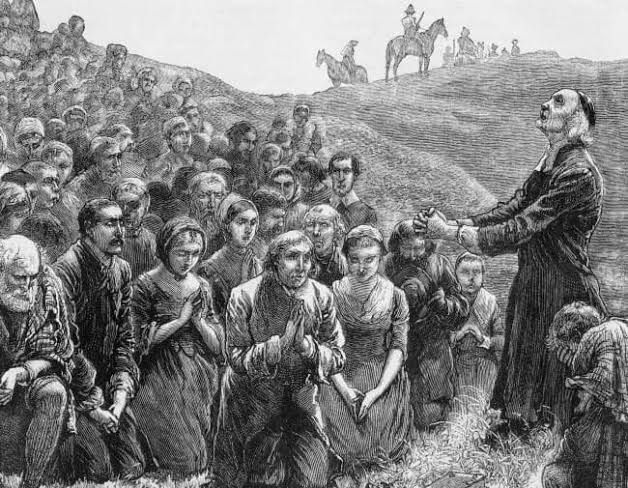

Westminster Confession of Faith 11: 1. Those whom God effectually calleth He also freely justifieth;1 not by infusing righteousness into them, but by pardoning their sins, and by accounting and accepting their persons as righteous: not for anything wrought in them, or done by them, but for Christ's sake alone: nor by imputing faith itself, the act of believing, or any other evangelical obedience, to them as their righteousness; but by imputing the obedience and satisfaction of Christ unto them,2 they receiving and resting on Him and His righteousness, by faith: which faith they have not of themselves; it is the gift of God.3
1 Rom. 8:30; Rom. 3:24.
2 Rom. 4:5-8; 2 Cor. 5:19,21; Rom. 3:22,24,25,27,28; Tit. 3:5,7; Eph.…
Follow the translation of Wendelin's Christian Theology:
www.fromreformationtoreformation.com/introductory-theology
Volume 1 of Wendelin's Christian Theology is now available in print!
https://www.lulu.com/shop/steven-dilday/wendelins-christian-theology-volume-1/hardcover/product-yv54k5p.html?q=wendelin&page=1&pageSize=4