Poole on 2 Samuel 24:16-25: The Angel Stayed, Crisis Averted

Verse 16:[1] (Ex. 12:23; 1 Chron. 21:15) And when the angel stretched out his hand upon Jerusalem to destroy it, (Gen. 6:6; 1 Sam. 15:11; Joel 2:13, 14) the LORD repented him of the evil, and said to the angel that destroyed the people, It is enough: stay now thine hand. And the angel of the LORD was by the threshingplace of Araunah (1 Chron. 21:15, Ornan;[2] see 2 Sam. 24:18; 2 Chron. 3:1) the Jebusite.
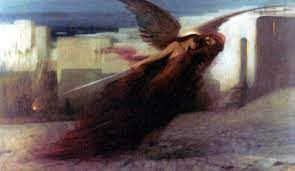
[When the angel of the Lord stretched out his hand] That is, with a sword, 1 Chronicles 21:27 (Piscator, Grotius).
The angel appeared in the shape of a man with a sword in his hand, 1 Chronicles 21:16, to convince them more fully that this was no natural nor common plague, but inflicted immediately by the hand of God.
[Upon Jerusalem] With many already having been smitten there, as it is evident from 1 Chronicles 21:15 (Menochius).
Upon Jerusalem; which he had begun to smite, and was proceeding to make a far greater slaughter.
[And the Lord felt pity, etc.] Hebrew: The Lord repented of the evil;[3] that is, He changed His sentence concerning the affliction, etc. (Vatablus).
The Lord repented him of the evil, that is, he moderated, and in part recalled, his sentence of the plague’s continuance for three whole days, and this he did upon David’s prayers and sacrifices, as appears from 2 Samuel 24:25, though these be mentioned afterward.
[To the angel smiting the people,הַמַּשְׁחִ֤ית בָּעָם֙ [4]] Ruining/destroying the people (Pagnine). To the destroyer; that is, to whom He had commanded to destroy the people (Vatablus).
[It is enough, רַ֔ב עַתָּ֖ה] Much now (Montanus, Septuagint, Munster) it is (Munster); sufficiently now (Jonathan, thus Tigurinus); it is sufficient (Junius and Tremellius); thou hast killed enough (Syriac, similarly the Arabic).
[Stay thine hand, הֶרֶף [5]] Relax (Junius and Tremellius); make to rest (Pagnine); restrain (Vatablus): therefore, either the Angel did not know the number of those to be killed, or these things are narrated in a human manner (Menochius).
[By the threshingfloor of Araunah] Who in verse 18 is called Araniah,[6] and in 1 Chronicles 21:24 Ornan[7] (Malvenda). Therefore, either there is an error at hand (Piscator); or he had two names [indeed, three names] (Menochius); or he who is called Araunah by the Hebrews is called Ornan by the Jebusites (Sanchez). Foreign names are pronounced in a diversity of ways. Thus the Hebrew names were modified by the Greeks, and the names of Romans were written by the Greeks, as in Plutarch: so it was happening in the name of this man (Martyr).
Araunah, called also Araniah in the Hebrew of 2 Samuel 24:18, and Ornan, 1 Chronicles 21:22; such changes in the pronunciation of the names being usual in Scripture.
[The Jebusite] By ancestry and race, but not by religion (Menochius). He was a proselyte and dear to David (Martyr), and benevolent toward the Jews. Hence in the storming of the city nothing troublesome happened to him (Bochart’s A Sacred Catalogue of Animals 1:378 out of Josephus). Others deny that he was a proselyte out of verse 23, thy God (thus Malvenda). Moreover, this threshingfloor was situated on mount Moriah, on which Abraham aimed to sacrifice his son[8] (Vatablus, Menochius), where the temple was afterwards built (Munster). Question: Why did the pestilence invade Jerusalem later? Responses: 1. He was loving that city above all others. See Psalm 87:2, He loveth the gates of Zion, etc. 2. Perhaps those were paying the half shekel; both because the tabernacle, being immediately present, appeared to cry out to them, and because the priests were there, who would teach them concerning it (Sanchez).
Verse 17:[9] And David spake unto the LORD when he saw the angel that smote the people, and said, Lo, (1 Chron. 21:17) I have sinned, and I have done wickedly: but these sheep, what have they done? let thine hand, I pray thee, be against me, and against my father’s house.

[I myself am the one that has sinned] Nevertheless, the people are not completely innocent, who had silently approved of David’s deed. In addition, the greatest punishment for the King himself was the hurt of his people. See Concerning the Law of War and Peace 2:22:17 (Grotius). He was not aware of the sins of the people, but he knew his own. In calamities each of us ought to take stock of his own sins. Previously David was confessing his sins before God, now before the elders (Martyr).
[Who are sheep] Therefore, they have a shepherd; either they are thy sheep, or mine; if thine, thou oughtest to spare them; if mine, I am to be punished. Question: Why would David not speak so earlier? Response: He was thinking in the beginning that he also was going to die; since he appears to himself to have been pardoned, he erupted in these words. Inasmuch as David asked to die in the place of his people, in this he was a type of Christ, and shows the very highest piety.[10] Certain Pagans did the same, but eyeing their own glory (Martyr).
[Against me and my father’s house] He preferred to be punished in his near relations than in the people, 1. Because, just as through him they were exalted, so it is just and equal that they suffer somewhat with him. 2. They were not as far removed from his sin as the people; they did indeed resist, but not sufficiently. He does not prescribe to God, but conditions are to be understood, if it should seem good to thee, etc. (Martyr).
[House] That is, familiars, those taking part in his counsels (Malvenda).
Let thine hand be against me; wherein David shows his justice, and piety, and fatherly care of his people, and that he was a type of Christ. Against my father’s house; against my nearest relations, who probably either put David upon, or encouraged him in, this action, because they were no less vain-glorious than David; and the honour which they thought would come to David thereby, would also redound to them; or, at least, they did not use their utmost endeavours to dissuade David from it, as they should have done, and therefore were involved in David’s guilt. Howsoever, it was but fit and reasonable that his family, which did partake of his honour and happiness, should also partake in his suffering, rather than those who were less related to him. Nor doth David absolutely desire that they may suffer, but only speaks comparatively, and by way of supposition, and with reference to God’s good pleasure.
Verse 18:[11] And Gad came that day to David, and said unto him, (1 Chron. 21:18, etc.) Go up, rear an altar unto the LORD in the threshingfloor of Araunah (Heb. Araniah[12]) the Jebusite.
[Now, Gad came] The same is a minister of the law and of the Gospel (Martyr). He came as a result of the command of God through the angel, verse 19; 1 Chronicles 21:18 (Malvenda out of Junius). David had only just confessed his sin. Behold how powerful is the confession of sins (Sanchez).
Gad came that day to David, by command from God, 2 Samuel 24:19; 1 Chronicles 21:18.

[Go up] David was in the citadel of Zion, with Mount Moriah being even higher, but with the valley of Millo[13] between the two summits; therefore, David had to descend first, so that he might ascend again to the threshing-floor mentioned (Menochius). Or, David was not now in the citadel of Zion, but in some lower place of Jerusalem (Martyr).
Go up to Mount Moriah.
[In the threshing-floor of Araunah] Now, there were multiple places of sacrifice, Gilgal,[14] Shiloh,[15] Nob,[16] Gibeon;[17] he disregards all those. Thus before Israelite men and women are preferred the widow of Sarepta, Luke 4, Naaman the Syrian,[18] and the Samaritan woman, John 4. Those were foreshadowings of the calling of the Gentiles (Martyr). Question: How does he order these things to be done, although the Angel has already restrained himself from the slaughter? Responses: 1. God, even if He wills to pardon, yet wills also to be asked (Sanchez out of Ambrose). Many things are predestined, that they should be obtained by prayer (Sanchez out of Gregory). 2. On account of the Angel threatening with the sword, there was yet fear of the pestilence; indeed, of the remnants, for those that had been infected were not healed. 3. Others maintain that the Angel had not yet ceased, but the saying of verse 16 was by way of anticipation (Lapide).
In the threshing-floor of Araunah the Jebusite; which place God appointed for this work, partly, in gracious condescension to and compliance with David’s fear of going to Gibeon, which is expressed 1 Chronicles 21:29, 30; partly, because this was the place where God by his angel appeared in a threatening posture, where therefore it was meet he should be appeased; and partly, because God would hereby signify the translation of the tabernacle from Gibeon hither, and the erection of the temple here, 2 Chronicles 3:1.
Verse 19:[19] And David, according to the saying of Gad, went up as the LORD commanded.
Verse 20:[20] And Araunah looked, and saw the king and his servants coming on toward him: and Araunah went out, and bowed himself before the king on his face upon the ground.

[And Araunah observing, etc.] Araunah had set aside his threshing out of fear, which he now puts away; for fear ought not to call us from an owed duty (Martyr). וַיַּשְׁקֵף,[21] that is, he looked on with his head thrust forward, for he was hiding for fear of the Angel (Vatablus).
Verse 21:[22] And Araunah said, Wherefore is my lord the king come to his servant? (see Gen. 23:8-16) And David said, To buy the threshingfloor of thee, to build an altar unto the LORD, that (Num. 16:48, 50) the plague may be stayed from the people.
[That the King cometh] That is to say, The order of things is inverted; I ought to come to thee (Martyr).
Wherefore is my lord the king come to his servant? wherefore doth the king do me this honour, and give himself the trouble of coming to me?
[And the slaughter may cease, וְתֵעָצַר [23]] And it may be restrained (Pagnine, Montanus), curbed (Septuagint, Jonathan, Junius and Tremellius), suppressed (Vatablus), warded off (Munster, Tigurinus), that is, that the plague may advance no farther (Vatablus).
Verse 22:[24] And Araunah said unto David, Let my lord the king take and offer up what seemeth good unto him: (1 Kings 19:21) behold, here be oxen for burnt sacrifice, and threshing instruments and other instruments of the oxen for wood.
[Thou hast oxen, רְאֵה֙ הַבָּקָ֣ר] See (behold for thyself [Vatablus]), oxen (Pagnine). See, I give, etc. That supplement is confirmed out of the following verse (Piscator).
Here be oxen; which were employed by him in his present work, which was threshing, 1 Chronicles 21:20. See the notes on Deuteronomy 25:4.
[And the cart, וְהַמֹּרִגִּים [25]] And sleighs (Malvenda), carts (Pagnine, Tigurinus), drag-hoes (Montanus), wheels (Septuagint), threshing-sledges (Junius, Junius and Tremellius, Vatablus). A Hebrew term signifying instruments wherewith wheat is threshed, and clods of earth are broken up (Vatablus, similarly Munster, Mariana).
[The yokes of the oxen, וּכְלֵ֥י הַבָּקָ֖ר] And the instruments (equipment [Montanus]) of the oxen (Pagnine, Tigurinus, Munster, Septuagint, Jonathan, Junius and Tremellius), that is, the instruments necessary for the cultivation of the fields (Munster). And the yoke (Syriac).
[For the use of firewood] Hebrew: for pieces of wood;[26] so that thou mightest make a fire (Vatablus).
Verse 23:[27] All these things did Araunah, as a king, give unto the king. And Araunah said unto the king, The LORD thy God (Ezek. 20:40, 41) accept thee.
[He gave all] That is, for his part, he attempted to give it (Dutch); he gave, that is, he promptly offered (Osiander).
[Araunah, as a king, to the king, הַמֶּ֖לֶךְ לַמֶּ֑לֶךְ] The king (regulus [Munster, Junius and Tremellius]) to the king (Montanus, Tigurinus). He was formerly the King of the Jebusites, before Jerusalem was captured (Vatablus). Or, he is so called, because he was of the blood of the Kings of the Jebusites (Grotius). Or he was the King of the Jebusites, who was yet in the city, but under tribute to David, and separated from idols (Munster). Or he is called King, since he conducted himself in this business in a Royal manner (Dutch). [Others omit the prior הַמֶּלֶךְ, the king (thus Pagnine, Septuagint, Syriac, Arabic).] הַמֶּלֶךְ, the king, was not read in many exemplars of the Vulgate before the correction of Sixtus, nor was it in Jonathan in the age of Kimchi (Bochart’s A Sacred Catalogue of Animals 1:2:38:378).
As a king; the particle as being understood, as it oft is in the Hebrew, that is, with a royal bounty. Or, Araunah the king, as he might be called, either because he was king of the Jebusites before David took their city, or because he was the son and heir of that king. These things did Araunah give; he not only offered, but actually gave them, that is, he actually resigned his right and property in them unto David; for so he did; and David by his refusal returned it to Araunah again. The Lord thy God accept thee; he was a Jebusite by nation, but a hearty proselyte; which made him so liberal in his offers to God’s service, and the common good of God’s people.

Verse 24:[28] And the king said unto Araunah, Nay; but I will surely buy it of thee at a price: neither will I offer burnt offerings unto the LORD my God of that which doth cost me nothing. So (1 Chron. 21:24, 25) David bought the threshingfloor and the oxen for fifty shekels of silver.
[By no means, but I will buy it] For it was impious to consecrate the land of another (Grotius). David was unwilling to steal the possessions of Araunah; it belongs to kings to protect them. David was understanding, what Solomon said, Honor God of thy substance, Proverbs 3:9 (Martyr).
Of that which doth cost me nothing; for this would be both dishonourable to God, as if I thought him not worthy of a costly sacrifice; and a disparagement to myself, as if I were unable and unwilling to offer a sacrifice of my own goods; and unsatisfactory to the command of God, which obligeth all offenders, and me in a particular manner, to offer sacrifice of their own estate.
[Therefore, he bought the threshing-floor and the oxen for fifty shekels of silver, וַיִּ֙קֶן דָּוִ֤ד אֶת־הַ֙גֹּרֶן֙ וְאֶת־הַבָּקָ֔ר בְּכֶ֖סֶף שְׁקָלִ֥ים חֲמִשִּֽׁים׃] And David bought the threshing-floor and the oxen for silver, namely, fifty shekels. Which greatly torments interpreters, because in 1 Chronicles 21:25 this same threshing-floor is purchased by David, as some think, for six hundred shekels of gold (Bochart’s A Sacred Catalogue of Animals 1:2:38:378). They resolve it in various ways. 1. He was able to give fifty shekels, and afterwards six hundred out of royal munificence (Mariana). 2. Therefore, David bought the threshing-floor: at this point a colon is to be introduced; now, he bought it for six hundred shekels of silver, 1 Chronicles 21:25. What follows, the price of the sacrificial victims, is much less (Grotius out of Lyra, similarly Junius). He gave fifty shekels for the oxen (and the cart, the threshing-sledge, etc. [Sanchez]), and six hundred for the threshing-floor (Sanchez, Menochius). The price of the latter, here omitted, is afterwards supplied in Chronicles (Sanchez). 3. He gave fifty for the storehouse and oxen (Munster), or, for that part of the threshing-floor in which he would build the altar; and six hundred for the remaining part of the threshing-floor (Vatablus); for the whole circuit and substance of that place (Munster); for the threshing-floor were given fifty shekels, but for the gardens, houses, and buildings six hundred (Martyr). 4. I myself in this passage understand shekels of gold, but in Chronicles shekels of silver, the proportion of which is twelve to one, as the passage of Plato in Hipparchus teaches; so that fifty shekels of gold are worth six hundred of silver. Therefore, I translate the passage in this way, and he bought, etc., for money, namely, fifty shekels of gold. The כֶסֶף/cheseph, which they here translate as silver, so that it might signify the material of the shekels, here signifies money, as often elsewhere, of whatever material it may be. Which even from this history is evident, in which David, being about to buy these things בְּכֶ֣סֶף מָלֵ֑א, for full money, for payment gives שִׁקְלֵ֣י זָהָ֔ב, shekels of gold, 1 Chronicles 21:22-25.[29] Now, that shekels of gold of perfectly just weight six hundred, 1 Chronicles 21:25, I translate in this way, he gave golden shekels of the value of six hundred, supply, of shekels common, or silver. That מִשְׁקָל/mishkal, properly weight, here signifies value, just as in 2 Samuel 12:30[30] [where see the things noted]. Hence שֶׁקֶל/shekel is rendered by the Greeks as τιεῖν and τιμᾶν, that is, to pay and to assess the value. Hence also in Latin, pendere, to pay, compensare, to weigh, etc.: although the terms were taken from weight, yet they are not rarely referred to the price and value of things. Moreover, Ezra proposed this to himself in Chronicles, so that he might show that these shekels were not common, that is, silver; but gold (Bochart’s A Sacred Catalogue of Animals 1:2:38:378, Masius[31] and Alcasar[32] and Villalpando[33] in Lapide).
For fifty shekels of silver. Objection: In 1 Chronicles 21:25, he is said to give for the place six hundred shekels of gold by weight. Answer: These two places may be fairly reconciled divers ways. First, Here he speaks of the price paid for the threshingfloor, and oxen, and instruments; and there for the whole place adjoining, on which the temple and its courts were built, which certainly was very much larger than this threshingfloor, and probably had Araunah’s house, if not some others, now built upon it. Secondly, The shekels here may be of gold, and in 1 Chronicles 21 of silver; and so the proportion of gold to silver being that of twelve to one, fifty shekels of gold make six hundred shekels of silver. And whereas it may be objected, that on the contrary these fifty shekels are said to be of silver, and the six hundred of gold, this they answer by another translation of the words. For they render this place thus, agreeably enough to the words and the order of the Hebrew text, he bought them for silver, (or, for money, as the Hebrew word כֶסֶף/cheseph oft signifies, and particularly in this very history in the parallel place, 1 Chronicles 21:24, where David desires to buy it for the full price, or for full money, where in the Hebrew it is for full silver,) even for fifty shekels, to wit, of gold, as it is expressed 1 Chronicles 21:25; which place they render thus, and that consonantly to the Hebrew, he gave shekels of gold of the value (for the Hebrew word מִשְׁקָל/mishkal signifies value as well as weight, as was before noted on 2 Samuel 12:30) of six hundred shekels, to wit, of silver. And this may seem added in the Book of the Chronicles, lest it should be thought that the fifty shekels here mentioned were but common and silver shekels. Thirdly, There is a considerable difference in the phrase in these two places: here he mentions for what David bought it, or what he was obliged to give for it; and in Chronicles what he actually gave for it, to wit, of his royal bounty, over and besides the full price of it; which was decent and convenient for so great a king, and especially upon so great an occasion, and to him who had given him such a noble example.
Verse 25:[34] And David built there an altar unto the LORD, and offered burnt offerings and peace offerings. (2 Sam. 21:14) So the LORD was intreated for the land, and (2 Sam. 24:21) the plague was stayed from Israel.
[And he built there an altar] But why did he not go to Gibeon, where the tabernacle was? Response: Here he was heard; therefore, he supposes that he is able to sacrifice. Scripture says that he was not able to go; fear instilled by the angel rendered him irresolute (Martyr).
David built there an altar unto the Lord; which he might well do, having God’s command for it, and the place being sanctified by God’s special presence in and by the angel.
[Burnt-offerings] So that the slaughter might cease (Martyr).
Offered burnt-offerings, to make atonement for his sins.
[And peace-offerings] When he saw that he was helped (Martyr).
And peace-offerings, to praise God for his gracious manifestation of himself.
[The Lord was propitiated] The sign of which was fire sent from heaven, 1 Chronicles 21:26. See what things are on Genesis 4:4. By the sign of fire God also showed that He was willing that the temple be erected in the same place (Lapide).
The Lord was entreated for the land, as appears both by fire from heaven, which consumed the sacrifice, as was usual in such cases; and by the speedy cessation of the plague.
[1] Hebrew: וַיִּשְׁלַח֩ יָד֙וֹ הַמַּלְאָ֥ךְ׀ יְרֽוּשָׁלִַם֘ לְשַׁחֲתָהּ֒ וַיִּנָּ֤חֶם יְהוָה֙ אֶל־הָ֣רָעָ֔ה וַ֠יֹּאמֶר לַמַּלְאָ֞ךְ הַמַּשְׁחִ֤ית בָּעָם֙ רַ֔ב עַתָּ֖ה הֶ֣רֶף יָדֶ֑ךָ וּמַלְאַ֤ךְ יְהוָה֙ הָיָ֔ה עִם־גֹּ֖רֶן הָאוֹ֥רְנָה הַיְבֻסִֽי׃ ס
[2] 1 Chronicles 21:15: “And God sent an angel unto Jerusalem to destroy it: and as he was destroying, the Lord beheld, and he repented him of the evil, and said to the angel that destroyed, It is enough, stay now thine hand. And the angel of the Lord stood by the threshingfloor of Ornan (אָרְנָן) the Jebusite.”
[3] Hebrew: וַיִּנָּ֤חֶם יְהוָה֙ אֶל־הָ֣רָעָ֔ה.
[4] שָׁחַת signifies to spoil or ruin.
[5] רָפָה in the Hiphil signifies to let drop, or to refrain.
[6] 2 Samuel 24:18: “And Gad came that day to David, and said unto him, Go up, rear an altar unto the Lord in the threshingfloor of Araunah (Kethib, אֲרַנְיָה/Araniah; Qere, אֲרַוְנָה/Aravnah) the Jebusite.”
[7] Hebrew: אָרְנָן/Ornan.
[8] Genesis 22.
[9] Hebrew: וַיֹּאמֶר֩ דָּוִ֙ד אֶל־יְהוָ֜ה בִּרְאֹת֣וֹ׀ אֶֽת־הַמַּלְאָ֣ךְ׀ הַמַּכֶּ֣ה בָעָ֗ם וַ֙יֹּאמֶר֙ הִנֵּ֙ה אָנֹכִ֤י חָטָ֙אתִי֙ וְאָנֹכִ֣י הֶעֱוֵ֔יתִי וְאֵ֥לֶּה הַצֹּ֖אן מֶ֣ה עָשׂ֑וּ תְּהִ֙י נָ֥א יָדְךָ֛ בִּ֖י וּבְבֵ֥ית אָבִֽי׃ פ
[10] See John 15:13.
[11] Hebrew: וַיָּבֹא־גָ֥ד אֶל־דָּוִ֖ד בַּיּ֣וֹם הַה֑וּא וַיֹּ֣אמֶר ל֗וֹ עֲלֵה֙ הָקֵ֤ם לַֽיהוָה֙ מִזְבֵּ֔חַ בְּגֹ֖רֶן אֲרַ֥נְיָה הַיְבֻסִֽי׃
[12] 2 Samuel 24:18: “And Gad came that day to David, and said unto him, Go up, rear an altar unto the Lord in the threshingfloor of Araunah (Kethib, אֲרַנְיָה/Araniah; Qere, אֲרַוְנָה/Aravnah) the Jebusite.”
[13] Also known as the Tyropœon Valley.
[14] See Joshua 5.
[15] Joshua 18:1.
[16] 1 Samuel 21; 22.
[17] 1 Kings 3:4.
[18] 2 Kings 5.
[19] Hebrew: וַיַּ֤עַל דָּוִד֙ כִּדְבַר־גָּ֔ד כַּאֲשֶׁ֖ר צִוָּ֥ה יְהוָֽה׃
[20] Hebrew: וַיַּשְׁקֵ֣ף אֲרַ֗וְנָה וַיַּ֤רְא אֶת־הַמֶּ֙לֶךְ֙ וְאֶת־עֲבָדָ֔יו עֹבְרִ֖ים עָלָ֑יו וַיֵּצֵ֣א אֲרַ֔וְנָה וַיִּשְׁתַּ֧חוּ לַמֶּ֛לֶךְ אַפָּ֖יו אָֽרְצָה׃
[21] שָׁקַף signifies to overhand, or to look down.
[22] Hebrew: וַיֹּ֣אמֶר אֲרַ֔וְנָה מַדּ֛וּעַ בָּ֥א אֲדֹנִֽי־הַמֶּ֖לֶךְ אֶל־עַבְדּ֑וֹ וַיֹּ֙אמֶר דָּוִ֜ד לִקְנ֧וֹת מֵעִמְּךָ֣ אֶת־הַגֹּ֗רֶן לִבְנ֤וֹת מִזְבֵּ֙חַ֙ לַֽיהוָ֔ה וְתֵעָצַ֥ר הַמַּגֵּפָ֖ה מֵעַ֥ל הָעָֽם׃
[23] עָצַר in the Niphal signifies to be restrained.
[24] Hebrew: וַיֹּ֤אמֶר אֲרַ֙וְנָה֙ אֶל־דָּוִ֔ד יִקַּ֥ח וְיַ֛עַל אֲדֹנִ֥י הַמֶּ֖לֶךְ הַטּ֣וֹב בְּעֵינָ֑ו רְאֵה֙ הַבָּקָ֣ר לָעֹלָ֔ה וְהַמֹּרִגִּ֛ים וּכְלֵ֥י הַבָּקָ֖ר לָעֵצִֽים׃
[25] מוֹרַג signifies a threshing-sledge.
[26] Hebrew: לָעֵצִים.
[27] Hebrew: הַכֹּ֗ל נָתַ֛ן אֲרַ֥וְנָה הַמֶּ֖לֶךְ לַמֶּ֑לֶךְ ס וַיֹּ֤אמֶר אֲרַ֙וְנָה֙ אֶל־הַמֶּ֔לֶךְ יְהוָ֥ה אֱלֹהֶ֖יךָ יִרְצֶֽךָ׃
[28] Hebrew: וַיֹּ֙אמֶר הַמֶּ֜לֶךְ אֶל־אֲרַ֗וְנָה לֹ֚א כִּֽי־קָנ֙וֹ אֶקְנֶ֤ה מֵאֽוֹתְךָ֙ בִּמְחִ֔יר וְלֹ֧א אַעֲלֶ֛ה לַיהוָ֥ה אֱלֹהַ֖י עֹל֣וֹת חִנָּ֑ם וַיִּ֙קֶן דָּוִ֤ד אֶת־הַ֙גֹּרֶן֙ וְאֶת־הַבָּקָ֔ר בְּכֶ֖סֶף שְׁקָלִ֥ים חֲמִשִּֽׁים׃
[29] 1 Chronicles 21:22-25: “Then David said to Ornan, Grant me the place of this threshingfloor, that I may build an altar therein unto the Lord: thou shalt grant it me for the full price (בְּכֶ֤סֶף מָלֵא֙): that the plague may be stayed from the people. And Ornan said unto David, Take it to thee, and let my lord the king do that which is good in his eyes: lo, I give thee the oxen also for burnt offerings, and the threshing instruments for wood, and the wheat for the meat offering; I give it all. And king David said to Ornan, Nay; but I will verily buy it for the full price (בְּכֶ֣סֶף מָלֵ֑א): for I will not take that which is thine for the Lord, nor offer burnt offerings without cost. So David gave to Ornan for the place six hundred shekels of gold by weight (שִׁקְלֵ֣י זָהָ֔ב מִשְׁקָ֖ל שֵׁ֥שׁ מֵאֽוֹת׃).”
[30] 2 Samuel 12:30: “And he took their king’s crown from off his head, the weight whereof (וּמִשְׁקָלָהּ) was a talent of gold with the precious stones: and it was set on David’s head. And he brought forth the spoil of the city in great abundance.”
[31] Andrew Masius (1516-1573) was among the most learned Roman Catholic scholars of his age, and in no field is that more evident than in the field of Oriental languages, having received training in Hebrew, Arabic, and Syriac. He also served as Counselor to William, Duke of Cleves. He published a major commentary upon Joshua, Joshuæ Imperatoris Historia Illustrata atque Explicata, and a Syriac grammar.
[32] Luis de Alcasar (1554-1613) is said to be the forerunner of modern Preterism. He spent forty years writing Vestigatio Arcani Sensus in Apocalypsi, a massive, nine hundred page commentary on Revelation.
[33] John Baptist Villalpando (1552-1608) was a Spanish Jesuit. He is noteworthy for his interest in architecture and fascination with Ezekiel’s Temple vision.
[34] Hebrew: וַיִּבֶן֩ שָׁ֙ם דָּוִ֤ד מִזְבֵּ֙חַ֙ לַֽיהוָ֔ה וַיַּ֥עַל עֹל֖וֹת וּשְׁלָמִ֑ים וַיֵּעָתֵ֤ר יְהוָה֙ לָאָ֔רֶץ וַתֵּעָצַ֥ר הַמַּגֵּפָ֖ה מֵעַ֥ל יִשְׂרָאֵֽל׃


Thomas Murphy's Pastoral Theology: 'Preeminently with those who hold the sacred office should it be the rule that they would not serve God with that which cost them nothing. There was a great principle, a heaven-revealed principle, in the resolution of King David: "Neither will I offer burnt-offerings unto the Lord my God of that which doth cost me nothing." [2 Sam 24:24] To offer that to Jehovah which cost no sacrifice or effort, or is of no value, is unworthy his glorious majesty and the benefits we have received from him. And does not the clergyman violate that principle every time he goes into the pulpit and professes to serve God whilst preaching a sermon that has cost hi…
William Gurnall's Christian in Complete Armour: 'In praying for others, of all we remember, saints must not be forgot. The apostle hints this, by making them the instance for all, as the species famosaóor chief rank of men, for whom we are to pray; and it suits well with Paul's doctrine elsewhere. Gal 6:10. We are here bid "as we have opportunity, to do good unto all, especially unto them who are of the household of faith." Now this of prayer I take to be one of the most eminent ways of doing them good. What greater kindness can a man do for his sick friend than to go to the physician for him. By other acts of charity w…
Thomas Vincent's Shorter Catechism Explained: 'Q. 65.10. What are the sins of subjects against their magistrates?
A. The sins of subjects against their magistrates are—1. Rebellion against them, and any treasonable seeking their overthrow and ruin. "An evil man seeketh only rebellion, therefore a cruel messenger shall be sent against him."—Prov 17:11. 2. Unsubjection and disobedience unto their good and righteous laws. "Wherefore ye must needs be subject, not only for wrath, but also for conscience' sake."—Rom 13:5. 3. Neglecting of prayer for them, and, instead thereof, speaking evil of them. "Presumptuous are they, self-willed, they are not afraid to speak evil of dignities."—2 Pet 2:10. 4. Reviling speeches unto them, and irreverent behaviour before them. "Thou shalt not revile…
Jonathan Edwards' Notes on the Bible: '2 Sam 24:18-25 and 1 Chron 21:18-30, and 1 Chron 22:1. The temple and altar where those sacrifices were to be offered that were typical of the sacrifice of Christ, were by God's orders erected on a threshingfloor, a place where wheat was wont to be threshed, that it might become bread to support men's lives. The wheat that was here threshed, or the bread that was made of it, seems to be typical of Christ, that bread which came down from heaven, who is often typically represented by bread, by flour, and wheat. Vide Note on 2 Kings 4:45. And the threshing of this wheat to prepare it for our food, seems t…
Jonathan Edwards' Types of Messiah: 'David as mediator saved the people of Jerusalem from destruction, by offering himself to suffer and die by the sword of the destroying angel, and by building an altar and offering sacrifice; 2 Sam 24:17-25, agreeably to the prophecies of the Messiah.'