Poole on 1 Kings 8:7, 8: The Bringing of the Ark into the Temple, Part 2

Verse 7:[1] For the cherubims spread forth their two wings over the place of the ark, and the cherubims covered the ark and the staves thereof above.
[Cherubim] Four Cherubim were near the ark; two Mosaic, fixed to the ark, from which they were not able to be separated, which were turned toward the North and South (and were facing one another [Martyr]); and two Solomonic, which were looking to the East, and were overshadowing the Ark with their wings, just as much as the Mosaic Cherubim (Sanchez out of Tostatus and Ribera and Villalpando, Martyr).
Verse 8:[2] And they (Ex. 25:14, 15) drew out the staves, that the ends (Heb. heads[3]) of the staves were seen out in the holy place[4] (or, ark, as 2 Chron. 5:9[5]) before the oracle, and they were not seen without: and there they are unto this day.

[And the staves projected, etc.,וַֽיַּאֲרִכוּ֘ הַבַּדִּים֒ וַיֵּרָאוּ֩ רָאשֵׁ֙י הַבַּדִּ֤ים מִן־הַקֹּ֙דֶשׁ֙ עַל־פְּנֵ֣י הַדְּבִ֔יר וְלֹ֥א יֵרָא֖וּ הַח֑וּצָה [6]] [The passage is somewhat involved; they render it variously.] And they prolonged (drew out [Pagnine], thrust forward [Piscator], caused to elongate [Montanus, Vatablus], extended [Junius and Tremellius], caused to project [Tigurinus]) the staves (Munster, Jonathan, similarly Strigelius, Vatablus, Castalio), understanding, unto the anterior part towards the entrance of the Oracle (Vatablus). They did not make them longer, but they drew them out, so that they might project there, so that the Priest, entering once in the year, might place the incense between those staves (Munster). They did not draw them out completely, but only a certain part. The bars were positioned at the ends of the Ark, along the breadth, not along the length (Vatablus): and they were appearing, or, in such a way that the heads, or ends, of the staves might be seen (Pagnine, Montanus, Munster, Tigurinus, similarly Strigelius, Castalio, Junius, Piscator) from the holiness (Pagnine, Montanus) (out of, or from, the Sanctuary [Syriac, Arabic, Vatablus], that is, out of the temple [Vatablus], from the holy [Munster, Tigurinus, Junius and Tremellius], out of the shrine [Castalio], in the holy [Strigelius], out of that holy place [Lightfoot[7]]) upon the faces, or, on the face, of the Oracle (Pagnine, Vatablus, Lightfoot, Jonathan), that is, in the part which was in front; that is, in the entrance of the Oracle (Vatablus) (before the oracle [Pagnine], all the way to the front of the temple [Syriac], before the innermost shrine [Tigurinus, Piscator], within the oracle itself [Munster, Strigelius], in view of the innermost shrine [Castalio], towards the anterior part [Junius and Tremellius]); and they were not appearing, or were not seen, externally, or without (Pagnine, Montanus, Vatablus, Syriac, Munster, Tigurinus, Castalio, etc.), outside the holy place (Piscator). They were not exceeding the Oracle itself (Vatablus). In the Nave of the Temple they were not seen, with the veil lying between (Grotius). [But further inquiry is to be made concerning the sense and truth of this passage, which they do not explain in one way.] Some interpreters thus: The staves were so long, that the heads of them were discerned by those that were in the Holy Place; not indeed bare, but with the veil interposed, which they were by no means penetrating, but yet were reaching, and pushing, and thus were appearing to those looking; just as the breasts of women, although covered by a veil, reveal themselves by their bulging (Rabbi Salomon in Lyra, similarly Martyr). This does not satisfy; for the staves were not able to push the veil, since in front of that was a wall, and in the wall doors, which were dividing both houses (Sanchez). But from this I gather that the doorway was open; which is also evident from this, that, with the veil rent at the death of Christ,[8] what things were in the Holy of Holies were seen. Moreover, they maintain that the staves were thus positioned, not because of a lack of space, but so that the High Priest upon entrance might not with a meandering approach wander here and there; but advance to the ark between the staves as two boundaries, so that he might sprinkle the blood and offer the incense (Martyr). Others thus: The tops of the staves were able to be seen by those that were standing near the innermost sanctuary of the Holy of Holies (Menochius, similarly Lyra, Sanchez) (on both sides, as I judge, from the edges of the veil spread before the Oracle [Menochius]); but not by those that were farther away (Lyra, similarly Sanchez); because, of course, the place was dark and obscure (Sanchez). These staves were not Mosaic, but were longer than those, extending all the way to the doorway of the Holy Place and the Holy of Holies, which because of these was not able to be shut (Rabbi Levi and Kimchi and Rabbi Salomon in Lightfoot). Two things urge this opinion upon them: 1. that they take קֹדֶשׁ/holiness of the Holy Place outside the veil; which nevertheless is to be taken of that extraordinarily Holy Place, under the wings of the Cherubim, for of that place he had already spoken in verses 6 and 7: wherefore מִן־הַקֹּדֶשׁ is to be translated, from that holy place, as it is evident out of 2 Chronicles 5:8, 9, where in the place of this מִן־הַקֹּדֶשׁ is put מִן־הָאָרוֹן, from the ark; and so הַקֹּדֶשׁ is not the Holy Place, nor the entire Holy of Holies, but that extraordinarily Holy Place, as we have already said (Lightfoot). [So also do Junius and Tremellius take it, and translate it:] From the holy place; that is, from the holy ark, 2 Chronicles 5:9 (Junius, similarly the English). It is certainly read there, from the ark. But those words do not depend upon the language of being seen; but upon an understood participle, that is, of the staves brought forth. Therefore, that does not appear to prevent the anterior part of the Temple from being understood here by the Holy: so that the place might be noted, from which the ends of the staves were able to be seen (Piscator). 2. That the עַל־פְּנֵי, upon the face, those authors take strictly, as if one standing at the door between the Holy Place and the Holy of Holies would have before himself the Holy of Holies, since here the words are to be taken, just as in Genesis 1:20, let them fly over the earth עַל־פְּנֵ֖י רְקִ֥יעַ, which the English translator well renders, in the open firmament of heaven:[9] In like manner it is to be translated here, they were seen from that holy place in the open face of the Oracle. The wings of the Cherubim were covering the ark; but the heads of the staves were extended beyond the wings of the Cherubim toward the doorway of the Oracle, and were appearing in the open face of the most holy place; and between these staves the High Priest stood before the Ark, to offer incense on the day of expiation (Lightfoot’s The Temple 15:4). And they arranged the staves in such a way, that the beginnings of the staves might appear from the Holy Place (that is, towards the Holy Place) before the Oracle: and yet they were not appearing outside of the Holy of Holies; they were placing the ark with the staves in such a way that the beginnings of the staves were appearing to one entering the Holy of Holies, and yet the ark was not seen because of the wings of the Cherubim; and, although the staves were seen in the Oracle, they were not extending outside of the Oracle; for between the Oracle and the Holy Place there was a wall, and a doorway, which was not open, except when the High Priest was entering (Osiander). They were not seen without, that is, extracted and separated from the ark, for that was forbidden by the law (Mariana).

They drew out the staves; not wholly, which was expressly forbidden, Exodus 25:15; Numbers 4:6; but in part. In the holy place; either, first, Properly so called; which place was indeed before the oracle. But how then could it be said that they were not seen without, to wit, in the holy place? For that they should be seen without, to wit, in the court, was so ridiculous a conceit, that it had been absurd to suppose it, or to say any thing to prevent it. Nor is it much better what others say, that these ends of the staves did discover themselves through the veil, which they thrust forward, though they did not pierce through it; for neither in that case had they been seen; and besides, there was a wall as well as a veil in that place. Or rather, secondly, In the most holy place, which is oft called by way of eminency the holy place, as Exodus 29:30; 39:1; Leviticus 6:30; 10:18; 16:2, 16, 17, 20. And the Hebrew words rendered before the oracle, may be as well rendered within the oracle, the phrase עַל־פְּנֵי, al pene, being so used, Genesis 1:2, the Spirit of God moved upon the face of the waters,[10] that is, in the waters, or in that confused heap of earth and water in which God was now working, that he might bring it into order and use; and Genesis 1:20, where it is well rendered in the open firmament of heaven,[11] that is, of the air. And thus the whole is most true; they were seen out, to wit, without the ark, and the cherubims which covered all the other parts, but they were not seen without the oracle, to wit, in the holy place, strictly so called; for how could they be seen there, when there was both a wall and a thick veil between that place and the oracle? And these staves were left in this posture, that the high priest might hereby be certainly guided to that very particular place where he was one day in a year to sprinkle blood, and to offer incense before the ark, which otherwise he might mistake in that dark place, where the ark was wholly covered with the wings of the great cherubims, which stood between him and the ark when he entered thither. Some conceive that the door of the oracle stood always open, (which yet seems very improbable,) and that they who were near the door might see the ends of the staves, though by reason of the darkness of the place they could see nothing else there.
[Unto this day] When this book was written (Junius, Piscator, Malvenda, similarly Sanchez).
[1] Hebrew: כִּ֤י הַכְּרוּבִים֙ פֹּרְשִׂ֣ים כְּנָפַ֔יִם אֶל־מְק֖וֹם הָֽאָר֑וֹן וַיָּסֹ֧כּוּ הַכְּרֻבִ֛ים עַל־הָאָר֥וֹן וְעַל־בַּדָּ֖יו מִלְמָֽעְלָה׃
[2] Hebrew: וַֽיַּאֲרִכוּ֘ הַבַּדִּים֒ וַיֵּרָאוּ֩ רָאשֵׁ֙י הַבַּדִּ֤ים מִן־הַקֹּ֙דֶשׁ֙ עַל־פְּנֵ֣י הַדְּבִ֔יר וְלֹ֥א יֵרָא֖וּ הַח֑וּצָה וַיִּ֣הְיוּ שָׁ֔ם עַ֖ד הַיּ֥וֹם הַזֶּֽה׃
[3] Hebrew: רָאשֵׁי.
[4] Hebrew: מִן־הַקֹּדֶשׁ, from the holy.
[5] 2 Chronicles 5:9: “And they drew out the staves of the ark, that the ends of the staves were seen from the ark (מִן־הָאָרוֹן) before the oracle; but they were not seen without. And there it is unto this day.”
[6] אָרַךְ signifies to be long; the Hiphil conjugation frequently conveys a causative sense.
[7] John Lightfoot (1602-1675) was an English churchman and divine of such distinction and learning that he was invited to sit as a member of the Assembly of Divines at Westminster. He specialized in Rabbinic learning and lore. He brought that learning to bear in his defense of Erastianism in the Assembly and in his comments upon Holy Scripture. He had a long and distinguished career at Cambridge, serving as Master of Catharine Hall, and later as Vice-chancellor of the University.
[8] Matthew 27:51; Mark 15:38; Luke 23:45.
[9] Genesis 1:20: “And God said, Let the waters bring forth abundantly the moving creature that hath life, and fowl that may fly above the earth (יְעוֹפֵ֣ף עַל־הָאָ֔רֶץ) in the open firmament of heaven (עַל־פְּנֵ֖י רְקִ֥יעַ הַשָּׁמָֽיִם׃).”
[10] Genesis 1:2b: “And the Spirit of God moved upon the face of the waters (עַל־פְּנֵ֥י הַמָּֽיִם׃).”
[11] Hebrew: עַל־פְּנֵ֖י רְקִ֥יעַ הַשָּׁמָֽיִם׃.

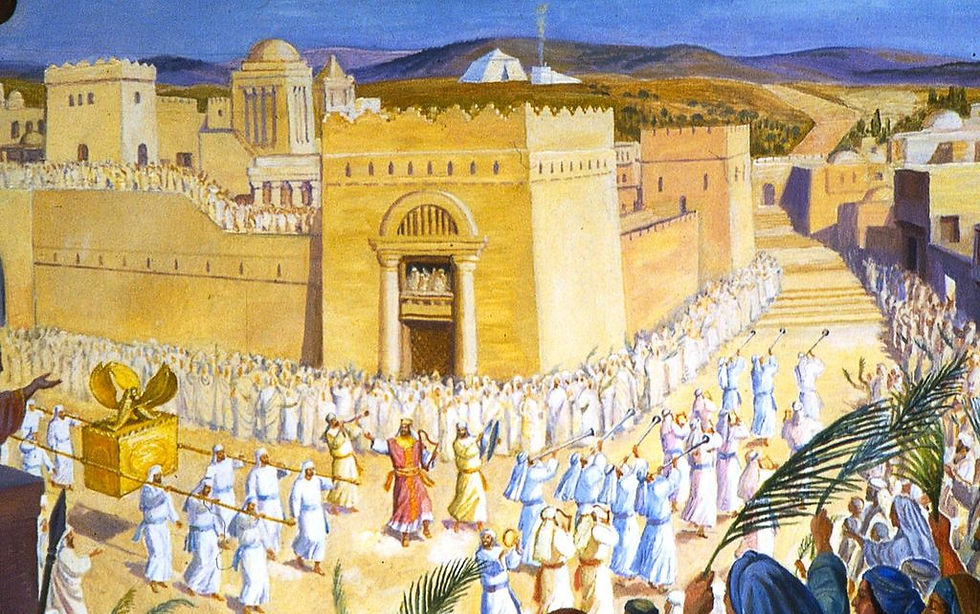

Matthew Henry: 'Matthew Henry: 'The temple, though richly beautified, yet while it was without the ark was like a body without a soul, or a candlestick without a candle, or (to speak more properly) a house without an inhabitant. All the cost and pains bestowed on this stately structure are lost if God do not accept them; and, unless he please to own it as the place where he will record his name, it is after all but a ruinous heap. When therefore all the work is ended (1 Kings 7:51), the one thing needful is yet behind, and that is the bringing in of the ark. This therefore is the end which must crown the work, and which he…
Follow the translation of Matthew Poole's Synopsis on 1 Kings!
https://www.fromreformationtoreformation.com/1-kings
An Old Testament Survey!
www.fromreformationtoreformation.com/old-testament-survey-class-page
Lampe's History of the United Kingdom under David and Solomon!
https://www.fromreformationtoreformation.com/post/lampe-on-church-history-the-church-under-kings-before-the-division
Get Heidegger's Handbook of the Old Testament!
https://www.lulu.com/shop/steven-dilday/handbook-of-the-old-testament/hardcover/product-q65wzzm.html?q=johann+heinrich+heidegger&page=1&pageSize=4