Poole on 1 Kings 8:12-21: Solomon's Blessing and Thanksgiving

[A fundraising break-through: We have surged to about 40% of our goal! Thanks be to the Most High God!
We still have some ground to cover. If you are being blessed by the translation work, please consider supporting the work and speeding it on its way. Click here to watch a brief video on the project.]
Verse 12:[1] (2 Chron. 6:1, etc.) Then spake Solomon, The LORD said that he would dwell (Lev. 16:2; Ps. 18:11; 97:2) in the thick darkness.

[Then says Solomon, etc.] When he saw that the priests were cast into confusion; that is to say, I receive it as a sign, and I understand that God is present (Martyr). Be not afraid of this marvel; it is not a new thing, nor a sign of anger, but of grace (Osiander).
[The Lord said that He would dwell in a cloud, לִשְׁכֹּ֖ן בָּעֲרָפֶֽל׃] That He was going to dwell (to dwell [Montanus]) in fog (Munster, Tigurinus, Piscator, similarly the Arabic, Syriac, Strigelius); or, that He dwells (Junius and Tremellius), that He was dwelling (Pagnine). He said, that is, He determined and decreed; that is to say, by this cloud I understand that God has chosen this seat, as altogether agreeable to Him. Chaldean: God determined that His majesty would dwell in Jerusalem; that is, in the Temple built in Jerusalem (Vatablus). Question: Where then did God say this? Response: In Leviticus 16:2, I will appear in the cloud above the oracle (Sanchez, Menochius, Tirinus); and in verse 13, where He commanded that the Oracle be filled with smoke, before he enters into it (Sanchez, Lapide); the same he also gathered from the writings of his own father, Psalm 18:9, 11 (Martyr, Lapide). He also knew that God thus appeared on Sinai; and that a cloud filled the Tabernacle when it was first erected, Numbers 9. Moreover, he remembered that the cloud was to the Israelites a sign and guide in the journey (Martyr).
The LORD said that he would dwell in thick darkness: Perceiving both priests and people struck with horror and wonder at this darkness, he minds them that this was no sign of God’s dislike or disfavour, as some of them might possibly imagine; but a token of his approbation, and grace, and special presence among them. The Lord said; not in express words, but by plain consequence, because he hath declared, both by his words and actions, that he would manifest his presence with and dwelling among his people by a dark cloud, in which he would appear. See Exodus 13:21, 22; 24:16; 40:35; Numbers 9:15; Deuteronomy 4:11; 5:22; Psalm 18:12; 97:2.
Verse 13:[2] (2 Sam. 7:13) I have surely built thee an house to dwell in, (Ps. 132:14) a settled place for thee to abide in for ever.
[A house for habitation, זְבֻ֖ל לָ֑ךְ מָכ֥וֹן לְשִׁבְתְּךָ֖ עוֹלָמִֽים׃ [3]] A habitation for thee (Montanus, similarly Pagnine, Tigurinus, Syriac, Arabic); a place that (or, a habitation in which [Munster]) thou mightest dwell there forever (Pagnine, Munster), or perpetually (Tigurinus); a residence in which thou mayest abide (Junius and Tremellius). Hebrew: for thee to sit, or thine: that is, for thy residence (Piscator); fit for thy lodging (Arabic); prepared for thy residence (Syriac); prepared as a house of thy majesty forever (Jonathan); a directing toward thy throne (Lapide, Malvenda). The purpose of the Temple is not to furnish a habitation for God, but direction to men to the eternal divine throne, which is in heaven (Lapide out of Cajetan); for the Temple was built for this end (Menochius). God had many mansions, Gilgal,[4] Nob,[5] etc., but these were not lasting (Munster). But in verse 27 he denies that God dwells on earth. Response: He denies it in this sense, that God was comprehended and circumscribed by the space of the house or land; but He is said to dwell there in this sense, that in this place He hears prayer, and shows Himself present, etc. (Estius). Solomon appears to set up a certain antithesis between the dark cloud, and the house shining with gold and precious stones; the cloud wispy and fleeting, and the house enduring perpetually (Menochius).
I have surely built thee an house to dwell in; I perceive by this thick darkness that thou art coming among us, and therefore make haste and come, O thou blessed Guest, into the dwelling-place which I have built by thy command, and for thy service. A settled place for thee to abide in for ever; not a tabernacle, which was made to be carried from place to place; but a durable, and, I hope, perpetual habitation.
Verse 14:[6] And the king turned his face about, and (2 Sam. 6:18) blessed all the congregation of Israel: (and all the congregation of Israel stood;)…
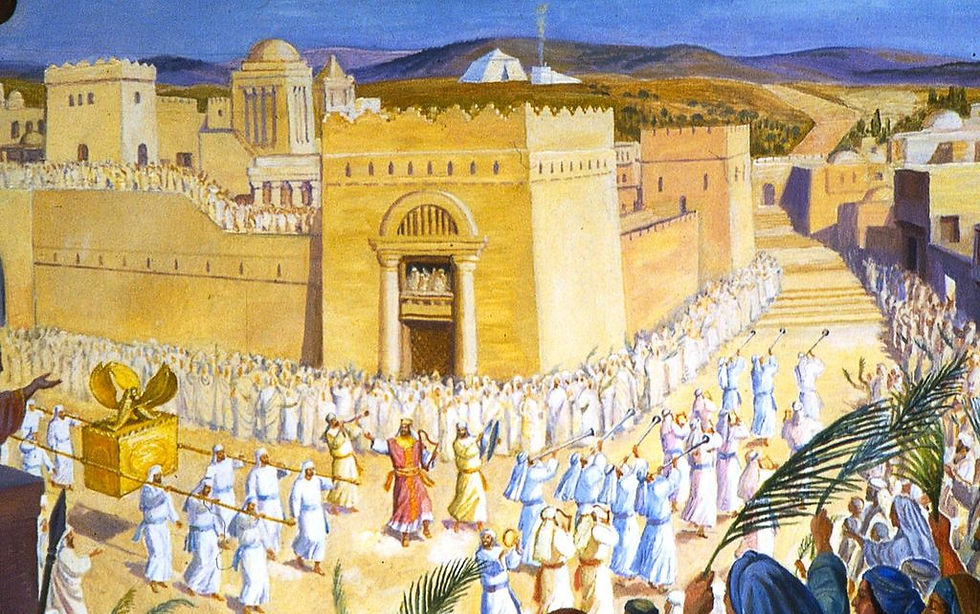
[And the King turned his face about] Solomon stood on a platform erected in the Court of the Israelites. From this place the King was able to be seen by the people on every side, and he was turned directly toward the altar of burnt offerings. Therefore, the king is said to have turned himself, because previously he was looking toward the altar (Menochius, similarly Sanchez).
The king turned his face about, from the temple, towards which he was looking to observe that thick and extraordinary darkness, to the body of the congregation.
[He blessed all the church of Israel, וַיְבָ֕רֶךְ אֵ֖ת כָּל־קְהַ֣ל יִשְׂרָאֵ֑ל] And he blessed all the assembly, or congregation, of Israel (Montanus, Malvenda), that is, he prayed for good things (Sanchez, Martyr); he supplicated for them the fear of God, peace, and all good things (Martyr). Others otherwise: He blessed (understanding, God, as in verse 56; Psalm 34:1; 103:1 [Piscator]) with the whole congregation (Junius and Tremellius, Piscator). אֶת [7] often means with. This interpretation is confirmed by the very argument of the prayer, which is here subjoined, Blessed be Jehovah, etc. (Piscator).
Blessed all the congregation of Israel, or, blessed (to wit, the Lord, which is easily understood from the following words; in which he only blesseth or praiseth God, but doth not bless the people at all) with (so the Hebrew אֵת/eth is oft used, as hath been showed before) all the congregation. Although he might do both, first bless the congregation, which possibly he might do in that solemn and appointed form, Numbers 6; which therefore it was needless to repeat here; and then blessed God. And indeed he doth both here below, where these same words are used, 1 Kings 8:55, 56, etc.
[All Israel was standing] In order to worship. And so in the courtyard it was not permitted to sit, as Rabbi Levi Gershon [also known as Gersonides] relates; only the king was sitting there (Martyr).
The congregation of Israel stood; partly in way of devotion to God, whom they adored; and partly out of respect to the king.
Verse 15:[8] And he said, (Luke 1:68) Blessed be the LORD God of Israel, which (2 Sam. 7:5, 25) spake with his mouth unto David my father, and hath with his hand fulfilled it, saying…

[Blessed] That is, Let Him be praised, or He is praised by us (Vatablus).
[Who spoke with His mouth unto David my father (similarly Montanus, Pagnine, Syriac, Arabic, Junius and Tremellius)] Who settled a covenant in His Word with David, etc. (Jonathan).
[And with His hands He hath accomplished it, saying, וּבְיָד֥וֹ מִלֵּ֖א לֵאמֹֽר׃] And (or as [Junius and Tremellius]) with His hand He hath fulfilled it, saying (Pagnine, Montanus, Junius and Tremellius), or, for He had said, etc. (Syriac, Arabic). By His hand, that is, power (Menochius, Vatablus); work (Mariana); liberality (Vatablus).
Blessed be the LORD, etc.: Praised be God, both for his grace in making such a promise, and for his goodness and truth in fulfilling it.
Verse 16:[9] (2 Sam. 7:6; 2 Chron. 6:5, etc.) Since the day that I brought forth my people Israel out of Egypt, I chose no city out of all the tribes of Israel to build an house, that (1 Kings 8:29; Deut. 12:11) my name might be therein; but I chose (1 Sam. 16:1; 2 Sam. 7:8; 1 Chron. 28:4) David to be over my people Israel.
[I chose not a city, etc., but I chose David (similarly nearly all interpreters)] I had not chosen, etc. (Junius and Tremellius); I had not signified myself to have chosen. A Metonymy of the subject (Piscator). I have approved no city, etc. (Arabic). The speech is elliptical, for it was necessary to add, but I afterwards chose Jerusalem, and I chose David, etc., just as it is found in 2 Chronicles (Martyr). Others thus: I did not choose a city, etc., but I chose David, because the place of the temple at Jerusalem was revealed through David on the threshing floor of Araunah[10] (Kimchi in Martyr). I have chosen David; that is, by such an election that would be continued to his posterity; which was not granted to Saul (Menochius). But I chose, וָאֶבְחַר, that is, all the way to this time when I chose David (Vatablus).
Since the day that I brought forth my people Israel out of Egypt, until David’s time; for then he did choose Jerusalem. I chose no city, that is, I did not declare my choice of it; for so choosing is used for declaring or executing one’s choice, as Deuteronomy 12:11; 2 Chronicles 6:5; Zechariah 2:12, and things are oft said to be done when they are only manifested or declared to be such; in which sense God is said to be justified, Psalm 51:4, and men to be guilty, Hosea 5:15. Otherwise, to speak properly, whatsoever God chooseth, he chooseth from eternity. That my name might be therein; that my presence, and grace, and worship, and glory might be there. I chose David, and in and with him the tribe of Judah, of which he was, and Jerusalem, where he dwelt; which is here implied by the opposition of this to the former part of the verse.
Verse 17:[11] And (2 Sam. 7:2; 1 Chron. 17:1) it was in the heart of David my father to build an house for the name of the LORD God of Israel.
In the heart of David my father; in his desire and purpose, as this or the like phrase is used, 1 Samuel 10:7; 14:7; 2 Samuel 7:3.
Verse 18:[12] (2 Chron. 6:8, 9) And the LORD said unto David my father, Whereas it was in thine heart to build an house unto my name, thou didst well that it was in thine heart.
[Thou didst well] Yet He did not will for this to be done; God sometimes approves things that He does not wish to be done. For He considers our heart and intention, which often is approved by Him; but, on the other hand, He wills the order of His providence to remain fixed (Martyr).
Thou didst well that it was in thine heart: Thy intention and affection was well-pleasing to me.
Verse 19:[13] Nevertheless (2 Sam. 7:5, 12, 13; 1 Kings 5:3, 5) thou shalt not build the house; but thy son that shall come forth out of thy loins, he shall build the house unto my name.
Verse 20:[14] And the LORD hath performed his word that he spake, and I am risen up in the room of David my father, and sit on the throne of Israel, (1 Chron. 28:5, 6) as the LORD promised, and have built an house for the name of the LORD God of Israel.
Verse 21:[15] And I have set there a place for the ark, wherein is (1 Kings 8:9; Deut. 31:26) the covenant of the LORD, which he made with our fathers, when he brought them out of the land of Egypt.
[A place for the ark, in which is the covenant of the Lord] The two tables of the covenant he calls the covenant; although they were only a sign of the covenant; by the appellation of the thing signified attributed to the sign, as it is wont to be done (as in this, this is my body); for stones and letters were not the covenant (Martyr). The covenant, that is, the Tables of the covenant (Junius, Piscator, Vatablus), on which were the precepts and conditions of the covenant (Vatablus). A Metonymy of the adjunct. Or rather, the laws according to which the covenant was made. A Metonymy of the subject (Piscator).
The covenant of the Lord, that is, the tables of the covenant, by a metonymy, wherein the conditions of God’s covenant with Israel are written.
[1] Hebrew: אָ֖ז אָמַ֣ר שְׁלֹמֹ֑ה יְהוָ֣ה אָמַ֔ר לִשְׁכֹּ֖ן בָּעֲרָפֶֽל׃
[2] Hebrew: בָּנֹ֥ה בָנִ֛יתִי בֵּ֥ית זְבֻ֖ל לָ֑ךְ מָכ֥וֹן לְשִׁבְתְּךָ֖ עוֹלָמִֽים׃
[3] זְבֻל appears to signify a lofty abode, from זָבַל, to exalt or honor.
[4] Joshua 4:19; 9:6; 10:6, 15, 43.
[5] 1 Samuel 21; 22:9-19.
[6] Hebrew: וַיַּסֵּ֤ב הַמֶּ֙לֶךְ֙ אֶת־פָּנָ֔יו וַיְבָ֕רֶךְ אֵ֖ת כָּל־קְהַ֣ל יִשְׂרָאֵ֑ל וְכָל־קְהַ֥ל יִשְׂרָאֵ֖ל עֹמֵֽד׃
[7] אֶת normally serves as the Direct Object marker.
[8] Hebrew: וַיֹּ֗אמֶר בָּר֤וּךְ יְהוָה֙ אֱלֹהֵ֣י יִשְׂרָאֵ֔ל אֲשֶׁר֙ דִּבֶּ֣ר בְּפִ֔יו אֵ֖ת דָּוִ֣ד אָבִ֑י וּבְיָד֥וֹ מִלֵּ֖א לֵאמֹֽר׃
[9] Hebrew: מִן־הַיּ֗וֹם אֲשֶׁ֙ר הוֹצֵ֜אתִי אֶת־עַמִּ֣י אֶת־יִשְׂרָאֵל֘ מִמִּצְרַיִם֒ לֹֽא־בָחַ֣רְתִּי בְעִ֗יר מִכֹּל֙ שִׁבְטֵ֣י יִשְׂרָאֵ֔ל לִבְנ֣וֹת בַּ֔יִת לִהְי֥וֹת שְׁמִ֖י שָׁ֑ם וָאֶבְחַ֣ר בְּדָוִ֔ד לִֽהְי֖וֹת עַל־עַמִּ֥י יִשְׂרָאֵֽל׃
[10] 2 Samuel 24:16-25; 1 Chronicles 21:15-18; 2 Chronicles 3:1.
[11] Hebrew: וַיְהִ֕י עִם־לְבַ֖ב דָּוִ֣ד אָבִ֑י לִבְנ֣וֹת בַּ֔יִת לְשֵׁ֥ם יְהוָ֖ה אֱלֹהֵ֥י יִשְׂרָאֵֽל׃
[12] Hebrew: וַיֹּ֤אמֶר יְהוָה֙ אֶל־דָּוִ֣ד אָבִ֔י יַ֗עַן אֲשֶׁ֤ר הָיָה֙ עִם־לְבָ֣בְךָ֔ לִבְנ֥וֹת בַּ֖יִת לִשְׁמִ֑י הֱטִיבֹ֔תָ כִּ֥י הָיָ֖ה עִם־לְבָבֶֽךָ׃
[13] Hebrew: רַ֣ק אַתָּ֔ה לֹ֥א תִבְנֶ֖ה הַבָּ֑יִת כִּ֤י אִם־בִּנְךָ֙ הַיֹּצֵ֣א מֵחֲלָצֶ֔יךָ הֽוּא־יִבְנֶ֥ה הַבַּ֖יִת לִשְׁמִֽי׃
[14] Hebrew: וַיָּ֣קֶם יְהוָ֔ה אֶת־דְּבָר֖וֹ אֲשֶׁ֣ר דִּבֵּ֑ר וָאָקֻ֡ם תַּחַת֩ דָּוִ֙ד אָבִ֜י וָאֵשֵׁ֣ב עַל־כִּסֵּ֣א יִשְׂרָאֵ֗ל כַּֽאֲשֶׁר֙ דִּבֶּ֣ר יְהוָ֔ה וָאֶבְנֶ֣ה הַבַּ֔יִת לְשֵׁ֥ם יְהוָ֖ה אֱלֹהֵ֥י יִשְׂרָאֵֽל׃
[15] Hebrew: וָאָשִׂ֙ם שָׁ֤ם מָקוֹם֙ לָֽאָר֔וֹן אֲשֶׁר־שָׁ֖ם בְּרִ֣ית יְהוָ֑ה אֲשֶׁ֤ר כָּרַת֙ עִם־אֲבֹתֵ֔ינוּ בְּהוֹצִיא֥וֹ אֹתָ֖ם מֵאֶ֥רֶץ מִצְרָֽיִם׃ ס


Archibald Hall's Gospel Worship: 'The highest decency requires, that it be performed with great reverence. Great fear is due to God in this, as much as in any other piece of service that is done in the meeting of his saints. While ministers stand, and lift up their hands to bless, Lev 9:22-23; 1 Chron 23:13; 1 Kings 8:54-55[4] the congregation should stand up to receive the blessing of Heaven, 1 Kings 8:14. Do we in this blessing express our desire and hope, to receive a kingdom that cannot be moved? and how can we be excused, if we have not grace, whereby we may serve him in it, with reverence and godly fear, since our God is a consumin…
Jonathan Edwards' Notes on Scripture: 'Exod 13:2. Concerning the pillar of cloud and fire, or the cloud of glory. This pillar of cloud and fire, and also the cloud of glory on mount Sinai, and in the tabernacle and temple, was a type of Christ in the human nature. The cloud was a fit representation of the human nature, being in itself a dark body, a vapour, a weak light thing, easily driven hither and thither by every wind, or the least breath of air; while it continues, is a most mutable thing, sometimes bigger, and sometimes less, constantly changing its form, puts on a thousand shapes, and it quickly vanishes away, is easily dispersed and brought to nought; …
Matthew Henry: 'Here, I. Solomon encourages the priests, who came out of the temple from their ministration, much astonished at the dark cloud that overshadowed them. The disciples of Christ feared when they entered into the cloud, though it was a bright cloud (Luke 9:34), so did the priests when they found themselves wrapped in a thick cloud. To silence their fears, 1. He reminds them of that which they could not but know, that this was a token of God's presence (1 Kings 8:12): The Lord said he would dwell in the thick darkness. It is so far from being a token of his displeasure that it is an indication of his favour; for he had said, I wil…
Follow the translation of Matthew Poole's Synopsis on 1 Kings!
https://www.fromreformationtoreformation.com/1-kings
An Old Testament Survey!
www.fromreformationtoreformation.com/old-testament-survey-class-page