Poole on 1 Kings 8:1-6: The Bringing of the Ark into the Temple, Part 1

Verse 1:[1] Then (2 Chron. 5:2, etc.) Solomon assembled the elders of Israel, and all the heads of the tribes, the chief (Heb. princes[2]) of the fathers of the children of Israel, unto king Solomon in Jerusalem, (2 Sam. 6:17) that they might bring up the ark of the covenant of the LORD (2 Sam. 5:7, 9; 6:12, 16) out of the city of David, which is Zion.

[They were assembled] Hebrew: he assembled,[3] that is, by commandment (Piscator).
[Those greater in age, זִקְנֵי] The Elders (Junius and Tremellius). Senators of the Great Sanhedrin (Grotius); senators, or judges, or in sum governors and magistrates (Piscator).
The elders of Israel; the senators, and judges, and rulers. The heads of the tribes; for each tribe had a peculiar head or governor.
[The captains of the families of the children of Israel, נְשִׂיאֵ֙י הָאָב֜וֹת לִבְנֵ֧י יִשְׂרָאֵ֛ל] The Princes (Prelates [Montanus], Magnates [Jonathan], Nobles [Tigurinus]) of the fathers (or, and those that were captains among the fathers [Munster]) of the children of Israel (Pagnine), or, among the children of Israel (Strigelius). Captains of the ancestors; that is, of the ancient families (Vatablus). The most distinguished in all the families, etc. (Osiander): the princes of the paternal families with the Israelites (Junius and Tremellius) [the ל/to/for he takes, as אֶת is sometimes taken, for with]. The exalted of the fathers, etc., that is, who were superior in authority among the fathers (Piscator).
The chief of the fathers; the chief persons of every great family in each tribe.
[Unto king Solomon (thus Vatablus)] Unto himself: the antecedent in the place of the relative (Vatablus).
Unto king Solomon; unto himself; the antecedent noun being put for the relative and reciprocal pronoun, as is frequent with the Hebrews. In Jerusalem, where the temple was built, and now finished. That they might bring up the ark to the top of this hill of Moriah, upon which it was built; whither they were now to carry the ark in a solemn pomp, that by this their attendance they might make a public profession of that service, and respect, and obedience which they owed unto that God who was graciously and gloriously present in the ark. Out of the city of David, where David had placed the ark, 2 Samuel 6:12, 17. See on 1 Kings 2:10; 3:1.
[That is, from Zion, הִ֥יא צִיּֽוֹן׃] It is Zion (Pagnine). That is, Which by another name is called Zion (Vatablus). Zion; that is, the city built upon mount Zion (Piscator).
Which is Zion; which is called Zion, because it was built upon that hill.
[1004 BC] Verse 2:[4] And all the men of Israel assembled themselves unto king Solomon at the (Lev. 23:34; 2 Chron. 7:8) feast in the month Ethanim, which is the seventh month.
All the men of Israel; not only the chief men who were particularly invited, but a vast number of the common people, as being forward to see and to join in this great and glorious solemnity. At the feast: understand either, first, The feast of tabernacles. Or rather, secondly, The feast of the dedication, to which Solomon had invited them, which was before that feast; for that began on the fifteenth day of the seventh month, Leviticus 23:34, but this began at the least seven days before that feast; for Solomon and the people kept the feast for fourteen days, here, 1 Kings 8:65, that is, seven days for the dedication of the temple, and seven other days for that of tabernacles; and after both these were finished, he sent all the people to their homes on the twenty-third day of the month. See 2 Chronicles 7:9, 10.
[In the month Ethanim (thus Tigurinus, Mariana), בְּיֶ֥רַח הָאֵֽתָנִ֖ים [5]] In the month of the mighty, or strong (Montanus, Vatablus, Mariana, Malvenda). This month is September; or, it corresponds partly to our September, partly to our October (Tirinus out of Sanchez, Lapide, Vatablus). Thus it is called; either, 1. because of the gatherings of fruits that are made in it (Munster, similarly Vatablus, Mariana), and whereby the vigor of man is preserved (Mariana out of Vatablus): or, 2. because at that time fruits are strong and ripe (Lapide): or, 3. because of the number of great feasts in that month (in which God was worshipped by the strong/steadfast and pious [Lapide]), namely, of Tabernacles, and of Atonement, and of the Dedication (Vatablus, similarly Munster): or, 4. Because in it were established the strongest things; that is, the foundations of the world (Malvenda): or, 5. Because at that time the strong are discerned, by bearing the afflictions of Autumn (Lapide, similarly Martyr). In the month of September (Pagnine). In the month which the ancients call the first month (Jonathan). Thus they call it from the creation, because the world was created in that month; but it is the seventh month after the exodus from Egypt (Hebrews in Vatablus). In the month of produce (Syriac). In the month of bristling fields (Junius and Tremellius), in which, with the produce collected, the unkempt fields bristle (Junius, Piscator). Hebrew: in the moon of the strong, or of the rough; that is, of the unkempt. Thus in Deuteronomy 21:4, unto the valley rough,[6] in the place of unkempt/wild (Piscator). Question: Inasmuch as the Temple was completed in the eighth month, 1 Kings 6:38, how is it here said to have been dedicated in the seventh month? Response 1: The construction was finished in the seventh month; and Solomon hastened, so that in that month it might be dedicated, for the sake of the people, who in any case were going to be assembling for the feast; but in the following month he completed the instruments of the house, and ordained offerings. Neither was it necessary, that in that dedication all these things were perfected (Martyr out of the Hebrews, similarly Lapide out of Tostatus and Salian). This does not satisfy, because all things are clearly said to have been completed, 1 Kings 7:48-51 (Serarius). Response 2: The dedication was delayed to the following year, so that the walls might be completely dry, and all things necessary for the dedication might be acquired (Lapide out of Serarius).
[On the solemn day[7]] Either, 1. On the feast of Atonement (certain interpreters in Martyr); but that solemn fast does not appear to comport with the joy of the dedication (Martyr): or, 2. On the feast, or, under the feast, of Tabernacles (thus Junius, Piscator, Martyr). Thus Vatablus [whom, I do not know for what reasons, both Lapide and Menochius cite unto the contrary]. This does not satisfy; for this feast was beginning on the fifteenth day of the month; but the dedication before that day: for on the twenty-third day of the month the fourteen days of this feast had passed, verse 65 (Lapide): or, 3. The feast of dedication is here understood (Lapide out of Serarius and Salian and Torniellius); which began on the eighth day, and lasted for fourteen days, unto the twenty-third day. (See 2 Chronicles 7:9, 10.) In these days the Feast of Tabernacles was included, on the eighth day of which the people were dismissed (Sanchez, Lapide). Solomon seized this occasion of the season and feast, so that the dedication might be celebrated with a greater concourse of the people (Lapide).
[It is the seventh month] By divine institution, Exodus 12:2 (Junius); namely, in the sacred year, for in the civil year, it was the first month (Piscator).
Which is the seventh month; which time he chose with common respect to his people’s convenience, because now they had gathered in all their fruits, and now they were come up to Jerusalem to celebrate the feast of tabernacles. Question: The temple was not finished till the eighth month, 1 Kings 6:38, how then could he invite them in the seventh month? Answer: This was the seventh month of the next year; for although the house in all its parts was finished the year before, yet the utensils of it, described 1 Kings 7, were not then fully finished, but took up a considerable time afterward; and many preparations were to be made for this great and extraordinary occasion.
Verse 3:[8] And all the elders of Israel came, (Num. 4:15; Deut. 31:9; Josh. 3:3, 6; 1 Chron. 15:14, 15) and the priests took up the ark.
[The Priests carried the ark] The Priests carried the Ark on three occasions; when they crossed Jordan; when they marched around Jericho; when David brought it back; and here, for a fourth time, into the Temple: For it was the office of the Levites to carry the Ark; but it was not lawful for them to enter into the Holy of Holies, inasmuch as, if the High Priest had been able to carry it alone, the aid of the Priests would not have been necessary (Vatablus). But in 2 Chronicles 5:4, it is found that the Ark was carried by the Levites. Responses: 1. In that passage the name of Levites is taken generally, for their descent from Levi, in which number were the Priests (Piscator, similarly Vatablus, Martyr): 2. or, the Levites carried it to the Holy of Holies, and the Priests afterwards carried it in: or, 3. the Priests carried the Ark, and the Levites carried the rest into the repository of the Temple (Vatablus).
The priests took up the ark: For although the Levites might do this, Numbers 4:15, yet the priests did it at this time, partly for the greater honour of the solemnity, and partly because the Levites might not enter into the holy place, much less into the holy of holies, where it was to be placed, into which the priests themselves might not have entered, if the high priest alone could have done it. Objection: The Levites are said to have done this, 2 Chronicles 5:4. Answer: That is most true, because all the priests were Levites, though all the Levites were not priests.
Verse 4:[9] And they brought up the ark of the LORD, (1 Kings 3:4; 2 Chron. 1:3) and the tabernacle of the congregation, and all the holy vessels that were in the tabernacle, even those did the priests and the Levites bring up.
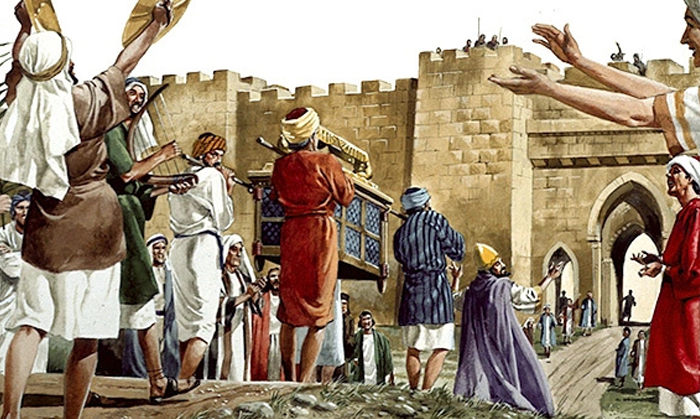
[And the tabernacle of the covenant] Namely, that made by Moses, which hitherto was in Gibeon (Tirinus out of Sanchez, thus Lapide out of Tostatus and Serarius and Josephus,[10] Junius, Piscator); for this is properly of the covenant. Objection: But that was not in Zion, but in Gibeon. Response: There is no doubt that that was brought by Solomon from Gibeon to Zion, and thence unto the Temple (Lapide). Others understand this of the tabernacle that David made of the ark (thus Salian and Sà in Lapide). But the tabernacle of David does not appear constructed from boards, but made from skins, 2 Samuel 7:2; 1 Chronicles 15:1 (Sanchez). Both Tabernacles, both of Moses and of David, were transported by Solomon to the Temple, just like all the other sacred vessels made by Moses; lest the worship of God be celebrated outside of the Temple, and so that the danger of superstition and idolatry might be avoided (Lapide out of Cajetan).
The tabernacle of the congregation; that made by Moses, which doubtless before this time had been translated from Gibeon to Zion, and now, together with other things, was put into the treasuries of the Lord’s house, to prevent all the superstitious use and profane abuse of it, and to oblige the people to come up to Jerusalem, as the only place where God would now be worshipped.
[The priests and the Levites were carrying them] The priests were carrying the Ark; the Levites, the tabernacle and vessels of the Sanctuary (Menochius). Each according to his office, Numbers 4. For, even if nothing is read of the priests in that passage; yet it is certain, with the number of the priests increased, that the duty of carrying the ark was placed upon them, Deuteronomy 31:9 (Junius, Piscator).
The priests and Levites; the priests carrying some, and the Levites others.
Verse 5:[11] And king Solomon, and all the congregation of Israel, that were assembled unto him, were with him before the ark, (2 Sam. 6:13) sacrificing sheep and oxen, that could not be told nor numbered for multitude.
[The multitude…was approaching with him, אִתּוֹ] With itself (Montanus). They were going (or, were [Pagnine], or, were standing [Syriac, Arabic]) with him (Munster, thus Junius and Tremellius). It was near, or before, him (Vatablus).
[They were sacrificing] They were furnishing to the priests for sacrifice (Menochius).
Sacrificing sheep and oxen; either, first, In the way, as David did upon the like occasion, 2 Samuel 6:13. Or, secondly, When the ark was come into the priests’ court, where the altar stood, whence it was speedily to be conveyed to that place where the people could never behold it more. Or rather, thirdly, When the ark was seated in its place; for although they might in the way or passage offer some sacrifices, as David did; yet that was not a proper season to offer so many sacrifices as could not be told nor numbered, as these are here said to be; which far better agrees with what is more particularly related below, 1 Kings 8:62-64, which is here signified in the general by way of anticipation, as is frequently done in the Scripture in like cases.
Verse 6:[12] And the priests (2 Sam. 6:17) brought in the ark of the covenant of the LORD unto (Ex. 26:33, 34; 1 Kings 6:19) his place, into the oracle of the house, to the most holy place, even (1 Kings 6:27) under the wings of the cherubims.
Into the oracle of the house, that is, to that part of the house which is called the oracle, 1 Kings 6:5, 16, 19, 23; or, as it here follows, the most holy place. Under the wings of the cherubims, to wit, of Solomon’s new-made cherubims, 1 Kings 6:23, 24, 27; not of the Mosaical cherubims, which were far less, and unmovably fixed to the ark, Exodus 37:7, 8; and therefore, together with the ark, were put under the wings of these cherubims.
[1] Hebrew: אָ֣ז יַקְהֵ֣ל שְׁלֹמֹ֣ה אֶת־זִקְנֵ֣י יִשְׂרָאֵ֡ל אֶת־כָּל־רָאשֵׁ֣י הַמַּטּוֹת֩ נְשִׂיאֵ֙י הָאָב֜וֹת לִבְנֵ֧י יִשְׂרָאֵ֛ל אֶל־הַמֶּ֥לֶךְ שְׁלֹמֹ֖ה יְרוּשָׁלִָ֑ם לְֽהַעֲל֞וֹת אֶת־אֲר֧וֹן בְּרִית־יְהוָ֛ה מֵעִ֥יר דָּוִ֖ד הִ֥יא צִיּֽוֹן׃
[2] Hebrew: נְשִׂיאֵי.
[3] Hebrew: יַקְהֵל.
[4] Hebrew: וַיִּקָּ֙הֲל֜וּ אֶל־הַמֶּ֤לֶךְ שְׁלֹמֹה֙ כָּל־אִ֣ישׁ יִשְׂרָאֵ֔ל בְּיֶ֥רַח הָאֵֽתָנִ֖ים בֶּחָ֑ג ה֖וּא הַחֹ֥דֶשׁ הַשְּׁבִיעִֽי׃
[5] אֵיתָן/ethan can signify perennial and constant, or firm.
[6] Deuteronomy 21:4: “And the elders of that city shall bring down the heifer unto a rough valley (אֶל־נַ֣חַל אֵיתָ֔ן), which is neither eared nor sown, and shall strike off the heifer’s neck there in the valley…”
[7] 1 Kings 8:2: “And all the men of Israel assembled themselves unto king Solomon at the feast in the month Ethanim (in mense Ethanim, in solemni die, in the month Ethanim, on the solemn day, in the Vulgate), which is the seventh month.”
[8] Hebrew: וַיָּבֹ֕אוּ כֹּ֖ל זִקְנֵ֣י יִשְׂרָאֵ֑ל וַיִּשְׂא֥וּ הַכֹּהֲנִ֖ים אֶת־הָאָרֽוֹן׃
[9] Hebrew: וַֽיַּעֲל֞וּ אֶת־אֲר֤וֹן יְהוָה֙ וְאֶת־אֹ֣הֶל מוֹעֵ֔ד וְאֶֽת־כָּל־כְּלֵ֥י הַקֹּ֖דֶשׁ אֲשֶׁ֣ר בָּאֹ֑הֶל וַיַּעֲל֣וּ אֹתָ֔ם הַכֹּהֲנִ֖ים וְהַלְוִיִּֽם׃
[10] Antiquities 8:2:1; 8:4:1.
[11] Hebrew: וְהַמֶּ֣לֶךְ שְׁלֹמֹ֗ה וְכָל־עֲדַ֤ת יִשְׂרָאֵל֙ הַנּוֹעָדִ֣ים עָלָ֔יו אִתּ֖וֹ לִפְנֵ֣י הָֽאָר֑וֹן מְזַבְּחִים֙ צֹ֣אן וּבָקָ֔ר אֲשֶׁ֧ר לֹֽא־יִסָּפְר֛וּ וְלֹ֥א יִמָּנ֖וּ מֵרֹֽב׃
[12] Hebrew: וַיָּבִ֣אוּ הַ֠כֹּהֲנִים אֶת־אֲר֙וֹן בְּרִית־יְהוָ֧ה אֶל־מְקוֹמ֛וֹ אֶל־דְּבִ֥יר הַבַּ֖יִת אֶל־קֹ֣דֶשׁ הַקֳּדָשִׁ֑ים אֶל־תַּ֖חַת כַּנְפֵ֥י הַכְּרוּבִֽים׃


Matthew Henry: 'The temple, though richly beautified, yet while it was without the ark was like a body without a soul, or a candlestick without a candle, or (to speak more properly) a house without an inhabitant. All the cost and pains bestowed on this stately structure are lost if God do not accept them; and, unless he please to own it as the place where he will record his name, it is after all but a ruinous heap. When therefore all the work is ended (1 Kings 7:51), the one thing needful is yet behind, and that is the bringing in of the ark. This therefore is the end which must crown the work, and which here we hav…
Follow the translation of Matthew Poole's Synopsis on 1 Kings!
https://www.fromreformationtoreformation.com/1-kings
An Old Testament Survey!
www.fromreformationtoreformation.com/old-testament-survey-class-page
Lampe's History of the United Kingdom under David and Solomon!
https://www.fromreformationtoreformation.com/post/lampe-on-church-history-the-church-under-kings-before-the-division
Get Heidegger's Handbook of the Old Testament!
https://www.lulu.com/shop/steven-dilday/handbook-of-the-old-testament/hardcover/product-q65wzzm.html?q=johann+heinrich+heidegger&page=1&pageSize=4