Poole on 1 Kings 7:23-26: The Brazen Sea

Verse 23:[1] And he made (2 Kings 25:13; 2 Chron. 4:2; Jer. 52:17) a molten sea, ten cubits from the one brim to the other (Heb. from his brim to his brim[2]): it was round all about, and his height was five cubits: and a line of thirty cubits did compass it round about.

[A sea molten[3] (thus Jonathan, Munster)] Or cast (Syriac, Pagnine, Tigurinus, Montanus); a lake/basin cast (Junius and Tremellius, Castalio). Sea is everywhere used in the place of lake/basin in the Gospels (Castalio), a great vessel for holding water (Junius, Osiander). A somewhat greater collection of waters the Hebrews call a sea (Osiander).
[From lip to lip (thus Osiander, Montanus)] From one part of the lip to the other (Junius and Tremellius), that is, across the diameter (Junius, Malvenda); that is, by a straight line led through the center from one extremity of the circumference to the other (Piscator).
[Round in its outer surface, סָבִיב] That is, as much in the highest part as in the lowest: it was round from top to bottom (Vatablus).
[A line of thirty cubits, etc.] Hence it is perceived that the diameter is a third part of the circumference; because it was said, that the diameter was ten cubits (Piscator, similarly Osiander, Lyra, Lapide). Of thirty cubits, almost: because the diameter is to the circumference as seven is to twenty-two, not to twenty-one; but Scripture passes over small amounts (Menochius, similarly Martyr). Its depth was five cubits (Sanchez, Josephus[4] in Martyr). The lip was not flat, or pointed, but gently curved, and spread out after the likeness of a lily (Sanchez). This vessel was serving for ablutions, both of sacrificial victims, and of the priests and Levites who were repeatedly washing their hands and feet, not in it (as the Latin has it, Exodus 30:19[5]), for it was not seemly, that they were putting their feet into that vessel, which had to be very clean; but (as it is in the Hebrew) מִמֶּנּוּ, from it, that is, with water drawn forth from it through pipes (Sanchez). And hence it is inferred that the priests ministered in the Temple with bare feet (Lapide, Sanchez). Finally, this sea was in the court of the priests, near the altar of burnt-offerings, and was corresponding to that brazen laver, concerning which see Exodus 30:18 (Lapide out of Sanchez). [From this passage, our John Palmer, an incredibly learned Theologian,[6] gathers the measure of the Cubit, and establishes it in this way:] Since the diameter of the brazen Sea was ten cubits, and the depth five, it follows that the capacity was three hundred and ninety-two and one half cubic cubits. But the Sea was containing two thousand Baths, verse 26, that is, it was wont to contain: but it was containing three thousand Baths, 2 Chronicles 4:5, that is, it was able to contain, if it were filled to the brim; which nevertheless was not wont to be done, lest the wind cause it to slosh out. Therefore, three hundred and ninety-two and one half cubic cubits are equal to three thousand Baths; and consequently one cubic Cubit is equal to seven and six hundred and forty-three thousandths Baths, or to seventy-six and forty-three hundredths Omers (because an Omer is a tenth part of an Ephah, Exodus 16:36; but the Bath and the Ephah, the latter a measure of dry goods, the former of liquids, are equal, Ezekiel 45:11). Hence it is able to be proven, that the Cubit of the Hebrews was about eighteen inches of the London measure, or at least was not two feet long. For, if a Cubit of eighteen inches is posited, its volume will be of five thousand, eight hundred and thirty-two cubic inches, which are equal to seventy-six and forty-three hundredths Omers of Manna: And so an Omer will contain seventy-six and one third cubic inches; that is, twenty-three and one half medium Eggs, or two and eighteen twenty-ninths pints of London measure, which appear to be sufficient for the daily rations of one person. But if the Cubit is posited as two feet, or of twenty-four inches, its volume will be thirteen thousand, eight hundred and twenty-four cubic inches, and thus the Omer will contain one hundred and eighty-one cubic inches; that is, fifty-six Eggs, or six and seven twenty-ninths pints, which appears to be way too much. Note that a medium Egg is three and one quarter cubic inches, and a London pint contains twenty-eight and eight hundred and seventy-five thousandths cubic inches, that is, nearly nine Eggs: and an inch is three times the length of one of our barley grains (John Palmer).
He made a molten sea; he melted the brass, and cast it into the form of a great vessel, for its vastness called a sea, which name is given by the Hebrews to all great collections of waters. The use of it was for the priests to wash their hands and feet, or other things as occasion required, with the water which they drew out of it. See 2 Chronicles 4:2. Compare Exodus 30:19, 20.
Verse 24:[7] And under the brim of it round about there were knops compassing it, ten in a cubit, (2 Chron. 4:3) compassing the sea round about: the knops were cast in two rows, when it was cast.

[And a graven work, וּפְקָעִים] Colocynths[8] (Junius and Tremellius, thus Montanus), gourds, or wild cucumbers (Mariana, similarly Osiander), protuberances after the likeness of colocynths (Pagnine), or of gourds, in which were fashioned the heads of oxen, as it is seen out of 2 Chronicles 4:3 (Vatablus): the figures of eggs (Jonathan), small heads (Syriac), arched moldings (Arabic), little spheres (Munster), knobs (Tigurinus, Strigelius), globes similar to wild gourds (Castalio).
Knops; or, carved or molten figures; for learned Hebricians note, that this word signifies the figures or pictures of all sorts, as flowers, beasts, etc. This general word is particularly explained of oxen, 2 Chronicles 4:3, unless there were so many figures, or sculptures of gourds, or other flowers; and in each of these a little ox’s head.
[Under the lip was circling that, מִתַּ֙חַת לִשְׂפָת֤וֹ׀ סָבִיב֙ סֹבְבִ֣ים אֹת֔וֹ] Under the lip of it round about they were circling it (Junius and Tremellius, Munster, Vatablus, etc.), that is, the sea (Mariana, Tigurinus). I would prefer, they circle, for this laver appears to have hitherto endured. Hebrew: circling, to which is able to be supplied either they shall be, or they are (Piscator).
[For ten cubits compassing the sea, עֶ֚שֶׂר בָּֽאַמָּ֔ה מַקִּפִ֥ים אֶת־הַיָּ֖ם סָבִ֑יב] Ten cubits were compassing the sea along the circumference (Jonathan, similarly the Syriac, Arabic). Question: How were ten cubits compassing the sea, which was thirty cubits in circumference? Response 1: From which place the circuit of that vessel, which was always narrower toward the base, had been reduced to ten cubits, from the same the engravings were applied. This is signified in 2 Chronicles 4:3 (Menochius). A graven work was compassing the entire lowest part of the font, which was only of ten cubits (Cajetan and Tostatus in Lapide). Response 2: It was not compassing the whole sea, but a third part of it (Lapide out of Sanchez), as it is evident from 2 Chronicles 4:3 (Sanchez). Response 3: Some thus translate it: And this very sea, which was extending ten cubits, were circling knobs, etc. (Strigelius). Compassing the sea of ten cubits; that is, although the sea was ten cubits in diameter, nevertheless they were compassing the sea along the entire circumference (Osiander). Response 4: Others take it otherwise, and translate it, ten in a cubit (understanding, one [Munster, Tigurinus]) were compassing the sea along its circumference (Pagnine, thus Munster, Junius and Tremellius, Piscator, similarly Castalio, Dutch, Malvenda, Mariana). That is, in the individual cubits were ten protuberances apiece: therefore, there were thirty in total (Vatablus, Piscator, Malvenda, Dutch, Junius).
Ten in a cubit; so there were three hundred in all.
[Two rows of striated graven works were cast] Striated, that is, having striæ: now, striæ are grooves or furrows, which are worked in wood or bronze for the sake of elegance, in such a way that one part projects and the other sinks back (Lapide).
[שְׁנֵ֤י טוּרִים֙ הַפְּקָעִ֔ים יְצֻקִ֖ים בִּיצֻקָתֽוֹ׃] Two rows (that is, two rows [Tigurinus]) of protuberances cast in the casting of that (Pagnine, Vatablus), that is, of the sea (Dutch, similarly Tigurinus, Castalio, Munster). That is, they were cast, when that sea was cast; that is to say, they were not adventitious, or applied (Vatablus). The term פְּקָעִים appears to signify every sort of picture, whether of flowers, leaves, or fruits; likewise of animals, or of any thing formed for ornament: for in 2 Chronicles 4:3 the similitude of Oxen is posited for the further exposition of that verse. Moreover, these knobs were not sculpted upon the sea, but were cast with it.
The knops were cast together with the sea, not carved. In two rows: it seems doubtful whether the second row had ten in each cubit, and so there were three hundred more; or whether the ten were distributed into five in each row.
Verse 25:[9] It stood upon (2 Chron. 4:4, 5; Jer. 52:20) twelve oxen, three looking toward the north, and three looking toward the west, and three looking toward the south, and three looking toward the east: and the sea was set above upon them, and all their hinder parts were inward.
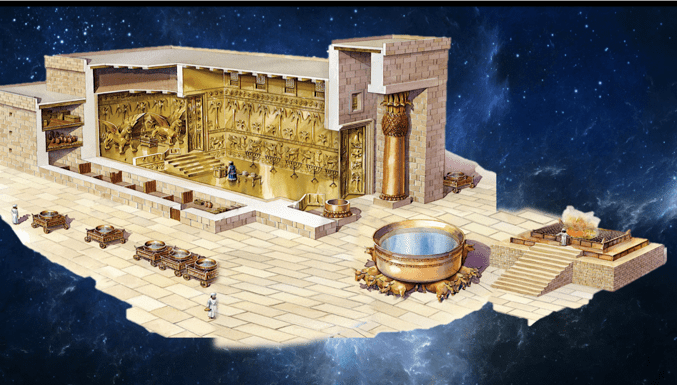
[Upon twelve oxen] This was contrary to the Law, and so Josephus[10] and the Hebrews take from this the beginning of the sins of Solomon. Others conjecture that a command of God, who is above the Law, intervened (Grotius). These oxen appear to have been solid, so that they might be equal to the bearing of so great a weight, that is, of the sea and waters (Menochius). The use of these oxen is gathered from interpreters. Indeed, in the mouth of each one of them was a spout, whence water was drawn: But there were so many, so that many might be able to wash at the same time (Martyr).
It stood upon twelve oxen, of solid brass, which was necessary to bear so great a weight. It is probably conceived that the water was by cocks drawn out of the mouths of these oxen.
[Three toward the North, etc.] These twelve oxen were mystically signifying the twelve Apostles, who at the command of Christ preached throughout all the regions of the world (Lapide).
Three of these oxen looked each way; partly for the more equal and convenient support of the vessel; and partly that divers persons might draw water out of it at the same time, which was frequently necessary, especially in great solemnities.
[The hinder parts of which were hidden within (similarly Vatablus, Junius and Tremellius)] I translate it, they were looking inwards. For the ה [on בָּיְתָה/ houseward/inward] is local (Piscator).
Verse 26:[11] And it was an hand breadth thick, and the brim thereof was wrought like the brim of a cup, with flowers of lilies: it contained (2 Chron. 4:5) two thousand baths.
[Of three inches, טֶפַח [12]] A hand-breadth (Vatablus, similarly Junius and Tremellius, Piscator). Three inches are a fourth part of a foot; that is, four fingers: which measure is called a hand-breadth, 2 Chronicles 4:5 (Menochius).
[Like the lip of a cup] That is, spread out, as cups and lilies are (Piscator out of Junius, Malvenda, Menochius), and gently curved toward the exterior side (Menochius).
[The leaf of a lily spread out, כְּמַעֲשֵׂ֥ה שְׂפַת־כּ֖וֹס פֶּ֣רַח שׁוֹשָׁ֑ן] According to the work of the lip of a cup, and of the blossom of a lily (Pagnine, similarly Vatablus): for the flowers of the lily are curved. Others translate it, and the flower of the lily was on it; that is, the lip of the sea was dappled with flowers of the lily: thus the Chaldean Paraphrast (Vatablus).
[It was holding two thousand baths] The Bath is a measure of liquids, of the same capacity as an Ephah, concerning which Exodus 16:36. An Attic Amphora[13] (Junius, Piscator). The Bath was equal to the Roman Amphora, which was containing forty-eight sextarii,[14] nine hundred and sixty ounces, eighty Roman pounds.[15] The Bath was a tenth part of a Cor[16] (Lapide). But in 2 Chronicles 4:5 it is said to hold three thousand baths. Response 1: Those were common baths, less than a third part of sacred baths (Mariana in Menochius, similarly Lapide out of Villalpando and Alcasar[17]). Response 2: To its top it was able to contain three thousand, but it was not wont to be filled except to two thousand (Grotius after Junius, Piscator, Ribera in Menochius, Sà in Tirinus). And this is signified in 2 Chronicles 4:5, by מַחֲזִיק, causing to be strong,[18] it was holding three thousand; that is to say, if you were to fill it as much as possible (Menochius out of Lapide). The upper circumference, because it was widest, was easily holding a thousand baths. Now, the Book of Chronicles supplies what things were omitted in the Books of Kings (Lapide).
Two thousand baths: Which amounts to five hundred barrels, each bath containing about eight gallons; the bath being a measure of the same bigness with an ephah, Ezekiel 45:11. Objection: This sea is said to contain three thousand baths, 2 Chronicles 4:5. Answer: Either there were two sorts of baths, as of cubits, the one common, the other sacred, and the sacred held half as much more as the common; or rather, he here speaks of what it did actually and usually contain, to wit, two thousand baths, which was sufficient for use; and in 2 Chronicles 4:5, he speaks of what it could contain if it were filled to the brim, as it is implied in the Hebrew words, which differ from these, and properly sound thus, strengthening itself, (to wit, to receive and hold as much as it could, or being filled to its utmost capacity,) it contained, or could contain, three thousand baths.
[1] Hebrew: וַיַּ֥עַשׂ אֶת־הַיָּ֖ם מוּצָ֑ק עֶ֣שֶׂר בָּ֠אַמָּה מִשְּׂפָת֙וֹ עַד־שְׂפָת֜וֹ עָגֹ֣ל׀ סָבִ֗יב וְחָמֵ֤שׁ בָּֽאַמָּה֙ קוֹמָת֔וֹ וּקְוֵה֙ שְׁלֹשִׁ֣ים בָּֽאַמָּ֔ה יָסֹ֥ב אֹת֖וֹ סָבִֽיב׃
[2] Hebrew: מִשְּׂפָת֙וֹ עַד־שְׂפָת֜וֹ.
[3] Hebrew: הַיָּ֖ם מוּצָ֑ק.
[4] Antiquities 8:3:5.
[5] Exodus 30:19: “For Aaron and his sons shall wash their hands and their feet thereat (מִמֶּנּוּ, from it; in ea, in it, in the Vulgate…”
[6] John Palmer (1612-1679) was Rector of Ecton in Northamptonshire (1641-1679) and Archdeacon of Northampton (1665-1679). In addition to theology, he was renowned in the fields of mathematics and astronomy. Palmer corresponded personally with Matthew Poole.
[7] Hebrew: וּפְקָעִים֩ מִתַּ֙חַת לִשְׂפָת֤וֹ׀ סָבִיב֙ סֹבְבִ֣ים אֹת֔וֹ עֶ֚שֶׂר בָּֽאַמָּ֔ה מַקִּפִ֥ים אֶת־הַיָּ֖ם סָבִ֑יב שְׁנֵ֤י טוּרִים֙ הַפְּקָעִ֔ים יְצֻקִ֖ים בִּיצֻקָתֽוֹ׃
[8] Also known as bitter apples, or wild gourds.
[9] Hebrew: עמֵ֞ד עַל־שְׁנֵ֧י עָשָׂ֣ר בָּקָ֗ר שְׁלֹשָׁ֣ה פֹנִ֣ים׀ צָפ֡וֹנָה וּשְׁלֹשָׁה֩ פֹנִ֙ים׀ יָ֜מָּה וּשְׁלֹשָׁ֣ה׀ פֹּנִ֣ים נֶ֗גְבָּה וּשְׁלֹשָׁה֙ פֹּנִ֣ים מִזְרָ֔חָה וְהַיָּ֥ם עֲלֵיהֶ֖ם מִלְמָ֑עְלָה וְכָל־אֲחֹֽרֵיהֶ֖ם בָּֽיְתָה׃
[10] Antiquities 8:7:5.
[11] Hebrew: וְעָבְי֣וֹ טֶ֔פַח וּשְׂפָת֛וֹ כְּמַעֲשֵׂ֥ה שְׂפַת־כּ֖וֹס פֶּ֣רַח שׁוֹשָׁ֑ן אַלְפַּ֥יִם בַּ֖ת יָכִֽיל׃ פ
[12] טֶפַח/span/hand-breadth is related to the verbal root טָפַח, to spread, to extend.
[13] That is, eight and a half imperial gallons, or ten and a third US gallons.
[14] A sextarius is about a pint.
[15] A Roman Pound consists of twelve ounces.
[16] A Cor was roughly sixty gallons.
[17] Luis de Alcasar (1554-1613) is said to be the forerunner of modern preterism. He spent forty years writing Vestigatio Arcani Sensus in Apocalypsi, a massive, nine-hundred-page commentary on Revelation. He also wrote In Eas Veteris Testamenti Partes quas Respicit Apocalypsis libros quinque.
[18] חָזַק, to be strong, in the Hiphil, which frequently conveys a causative sense.


Matthew Henry: 'A brazen sea, a very large vessel, above five yards in diameter, and which contained above 500 barrels of water for the priests' use, in washing themselves and the sacrifices, and keeping the courts of the temple clean, 1 Kings 7:23, etc. It stood raised upon the figures of twelve oxen in brass, so high that either they must have stairs to climb up to it or cocks at the bottom to draw water from it. The Gibeonites, or Nethinims, who were to draw water for the house of God, had the care of filling it. Some think Solomon made the images of oxen to support this great cistern in contempt of the golden calf which Israel ha…
Follow the translation of Matthew Poole's Synopsis on 1 Kings!
https://www.fromreformationtoreformation.com/1-kings
An Old Testament Survey!
www.fromreformationtoreformation.com/old-testament-survey-class-page
Lampe's History of the United Kingdom under David and Solomon!
https://www.fromreformationtoreformation.com/post/lampe-on-church-history-the-church-under-kings-before-the-division
Get Heidegger's Handbook of the Old Testament!
https://www.lulu.com/shop/steven-dilday/handbook-of-the-old-testament/hardcover/product-q65wzzm.html?q=johann+heinrich+heidegger&page=1&pageSize=4