Lampe on Church History: The Apostolic Church, Part 3

Heresies
XXIX. In those first beginnings of the Christian Church, that various seeds of heresies had already sprung up, is evident even from the Apostolic writings, in which are found diverse names of those that had fallen from the truth and faith. To Hymenæus and Philetus, with whom is also joined Alexander, is imputed the denial of the resurrection of the dead.[1] But, whether by this dogma they were following in the steps of the Sadducees (for we readily admit that they were Hellenists), or they only denied the resuscitation of bodies, there is some doubt. Moreover, also among the heretics are referred Hermogenes and Phygellus,[2] and Demas[3] and Diotrephes φιλοπρωτεύων, loving to have the preeminence.[4] By the general name of Antichrists John comprehends these as forerunners of Antichrist.[5] But also certain Churches, especially the Antiochian and Corinthians, were afflicted with schismatics.
XXX. Here and there in the Apostolic Epistles are also refuted various doctrines already spread abroad at that time, the authors of which are not named. Especially such were those of the False Apostles of the Jews, urging the necessity of observing the ceremonial Law of Moses. More than all the rest, the article concerning justification was impugned in a variety of ways, but was manfully defended by the Apostle Paul. Others were teaching the omnimodal liberty of all Christians without limits. There were also those that were denying that Jesus Christ was come in the flesh.[6]
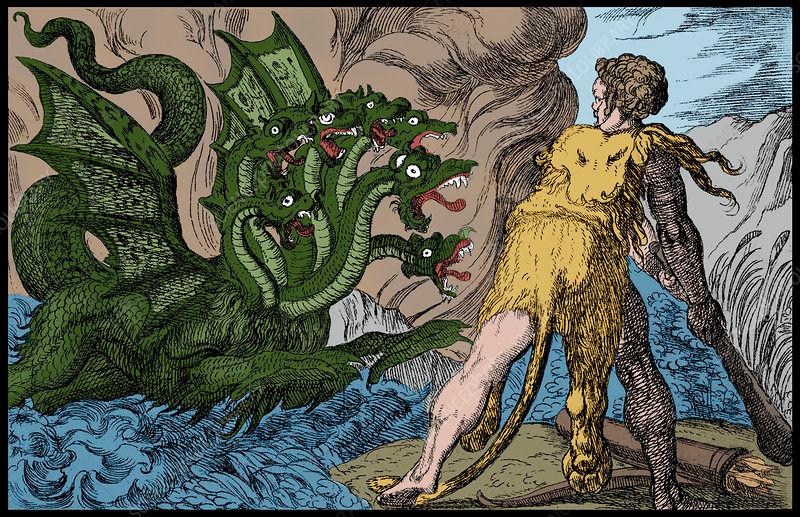
XXXI. In these doctrines one may discover the vestiges of the men that the Ancient Church called the Gnostics. This term is used in a variety of ways by Ecclesiastical Authors. Nevertheless, in a more general sense it is attributed to those that were boasting of a sublimer knowledge of divine things, and were in strange ways mixing the tenets of Philosophy, both Pythagorean and Platonic, and also of the Kabbalistic traditions of the Jews, with the doctrines of the Christian religion. Their system of doctrine is a thing incredibly difficult to relate, since those professing it had as many senses as they had heads, after the likeness of the Lernæan Hydra,[7] and since their doctrines, wrapped in obscure words, appear not to have been sufficiently understood by the Fathers themselves.

XXXII. The First of the Gnostics is considered to be Simon, although there is some doubt whether he is that Samaritan Magus, before whom by some is placed Dositheos, who set himself forth as the Christ foretold by the Prophets, and babbled other absurd and impious things. But Simon is accused of having taught, that he is the Father and Beginning of all things, that his wife Helen or Selene, a Phœnician prostitute, was his first emanation, from which the Archangels and Angels proceeded, the demiurges of this world: she was detained as a captive by them, but the Father came to free her; which bits of delirium, nevertheless, are mitigated by some through a mystical explanation from Platonic principles. It is asserted of the same, that he imagined a twofold Deity, and a world created by malignant powers; he nonsensically babbles that angels are to be worshipped, the flesh is not to be resurrected, that those that have placed their hope in himself and Helen are to be saved, that no operations are just by nature. The Fable concerning the quarreling of Peter with Simon at Rome has been completely exploded.
XXXIII. Menander[8] followed this path, toward the end of the first century, a new coater of the Simonian doctrines, arrogating to himself the honor of Christ, promising to his disciples such wisdom through magic, that they could conquer the very Angelic Demiurges. In the same time-period are thought to fall the Ebionites[9] and the Nicolaitans;[10] it is uncertain from what author they were sprung. Others add the Nazarenes,[11] who nevertheless were either Christians of the Jews, infamous for no heterodoxy, except that they too tenaciously clung to certain Jewish ceremonies; or if they are to be numbered among the heretics, they do not appear to belong to this century.
XXXIV. Meanwhile, the number of the heretics of this age are not to be increased beyond what is just. Also, that the success of the heretics, while the Apostles were yet living, was less than is commonly thought, and that their poison crept along mostly in secret, we believe, induced by the authority of Hegesippus, Tertullian, and Clement of Alexandria.[12]
XXXV. Only one solemn Council, designating an extraordinary assembly of the Church, instituted to compose controversies, is found in Acts 15, in which the controversy concerning the obligation of the Gentiles to observe the ceremonial Law of Moses under the New Economy was settled. Nevertheless, the assembly of Acts 21 is able to be added, in which there was a treatment of the toleration of legal ceremonies for a time, with James, Paul, and the Elders being present.
[1] 1 Timothy 1:20; 2 Timothy 2:17, 18.
[2] 2 Timothy 1:15.
[3] 2 Timothy 4:10.
[4] 3 John 9.
[5] See 1 John 2:18.
[6] 1 John 4:1-2; 2 John 7.
[7] In Greek mythology, the Lernæan Hydra was a many-headed, serpentine monster inhabiting the Lake of Lerna on the Greek Peloponnesus. It is said that, when one head was cut off, two more would grow in its place.
[8] Menander was a first century Samaritan Simonian and magician.
[9] The Ebionites were a second century Judaizing sect, who insisted upon the keeping of Jewish religious rites and laws. They denied the Deity of Jesus Christ. The existence of a second-century heresiarch by the name of Ebion is a matter of some dispute.
[10] Although the Nicolaitans are mentioned by the early Church Fathers, little is known with certainty about them beyond what is mentioned in John’s Apocalypse, that they ate things sacrificed to idols, and committed fornication. See Revelation 2:6, 14, 15.
[11] Unlike the Ebionites, the Nazarenes held orthodox views concerning the person of Christ, but they tenaciously held to the ceremonial law of Moses. Remnants of this sect seem to have survived into the twelfth century.
[12] Titus Flavius Clemens Alexandrinus (died c. 215) was the head of the Christian catechetical school in Alexandria, Egypt. He was trained in pagan philosophy before his conversion to Christianity.


A New Testament Survey!
https://www.fromreformationtoreformation.com/new-testament-survey
Get Heidegger's Handbook of the New Testament!
https://www.lulu.com/shop/steven-dilday/handbook-of-the-new-testament/hardcover/product-nvdmmk5.html?q=johann+heinrich+heidegger&page=1&pageSize=4
Study Church History with Lampe!
www.fromreformationtoreformation.com/church-history-survey